


Ojude Oba draws thousands as Ijebu festival endures after monarch’s death
Thousands of people gathered in southwestern Nigeria on Friday for the 2026 edition of the Ojude Oba festival, marking the first celebration since the death of the longtime Awujale of Ijebuland and underscoring the enduring strength of one of Africa’s most prominent cultural traditions.
The annual festival, held in the ancient town of Ijebu-Ode in Ogun State, drew participants from across Nigeria and the diaspora in a colourful display of traditional fashion, horse-riding processions and age-grade ceremonies that have become synonymous with the event.
This year’s celebration carried unusual significance.
Ojude Oba 2026 was widely viewed as a defining test of whether Nigeria’s most internationally recognised traditional festival could maintain its momentum following the death of the monarch most closely associated with its modern transformation.
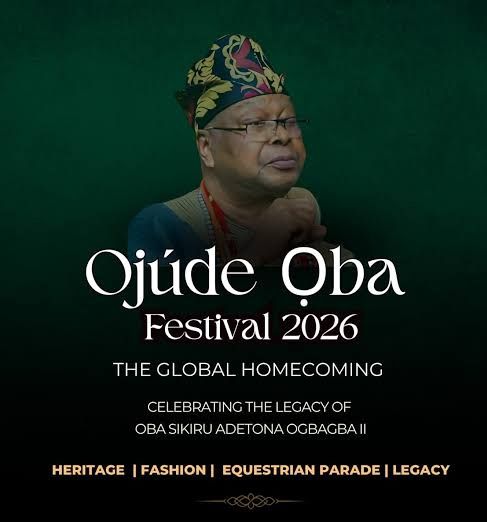
It was the first Ojude Oba festival since the death of Oba Sikiru Kayode Adetona, the Awujale of Ijebuland whose reign spanned decades and helped transform the gathering from a regional cultural observance into an internationally recognised festival attracting tourists, investors and cultural enthusiasts.
The late Awujale of Ijebuland spent decades promoting the festival as a platform for cultural preservation, investment promotion and global engagement, helping transform it from a regional gathering into one of Africa’s most prominent cultural events.
Despite the absence of a sitting monarch, organisers proceeded with the event, reflecting a long-standing decision by the late ruler that the festival should continue regardless of developments surrounding the royal institution.
“Ojude Oba transcends personalities,” said Chief Olu Okuboyejo, chairman of the organising committee.
“It is a cultural institution that belongs to the people and must continue from generation to generation.”
Read Also: Political deepfakes raise alarm as 16.5 Million UK adults exposed before elections
NDLEA re-arrests drug suspect who faked death with wife’s affidavit

Festival tests strength of cultural institutions
The successful staging of the festival during an interregnum is being viewed by cultural historians and community leaders as a test of the resilience of traditional institutions in modern Nigeria.
“The significance of this year’s festival extends beyond celebration,” said Professor Toyin Falola, a historian of Yoruba society and culture.
“What it demonstrates is that the institution has become larger than any individual ruler. The continuity of Ojude Oba reflects the strength of cultural identity and collective memory within Ijebuland.”
While many royal-centred ceremonies across Africa remain closely tied to the presence of a reigning monarch, Ojude Oba has increasingly evolved into a broader cultural platform representing the collective identity of the Ijebu people.
The festival originated more than a century ago as a post-Eid gathering in which Muslim converts paid homage to the Awujale after receiving freedom to practise their faith.
Over time, it expanded beyond its religious roots and became an inclusive celebration involving Muslims, Christians, traditional worshippers and secular participants.
Today, it is widely regarded as one of Nigeria’s most visible expressions of religious tolerance and communal coexistence.
Horse-riding families preserve centuries-old traditions
Among the most anticipated attractions were the equestrian displays by descendants of historic warrior families.
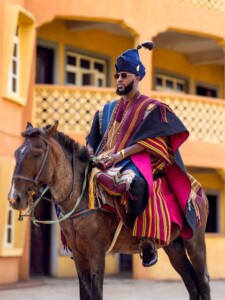
More than two dozen Balogun and Eleshin families participated in ceremonial horse-riding processions that showcased traditions dating back centuries.
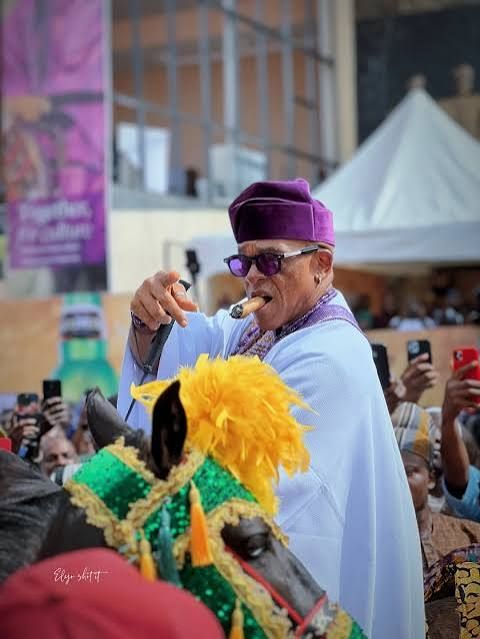
The riders, dressed in elaborate regalia and accompanied by drummers and praise singers, drew large crowds along festival routes.
Equestrian parades remain one of the defining symbols of Ojude Oba and are widely viewed as a visual representation of Ijebu history, military heritage and aristocratic culture.
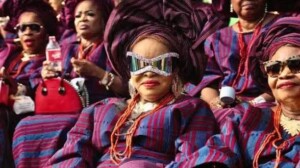
The festival also featured the participation of more than 90 Regberegbe age-grade groups, whose coordinated appearances highlighted the social structures that continue to play a significant role in community development and cultural preservation.
Tourism and economic significance growing
Beyond its cultural importance, Ojude Oba has become a major driver of economic activity in Ogun State.
Hotels, guest houses, transport operators, event planners, photographers and fashion businesses typically experience one of their busiest periods of the year during the festival, underscoring the growing economic value of cultural tourism in southwestern Nigeria.
State officials say the event has evolved into one of Nigeria’s most important cultural tourism assets, helping to attract domestic and international visitors while generating income for local businesses.
Tourism analysts say the festival’s ability to attract visitors from across Nigeria and the diaspora has increasingly positioned Ijebu-Ode as a destination for heritage tourism, a segment governments across Africa are seeking to develop as a source of non-oil economic growth.
Governor Dapo Abiodun described the festival as both a cultural celebration and an economic platform.
According to the governor, Ojude Oba has grown into one of Africa’s most respected cultural gatherings and continues to strengthen Ogun State’s position as a destination for tourism and investment.
Analysts say cultural festivals are becoming increasingly important tools for economic diversification as governments seek to expand tourism revenues and develop creative-economy industries.
Legacy of Oba Adetona remains central theme
Much of this year’s event focused on honouring the legacy of Oba Adetona, whose leadership helped elevate the profile of Ijebuland nationally and internationally.
During his reign, the monarch became known for promoting education, institutional reforms and cultural preservation while expanding the visibility of Ojude Oba beyond Nigeria.
Organisers dedicated the 2026 edition to celebrating his contributions and reaffirming the values of unity, cultural pride and community development that he championed throughout his tenure.
Participants said the large turnout demonstrated public commitment to preserving those traditions.
Why Ojude Oba matters beyond Nigeria
As African countries increasingly seek to promote cultural heritage as a source of tourism growth and international engagement, Ojude Oba has emerged as a model for how traditional festivals can remain relevant in a rapidly modernising society.

Its blend of history, fashion, commerce and community participation has helped transform what began as a local religious observance into a globally recognised cultural event.
The success of Ojude Oba 2026 suggests that the festival’s appeal now extends beyond royal tradition, reflecting broader interest in African cultural heritage, identity and tourism.
For many attendees, the continuation of the festival following the death of the Awujale sent a broader message about institutional continuity and cultural resilience.
While the royal succession process continues, organisers and participants say the festival’s future remains secure.
The success of Ojude Oba 2026 reinforced a message many participants viewed as central to the festival’s future: while the succession process for the Awujale of Ijebuland continues, the institution itself remains firmly intact.
For organisers, cultural leaders and residents alike, that continuity may prove to be one of the late monarch’s most enduring legacies.s.
Read more @ireport247news
About The Author
