

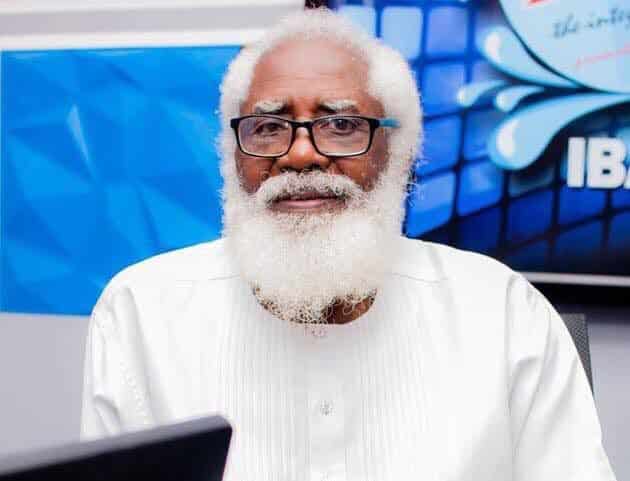
Former Nigerian Ambassador to the Philippines, Dr. Yemi Farounbi, has expressed deep concern over what he described as the gradual erosion of Yoruba unity and communal values across southwestern Nigeria, warning that the disintegration of traditional cooperation threatens the foundation of cultural strength and regional progress.
Speaking during a public lecture themed “Community Development Initiatives as a Springboard for National Cohesion – Ijesaland as a Case Study” in Ilesa, Farounbi lamented that the once-vibrant Yoruba spirit of solidarity and shared responsibility has been replaced by increasing individualism and materialism.
According to him, this decline in Yoruba unity has weakened social cohesion, community development, and inter-generational relationships that once defined the people’s identity.

The fading heritage of Yoruba unity
Dr. Farounbi traced the roots of Yoruba progress in earlier decades to communal practices such as Àáró and Òwè — collective systems where community members worked together on farms, construction, and public projects.
These cultural mechanisms, he explained, fostered cooperation, empathy, and the shared pursuit of prosperity.
“Those values made our people strong. They ensured no one was left behind,” he said.
“But today, capitalist competition and excessive pursuit of personal success have destroyed that spirit. We have replaced brotherhood with rivalry, and unity with suspicion.”
He warned that without deliberate revival of communal consciousness, the Yoruba nation risks losing its moral fabric and developmental momentum.
Farounbi emphasized that Yoruba unity must go beyond rhetoric, adding that the preservation of language, history, and cultural practices should form part of a long-term social renewal strategy. “When we forget who we are, we lose the power to build what we need,” he stated.
Asiwaju Fasuyi hailed as symbol of rebirth
Despite the worrying trends, the former envoy described Asiwaju Olayinka Fasuyi as a “miracle that has emerged” in Ijesaland, leading a revival of collective responsibility and purposeful leadership among traditional rulers, professionals, and youths.
According to Farounbi, Fasuyi’s initiatives reflect how visionary leadership can restore Yoruba unity by inspiring collaboration across social and economic sectors.
He lauded Fasuyi for uniting Ijesaland’s royal fathers, facilitating infrastructure growth, and spearheading humanitarian projects that uplift the less privileged.
“What Fasuyi is doing in Ijesaland is not just development — it is the rebirth of the Yoruba communal spirit,” he said.
Among Fasuyi’s notable interventions are the construction of an ultra-modern palace, the establishment of the Ijesaland Geriatric Centre, and the University of Ilesa, all of which were achieved through cooperative funding and community engagement.
A model for Yoruba unity and sustainable development
In his address, Prof. Adeyinka Aderintan, who represented Prof. Folorunso Adewole, praised Fasuyi’s enduring passion for community empowerment.
He noted that Ijesaland’s transformation offers a practical model of how Yoruba unity can drive regional advancement when anchored on accountability and shared vision.
“Development becomes meaningful when the people own the process,” Aderintan said.
“The Ijesa model proves that we can achieve more together when our goals align with our collective identity.”
The lecture highlighted the intersection between cultural revival and socio-economic progress, underscoring how traditional cooperation remains vital to modern governance and local development.
Participants agreed that Yoruba unity is not just a cultural goal but a strategic tool for rebuilding trust and fostering national cohesion.
Fasuyi’s vision for Ijesaland
Responding to the accolades, Asiwaju Fasuyi thanked the dignitaries for their goodwill and reaffirmed his commitment to expanding inclusive growth in Ijesaland.
He highlighted projects under the Ijesaland Development Fund, which finances health, education, and entrepreneurial programmes.
Fasuyi also disclosed that the Ijesa Health Insurance Scheme has recorded an ₦82 million surplus, which will be reinvested to extend coverage and strengthen healthcare delivery.
“Our people are our strength,” Fasuyi said.
“True leadership is about uniting hearts and building bridges. When we stand together as one, no challenge can defeat us.”
The event concluded with a symbolic cake-cutting ceremony marking Fasuyi’s platinum anniversary, followed by group photographs with community leaders, scholars, and youth representatives.
Reclaiming the Yoruba identity
Dr. Farounbi called on Yoruba leaders, scholars, and traditional institutions to replicate the Ijesaland model across the South-West, insisting that a united front is essential to repositioning the region as a centre of education, enterprise, and culture.
He urged younger generations to reconnect with indigenous systems that promote inclusivity and respect for elders, warning that Yoruba unity cannot thrive without discipline, sacrifice, and collective pride.
“In the spirit of our forebears, let us revive those values that once made us a beacon of civilisation in Africa,” Farounbi declared. “The time to rebuild is now.”
The lecture, which drew participants from academia, business, and the traditional council, reaffirmed a resounding message — Yoruba unity remains the cornerstone of sustainable development and social harmony.
As Ijesaland’s transformation gains momentum under Asiwaju Fasuyi’s leadership, stakeholders believe that rekindling communal values will not only empower local communities but also strengthen Nigeria’s national cohesion in an increasingly fragmented society.


