Europe is ‘decaying’ group of nations became the central theme of Donald Trump’s fiery interview, where he accused European governments of weakness and uncontrolled migration destroying continental cohesion.
Trump attacks European leaders by repeatedly insisting their policies have surrendered sovereignty, arguing they are motivated by political correctness instead of decisive security strategies necessary for preserving long-term national stability.
He described contemporary European leadership as uncertain and confused, asserting they “don’t know what to do” when confronting migration pressures increasingly transforming demographic realities across the continent.
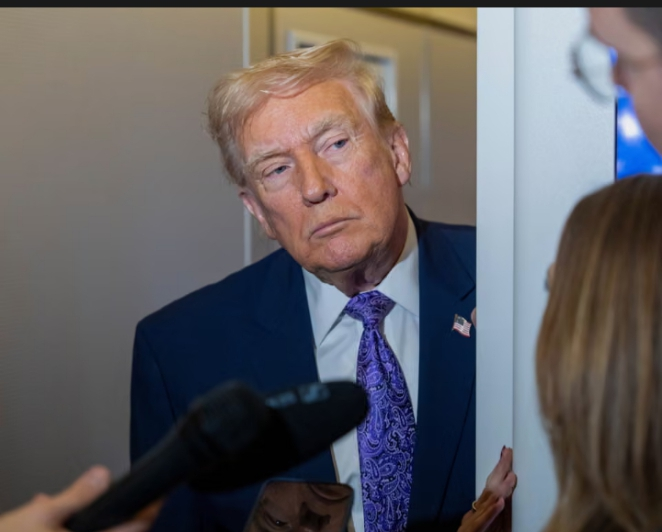
The US president argued Europe’s leaders have allowed unvetted arrivals, insisting the openness reflects ideological negligence rather than meaningful policy thinking guided by security considerations or cultural preservation concerns.
Trump’s criticism ignited broader European migration crisis debate as he warned that failure to enforce strict borders would accelerate institutional fragility already visible within multiple European Union states.
He said Europe is ‘decaying’ group of nations because governments repeatedly ignore public anxieties, creating a vacuum where populist movements rise while mainstream leadership refuses acknowledging underlying societal tensions.
Trump praised Hungary for its border policies, suggesting Viktor Orbán demonstrated strength by prioritising national identity and confronting migration challenges without accommodating external criticism or international pressure.
He also highlighted Poland’s actions, claiming they set an example other European nations should follow, particularly those experiencing political turbulence related to inconsistent enforcement of immigration rules.
According to Trump, Europe’s instability stems not only from migration but also from leadership unwilling to challenge global expectations that conflict with domestic security priorities and cultural preservation agendas.
He framed this as a defining issue of the twenty-first century, asserting that national survival requires courage from elected officials, not adherence to fashionable ideological frameworks weakening governmental decision-making.
The interview deepened US–Europe political tensions by portraying European political structures as fragile and poorly coordinated, particularly regarding defence, border security, and international cooperation during intensifying global geopolitical competition.
Trump argued American support for Europe should depend on European willingness to confront migration responsibly, rather than expecting unconditional backing while maintaining policies he called disastrous.
He reiterated his readiness to support political candidates across Europe who align with his worldview, acknowledging he endorsed figures many Europeans dislike, including Hungarian Prime Minister Viktor Orbán.
Trump suggested his endorsements contributed to reshaping political debates across Europe, reinforcing nationalist narratives centred on cultural defence, religious identity, territorial integrity, and public resentment toward rapid demographic transformation.
The former president insisted Europe weakened itself by embracing political correctness, arguing leaders prioritised emotional rhetoric instead of practical planning capable of defending borders and stabilising populations under pressure.
He added that mass migration would make Europe significantly weaker because incoming groups “possess different ideologies,” which he believes undermine long-standing European societal values and institutional foundations established generations earlier.
Trump stated that European countries should expel individuals who entered illegally, emphasising enforcement and removal are essential components of stable immigration systems protecting vulnerable communities from security risks.
He claimed European governments lack commitment to implementing necessary deportations, citing bureaucratic delays, legal obstacles, and political reluctance driven by fear of public criticism or international human rights arguments.
Trump’s critique expanded beyond migration, stressing that ideological priorities have distracted European leaders from addressing urgent economic challenges, demographic decline, defence responsibilities, and internal governance weaknesses.
He argued Europe is ‘decaying’ group of nations because leadership fails recognising these interconnected problems, preferring symbolic gestures rather than difficult decisions capable of restructuring national institutional capacity.
Trump commented that Europe’s influence globally has declined steadily due to internal contradictions and the absence of strategic clarity, leaving the continent dependent on external actors for security.
He suggested Europe’s military contributions remain insufficient, warning that geopolitical conflicts demonstrate the importance of strong defence capabilities, yet European nations avoid significantly increasing spending or responsibilities.
Trump dismissed European involvement in Ukraine peace efforts, saying European governments “talk but don’t produce,” suggesting symbolic diplomacy has failed achieving measurable progress toward sustainable conflict resolution.
He insisted European governments lack negotiation leverage because they depend heavily on American security guarantees, limiting their freedom to act independently or assert strong diplomatic positions.
Trump’s criticism extended to specific officials, with Trump comments on Sadiq Khan reigniting longstanding confrontations between the two political figures across their continuing transatlantic rhetorical disputes.
He referred to London’s mayor as “a disaster,” claiming Khan’s leadership contributed to rising insecurity and declining urban conditions within one of Europe’s most globally recognisable cities.
Trump said he “hates what happened to London and Paris,” suggesting cultural transformation accelerated by migration and leadership failure eroded historic identities essential to European civilisation.
He argued city officials represent broader national weakness, claiming local governance illustrates the consequences of political correctness overtaking security priorities and traditional European cultural frameworks.
Trump’s repeated statements reinforced perceptions that US–Europe political tensions will intensify as long as disagreements over migration, security policy, and ideological direction remain unresolved.
He emphasised Europe must reconsider foundational principles if it hopes to recover strength, insisting strategic clarity and cultural confidence must replace indecision dominating policy across multiple nations.
Trump framed his remarks as warnings rather than attacks, though critics argue his language undermines diplomatic relations and fuels polarisation among populations already divided over migration issues.
Despite backlash, Trump continued defending his comments, arguing real leadership requires confronting uncomfortable truths, not avoiding debates simply to protect political feelings or maintain international approval.
Analysts suggest his remarks may influence political discourse, especially within nations experiencing pressure from right-wing parties promising stronger borders and more assertive national identity protection.
Trump’s assertions highlight transatlantic ideological divergence, with American conservative politics increasingly contrasting with Europe’s centrist and liberal traditions guiding policy responses to twenty-first century challenges.
His interview underscores deeper philosophical conflict about governance, migration, sovereignty, and identity, shaping debates that will define future cooperation between the United States and European nations.
Trump reiterated Europe is ‘decaying’ group of nations because leadership refuses acknowledging widespread public dissatisfaction, instead focusing on maintaining institutional appearances rather than embracing structural reform.
He concluded Europe’s future depends on rediscovering courage and rejecting political correctness, warning inaction will accelerate weakening already visible across political, cultural, and security landscapes.
Many European officials responded cautiously, emphasising cooperation remains essential despite disagreements, noting shared interests outweigh rhetoric that risks destabilising historically important transatlantic alliances.
Observers say Europe faces genuine pressures but disputes remain over causes, with some attributing challenges to economic inequality rather than migration or ideological leadership shortcomings.
Others argue Trump’s comments may energise nationalist parties seeking stronger borders, potentially reshaping future electoral dynamics within several European countries confronting identity and security debates.
The interview reveals how migration remains Europe’s most politically explosive issue, shaping narratives about stability, cultural confidence, and governmental responsibility during rapid demographic transformation.

Ultimately, Trump’s remarks intensify global attention on whether Europe can reconcile humanitarian commitments with public demand for stronger borders, security, and cultural preservation in evolving political contexts.
His comments may influence future US policies toward Europe, particularly regarding defence cooperation, diplomatic engagement, and shared responsibilities within increasingly complex international security environments.
The controversy ensures Europe remains central to global debate, with questions surrounding sovereignty, migration, and leadership shaping international discourse throughout this era of heightened geopolitical uncertainty.
About The Author