

Former Kaduna State governor, Nasir El-Rufai, has called for clarity and openness over reports that the Office of the National Security Adviser allegedly procured a significant quantity of a hazardous chemical substance.
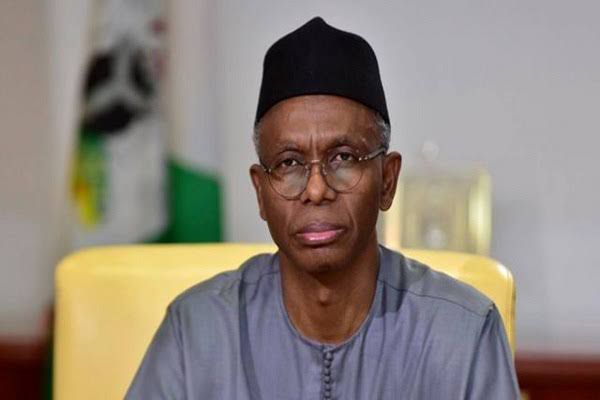
In a formal letter dated January 30, El-Rufai addressed his concerns to Nuhu Ribadu, urging him to provide detailed explanations regarding the reported acquisition of about 10 kilogrammes of thallium sulphate.
According to El-Rufai, information available to opposition political leaders indicated that the chemical was sourced from a supplier in Poland.
He stated that his request was not driven by partisan rivalry but by a sense of civic responsibility.
As a public figure and citizen, he said he believed it was important to seek assurances about matters that could potentially affect public health and national security.
Thallium sulphate is widely recognised as a highly toxic compound.
Because of its dangerous properties, its production, distribution and use are typically subject to strict international regulations.
El-Rufai emphasised that substances of this nature require careful monitoring, transparent procurement procedures and clear documentation to prevent misuse or accidental exposure.
He therefore requested clarification on the exact purpose for which the material was obtained and how it is intended to be used.
In his correspondence, El-Rufai asked whether the procurement followed all established legal frameworks.
Read also: Presidency reacts to wiretapping controversy involving El-Rufai
Shehu Sani demands El-Rufai probe over Kaduna governance record
He specifically sought confirmation on whether the importation was covered under an existing chemical permit or a defence-related authorisation.
Additionally, he requested the identity of the supplier and documentation supporting the transaction. These details, he argued, are necessary to ensure that due process was observed.
Beyond the procurement process itself, El-Rufai also raised concerns about safety protocols.
He asked the Office of the National Security Adviser to disclose how the substance was transported into the country and what security arrangements were put in place upon arrival.
Given the compound’s extreme toxicity, he said it was vital to understand where it is currently stored and which agency is responsible for its safekeeping.
Regulatory oversight formed another key part of El-Rufai’s inquiry. He questioned whether relevant national agencies were consulted or notified before and after the importation.
In particular, he referenced the National Agency for Food and Drug Administration and Control (NAFDAC) and the Nigeria Centre for Disease Control (NCDC), institutions typically tasked with monitoring hazardous substances and safeguarding public health.
He also alluded to the possible involvement of environmental authorities in ensuring compliance with safety standards.
El-Rufai further requested information about any public health risk assessments conducted in connection with the chemical’s importation.
He asked whether mitigation strategies had been designed to address potential exposure risks and whether contingency plans were in place in case of accidental release or misuse.
According to him, transparency in such matters strengthens public confidence in national security institutions.
While reiterating that his letter was written in good faith, El-Rufai noted that accountability and openness are cornerstones of democratic governance.
He stressed that public trust is reinforced when government offices provide timely and detailed explanations on sensitive matters.
To encourage constructive dialogue, he requested either a direct response from Ribadu or the designation of a contact person within the NSA’s office for further engagement.
The former governor copied his letter to the leadership of NAFDAC and NCDC, as well as to the national chairmen of the African Democratic Congress (ADC) and the Peoples Democratic Party (PDP).
This move signalled that the issue had attracted attention within broader political circles and was not confined to private correspondence.
In a related development, El-Rufai recently made claims during an appearance on a programme aired by Arise Television.
He alleged that he had listened to an intercepted phone conversation involving Ribadu.
According to him, the conversation purportedly contained directives aimed at facilitating his arrest.
Although he acknowledged that accessing such a recording would be unlawful, he argued that phone surveillance is a practice frequently associated with government operations.
These claims have added a layer of political tension to the unfolding situation. Observers note that the intersection of national security concerns, alleged chemical procurement and accusations of surveillance has heightened public interest in the matter.
For many, the central issue remains whether proper procedures were followed and whether adequate safeguards are in place.
As of now, there has been no official public response from the Office of the National Security Adviser addressing El-Rufai’s questions.
The absence of immediate clarification has fueled further debate among political stakeholders and members of the public.
Ultimately, El-Rufai maintains that his objective is not confrontation but transparency.
He insists that clear communication and adherence to regulatory standards are essential in preserving confidence in national institutions.


About The Author


