DSS arraigns El-Rufai Feb 25 over NSA phone interception, cybercrime
The DSS arraigns El-Rufai Feb 25 over NSA phone interception, cybercrime in a case that is set to test the scope of Nigeria’s updated cybercrime laws and the limits of political speech in the digital era.
Nigeria’s domestic intelligence agency, the Department of State Services, has filed a three-count criminal charge against former Kaduna State Governor, Nasir El-Rufai, accusing him of unlawfully intercepting the telephone communications of the National Security Adviser, Nuhu Ribadu.
The matter, marked FHC/ABJ/CR/99/2026, has been assigned to Justice Joyce Abdulmalik of the Federal High Court, Abuja Division. The Chief Judge of the court, John Tsoho, approved the assignment and fixed February 25 for arraignment.
Charges rooted in cybercrime law
According to court filings seen by our correspondent, the prosecution alleges that El-Rufai admitted during a televised interview that he and others intercepted the NSA’s phone conversations. The interview, which aired on Arise TV’s Prime Time programme, has become central to the prosecution’s case.
In the first count, the DSS contends that the former governor’s statements amount to an admission of unlawful interception of electronic communications, contrary to Section 12(1) of the Cybercrimes (Prohibition, Prevention, etc.) Amendment Act, 2024.
The agency argues that such conduct constitutes a breach of national security infrastructure.
The second count alleges that El-Rufai acknowledged knowing an individual involved in the alleged interception but failed to report the matter to relevant authorities, an offence the prosecution says is punishable under Section 27(b) of the same Act.
A third count, according to sources familiar with the charge sheet, references alleged violations of the Nigerian Communications Act, 2003, particularly provisions dealing with unauthorised access to telecommunications systems.
The DSS arraigns El-Rufai February 25 over NSA phone interception, cybercrime amid heightened political tension, with legal experts noting that the interpretation of “admission” during media interviews may become a contentious issue during trial.
Background to the controversy
During the Arise TV interview, El-Rufai claimed he overheard Ribadu directing security operatives to detain him. He linked the alleged directive to what he described as an attempted arrest at the Nnamdi Azikiwe International Airport on February 12 upon his return from Cairo, Egypt.
The former governor’s remarks triggered widespread debate, with supporters describing them as whistleblowing and critics arguing they could undermine national security protocols.
Shortly after the interview, El-Rufai was detained for questioning by the Economic and Financial Crimes Commission over an alleged N432bn fraud case. He was granted administrative bail later that evening.
However, his legal troubles did not end there. Sources indicated that he was subsequently taken into custody by the Independent Corrupt Practices and Other Related Offences Commission in connection with a separate investigation.
The rapid sequence of events has intensified scrutiny around the case, with political observers suggesting that the proceedings could have broader implications for opposition figures and former office holders.
Legal implications and expert views
The DSS arraigns El-Rufai February 25 over NSA phone interception, cybercrime at a time when Nigeria’s amended cybercrime framework is still being tested in court.
Legal analysts say the prosecution will need to establish beyond reasonable doubt that any alleged interception occurred and that it was carried out without lawful authority. They also note that statements made during media interviews do not automatically constitute proof of criminal conduct unless corroborated by independent evidence.
A senior Abuja-based lawyer, who requested anonymity due to the sensitivity of the case, explained that the defence may argue that the interview comments were taken out of context or did not amount to a confession under Nigerian law.
Others have pointed out that the case could clarify how the courts interpret the duty to report knowledge of cyber offences, particularly where such knowledge is disclosed publicly.
Political undertones
The DSS arraigns El-Rufai February 25 over NSA phone interception, cybercrime against a backdrop of shifting political alliances and growing public discourse around governance and accountability.
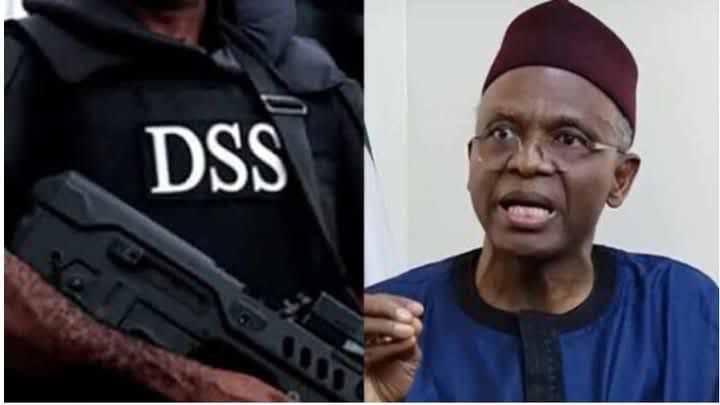
El-Rufai, a prominent political figure and former governor, has remained outspoken on national issues. His arraignment has sparked mixed reactions across party lines, with some calling for due process and others urging restraint to avoid politicising security institutions.
While the DSS has not issued further public statements beyond the charge, court insiders say preparations are underway for what could be a closely watched arraignment.
At the arraignment, the charges will be formally read to the defendant, who is expected to enter a plea. If he pleads not guilty, the court will likely consider bail conditions and set timelines for trial.
Given the gravity of the allegations, proceedings may attract heightened security presence and significant public interest.
For now, all eyes remain on the Federal High Court in Abuja as the DSS arraigns El-Rufai February 25 over NSA phone interception, cybercrime, a case that could redefine the boundaries between political speech, national security, and digital privacy in Nigeria.