Two people were killed and several injured in the Donga Mosque Clash in Taraba as rival factions fought over Donga Central Mosque leadership.
Two people have been confirmed dead while several others sustained injuries following a violent confrontation between rival religious groups in Taraba State.
The Donga Mosque Clash, which occurred on Tuesday, October 28, 2025, reportedly erupted over a long-standing leadership dispute surrounding the Donga Central Mosque.
The violent outbreak threw the once-peaceful Donga town into confusion, leaving destruction and sorrow in its wake.
Witnesses said the clash, which involved supporters of the Izala Jos sect and members of the Danburam family, was sparked by disagreements over who should occupy the position of Imam of the mosque situated directly opposite the palace of the Paramount Ruler of Donga Chiefdom.
According to reports from Daily Trust, the Donga Mosque Clash began when intelligence reached authorities that one faction intended to forcibly seize control of the disputed mosque. Sources revealed that the two rival groups had been at odds for months, each insisting on its right to lead the congregation.

Despite several peace efforts by religious leaders and community elders, tensions persisted. Matters escalated on Tuesday evening after news spread that both camps were mobilizing their followers in preparation for a possible confrontation.
Security agencies reportedly acted swiftly to avert the crisis. The Divisional Police Officer in Donga summoned representatives from both sides for an emergency meeting, warning them against any action that might lead to public disorder.
Working in collaboration with the Nigeria Security and Civil Defence Corps (NSCDC) and the Department of State Services (DSS), the police deployed personnel to the vicinity of the Donga Central Mosque. Their goal was to ensure peace and prevent any outbreak of violence.
However, the situation soon spiraled out of control. Both sides allegedly ignored the warnings and mobilized large numbers of youths armed with dane guns, machetes, cutlasses, and stones, turning the area into a battleground.
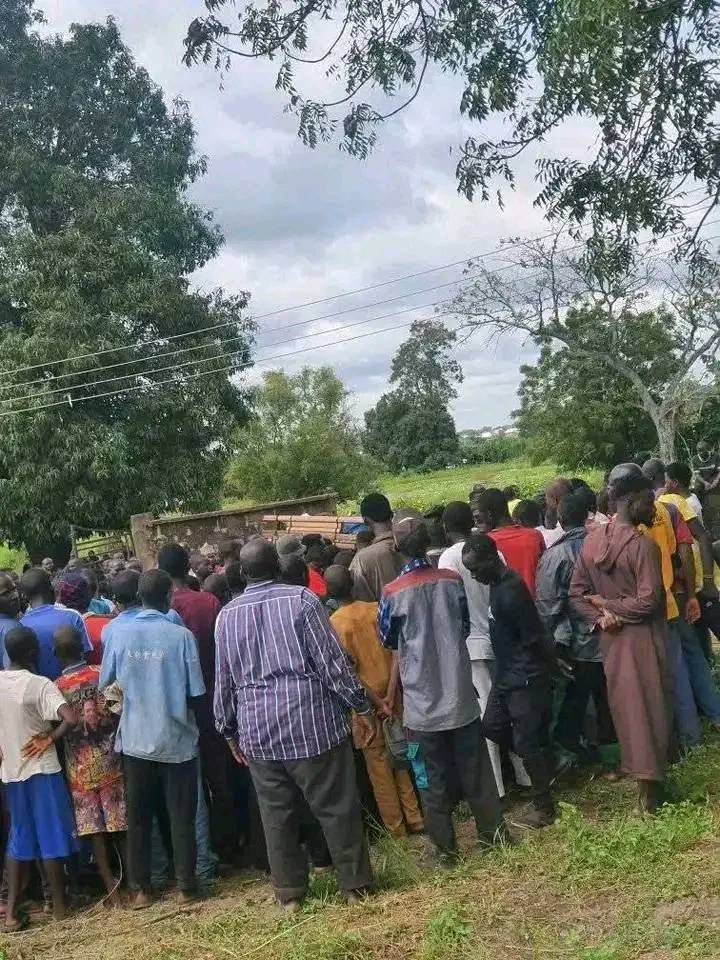
Eyewitnesses recounted that chaos erupted around 6:00 p.m. when the rival factions confronted each other near the mosque. The clash quickly escalated into full-blown violence as residents fled for safety.
Security operatives struggled to contain the fighting, deploying tear gas and smoke grenades to disperse the rioters. Amid the chaos, Biliya Zakari, a 20-year-old resident of Asibiti Ward, was fatally hit, while another unidentified person also lost his life. Several others were injured, and a temporary structure near the mosque was set ablaze.
The Donga Mosque Clash lasted several hours before order was restored, leaving behind a trail of fear, destruction, and grief among residents.
By late Tuesday night, calm gradually returned to the area following a reinforcement of police and military patrols. The Taraba State Police Command confirmed the incident, stating that normalcy had been restored but that additional officers would remain on ground to maintain peace.
Police authorities also assured residents that investigations were underway to identify and prosecute those responsible for instigating the Donga Mosque Clash.
“We have restored peace, but we will not tolerate any further breakdown of law and order,” a police spokesperson declared.
Meanwhile, the Taraba State Government, through the Ministry of Religious Affairs, has pledged to mediate between the warring factions to prevent future violence.
The Paramount Ruler of Donga Chiefdom expressed deep concern over the incident, condemning the bloodshed and calling for unity among the people. He urged all religious leaders in the area to put aside their differences and work together for lasting peace.
Similarly, community elders described the Donga Mosque Clash as a needless tragedy that could have been avoided through dialogue and patience.
A respected elder, Mallam Ibrahim Jatau, lamented the situation: “This was an unnecessary loss of life. The leadership of a mosque should never be a reason for brothers to kill each other. We must learn to resolve our differences peacefully.”
Another resident, Aisha Abubakar, recalled the fear that gripped the community. “The gunshots were terrifying. Everyone ran indoors. We don’t want to experience such again,” she said.
Human rights organizations and civil society groups have condemned the violence, calling on security agencies to bring all perpetrators to justice. They emphasized that the Donga Mosque Clash underscores the urgent need for religious tolerance and conflict resolution mechanisms within communities.
The Taraba State Government has also directed the establishment of a peace and reconciliation committee to address the root causes of the conflict. The committee is expected to engage the two factions and propose sustainable ways of managing religious leadership disputes across the state.
Security experts have further advised authorities to strengthen community intelligence systems to prevent such clashes from escalating in the future. They noted that early intervention, dialogue, and continuous community engagement remain key to preserving peace.
The Donga Mosque Clash serves as a painful reminder of the consequences of unresolved leadership and religious rivalries. While calm has returned to Donga, the tragedy has left behind grief, fear, and questions about how such conflicts can be permanently prevented.
Authorities have vowed to pursue justice, restore confidence, and promote peace among residents. As investigations continue, the people of Donga are hopeful that this sad chapter will mark a turning point towards unity, understanding, and respect among all religious groups in the region.

More news at ireport247news