

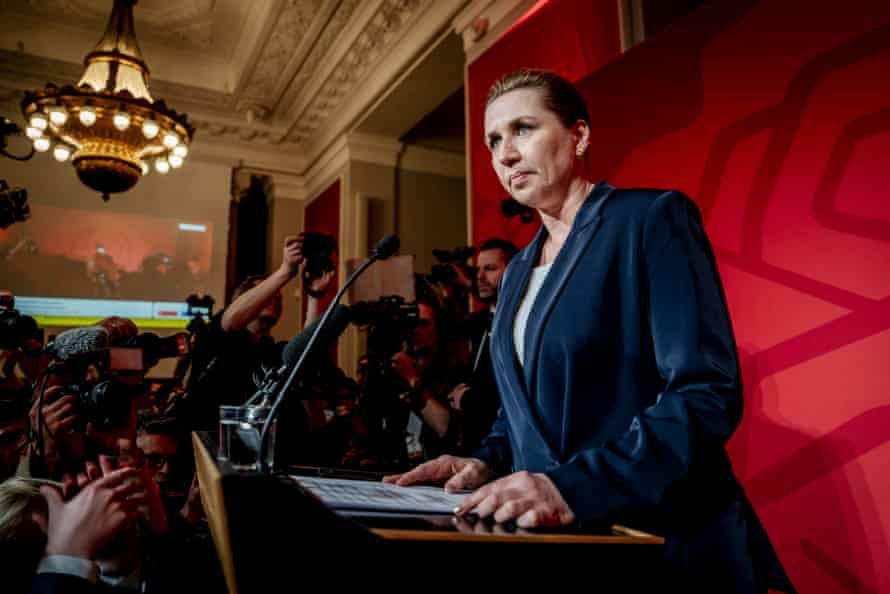
Denmark coalition talks have begun after Mette Frederiksen was given the first chance to form a government following an election that produced no clear parliamentary majority.
The result has created a fragmented political landscape, with both left and right blocs falling short of the numbers required to govern independently, forcing negotiations across ideological divides.
Frederiksen’s Social Democrats remain the largest party despite recording one of their weakest performances in more than a century, complicating efforts to build a stable governing coalition.
The Danish political system often relies on coalition governments, but the current arithmetic suggests particularly complex and potentially lengthy negotiations ahead for all parties involved.
Leaders have acknowledged the difficulty of the situation, noting that the outcome reflects voter uncertainty and shifting political priorities within the country.
Attention has quickly turned to potential alliances, with centrist figures expected to play a decisive role in determining the shape of the next administration.
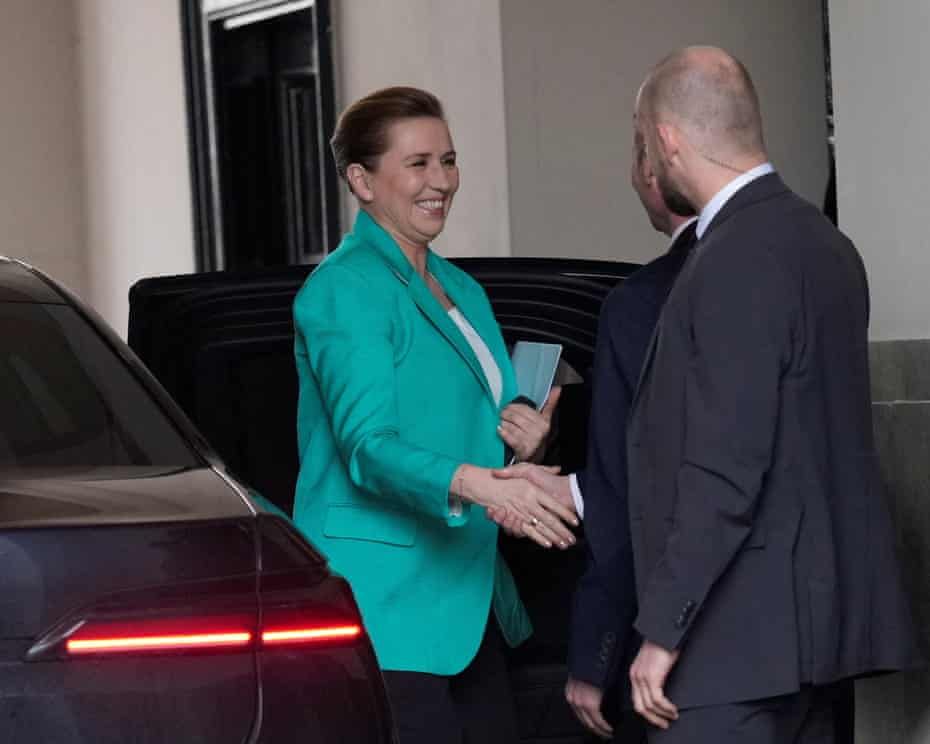
Lars Løkke Rasmussen and his Moderates party are widely viewed as kingmakers, holding enough seats to influence whether a left-leaning or right-leaning coalition emerges.
Rasmussen has called for cooperation across traditional political divides, urging major parties to move toward the center to achieve a workable majority.
Meanwhile, leaders of right-leaning parties have signaled reluctance to join a government led by Frederiksen, further narrowing the available coalition options.
This resistance highlights ideological tensions that could prolong discussions and complicate compromise on key policy issues.
Frederiksen has emphasized the urgency of forming a government, pointing to global uncertainties that require stable leadership and swift decision-making.
Her comments reflect broader concerns about economic pressures, security challenges, and international developments affecting Denmark and Europe.
Coalition negotiations in Denmark often involve detailed agreements on policy priorities, making the process both time-consuming and politically sensitive.
The current talks are expected to address issues such as immigration, economic policy, and climate commitments, all of which have been central to recent political debates.
Immigration policy in particular has been a contentious topic, with Frederiksen adopting stricter measures that have drawn both support and criticism.
These positions may influence negotiations, especially with parties that hold differing views on social and economic policies.
Recent election results also highlighted gains by smaller parties, reflecting a more diverse political landscape and increasing the complexity of coalition building.
The Green Left party emerged as a significant force, attracting voters who shifted away from traditional parties in response to policy changes.
On the other side of the spectrum, right-wing parties also improved their standings, indicating continued polarization among the electorate.
This fragmentation means that no single bloc can dominate, reinforcing the need for compromise and cooperation across political lines.
The role of regional representatives, including those from Greenland, has also gained attention in the wake of the election results.
Their presence in parliament adds another layer of complexity to negotiations, particularly on issues related to autonomy and national unity.
Frederiksen has indicated willingness to explore multiple coalition configurations, signaling flexibility in her approach to forming a government.
However, political realities may limit options, as parties weigh the risks and benefits of entering into potentially fragile alliances.
Observers suggest that negotiations could take weeks, given the number of parties involved and the depth of policy differences.
Such extended talks are not uncommon in parliamentary systems, especially when election results produce evenly balanced outcomes.
During this period, the outgoing government typically remains in a caretaker role, ensuring continuity of governance.
Public expectations are focused on achieving stability, with many voters hoping for a coalition capable of addressing pressing national and international issues.
Economic concerns, including inflation and global market uncertainties, are likely to influence policy discussions among negotiating parties.
Security considerations, particularly within the broader European context, may also shape the priorities of the next government.
The outcome of the talks will determine Denmark’s political direction in the coming years, with implications for both domestic policy and international relations.
Frederiksen’s leadership will be closely scrutinized as she attempts to navigate the complex negotiations required to secure a governing majority.
The involvement of centrist and smaller parties underscores the importance of consensus-building in the current political environment.
Ultimately, the success of the coalition talks will depend on the willingness of parties to compromise and align on shared objectives.
Read also: Iran closely monitoring US troop deployments, says Tehran official
As discussions continue, political observers and the public alike will be watching for signs of progress toward a stable and effective government.
The process reflects the challenges inherent in democratic systems where diverse viewpoints must be reconciled to achieve governance.
For now, uncertainty remains, but the negotiations represent a critical step in shaping Denmark’s future political landscape.
More: Ireport247news
About The Author
