No plan to introduce mandatory training for youths – Defence minister
Amid renewed public debate over national service and youth participation in security, the Federal Government has firmly clarified that there is no plan to introduce mandatory training for youths under a compulsory military framework.
The Minister of Defence, Christopher Musa, stated that Nigeria will continue to operate a professional volunteer armed forces model rather than adopt compulsory military service.
His position comes against the backdrop of persistent security challenges and growing calls in some quarters for structural reforms within the defence architecture.
Represented at a public event in Abuja by Col. George Usibe, the minister spoke during the presentation of a new book examining the prospects of mandatory military service for Nigerian youths.
While acknowledging the intellectual contribution of the publication to national discourse, he emphasised that it does not reflect current government policy.
Professional volunteer force remains central
According to the minister, Nigeria’s security framework is anchored on a professional volunteer military dedicated to safeguarding sovereignty and supporting civil authorities during internal security operations.
He stressed that this structure aligns with international best practices adopted by many countries that prioritise specialised, career-based armed forces over mass conscription.
He further explained that civic participation in nation-building is already institutionalised through programmes such as the National Youth Service Corps. The scheme, established to foster national integration, remains a central pillar of youth engagement and cross-cultural exposure across the federation.
By reiterating that there is no plan to introduce mandatory training for youths, the government sought to dispel speculation that it might be considering a draft-style model in response to insecurity.
Global comparisons and local realities
The book’s author, Mohammed Abubakar, argued that countries such as Finland, Israel, South Korea and Singapore have leveraged mandatory military service to reinforce national cohesion and security preparedness. He cited survey findings suggesting significant public support for compulsory service as a potential response to insecurity.
However, the defence minister maintained that security outcomes are shaped by a complex interplay of governance quality, institutional capacity, technological sophistication and public trust—rather than manpower models alone.
Security experts note that while conscription can expand force numbers, it also requires substantial fiscal commitment, logistical coordination and administrative oversight.
In Nigeria’s context, analysts argue that sustaining a compulsory system would demand significant budgetary allocations for training facilities, housing, equipment and welfare—factors that must be weighed carefully.
Constitutional and economic considerations
Reaffirming that there is no plan to introduce mandatory training for youths, the minister underscored that any future policy shift would need to align with constitutional provisions, socio-economic realities and the country’s institutional readiness.
He described Nigeria’s current defence reform agenda as focused on operational readiness, technological advancement, joint operations capability and inter-service coordination.
According to him, preserving a highly professional armed forces remains a strategic priority, especially at a time when asymmetric threats require specialised training and modern equipment.
Policy analysts have long cautioned that rapid expansion of military intake without corresponding investments in quality assurance could dilute operational standards. As such, the government’s emphasis appears to be on strengthening the existing professional corps rather than broadening recruitment through compulsion.
Civic service and hybrid approaches
While ruling out compulsory military service, the minister indicated that Nigeria remains open to evidence-based dialogue on innovative models of national service.
He suggested that hybrid approaches—expanding voluntary reserve participation, enhancing community resilience programmes and scaling youth skills development initiatives—could offer balanced alternatives.
Such measures, observers say, may allow broader youth engagement in nation-building without imposing mandatory enlistment. Expanding structured civic platforms could also deepen social cohesion while maintaining fiscal sustainability.
The debate over whether to introduce mandatory training for youths has intensified in recent months, particularly in light of security incidents across various regions.
Advocates argue that structured service can instil discipline and civic responsibility. Critics, however, caution against potential unintended consequences, including economic disruption for young people and administrative overload.
Balancing ambition with feasibility
Defence policy specialists emphasise that national security reforms must strike a balance between ambition and feasibility. Countries that operate conscription systems often have deeply embedded institutional frameworks and long-standing legal provisions that support such arrangements.
In contrast, Nigeria’s defence transformation efforts have centred on professionalisation, intelligence-driven operations and technological upgrades. Maintaining focus on these priorities, officials say, is critical to ensuring sustainable security gains.
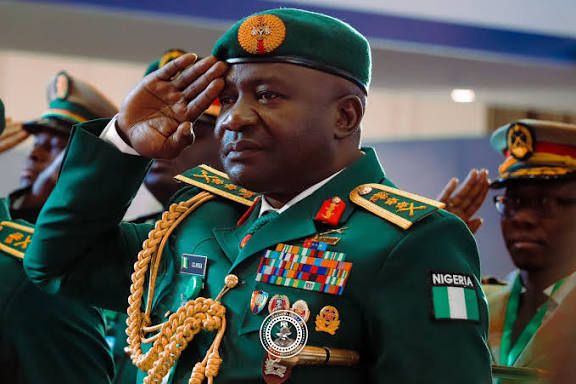
By clarifying that there is no plan to introduce mandatory training for youths, the government has attempted to provide policy certainty at a time of heightened public scrutiny. The message signals continuity in defence strategy, even as authorities remain receptive to scholarly contributions and public debate.
As conversations on national service continue, stakeholders across academia, civil society and the security sector are expected to weigh in on the most viable pathways to strengthening national resilience.
For now, however, Nigeria’s approach remains firmly rooted in a volunteer military complemented by civic engagement initiatives.
About The Author