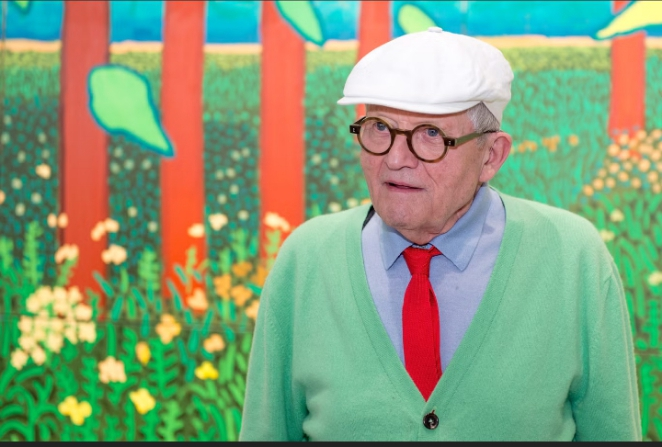
David Hockney Bayeux Tapestry UK loan criticism has intensified public debate after the celebrated British artist warned that plans to transport the medieval artefact from France to London could cause irreversible damage.
Hockney described the proposal to exhibit the fragile 11th-century embroidery at the British Museum as “madness”, arguing that the risks involved far outweigh any symbolic or educational benefits.
David Hockney, widely regarded as one of Britain’s greatest living painters, made the intervention amid growing anticipation surrounding the proposed nine-month exhibition of the Bayeux Tapestry in the UK.
The historic textile, which chronicles the Norman conquest of England in 1066, has been housed in Bayeux, Normandy, for centuries and has rarely left its carefully controlled environment.
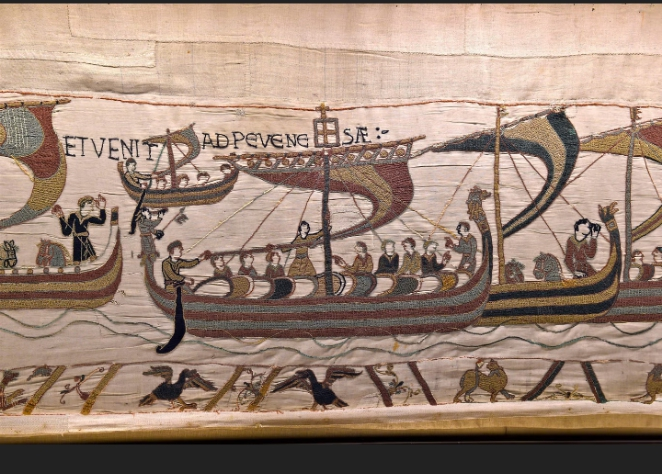
The 70-metre-long embroidery is considered one of the most important surviving works of medieval art.
Depicting 58 narrative scenes, the tapestry illustrates the events leading up to the Battle of Hastings and the rise of William the Conqueror as England’s first Norman king. Its cultural and historical significance has earned it a place on Unesco’s Memory of the World register.
The UK government has reportedly insured the tapestry for around £800m during the proposed loan, highlighting both its immense value and fragility.
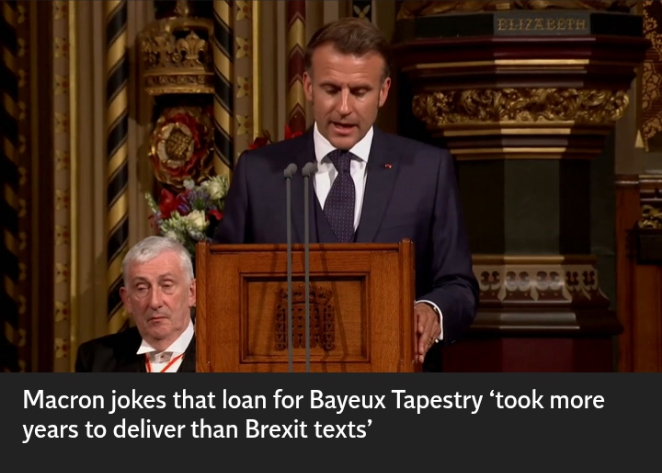
Prime minister Keir Starmer previously described the artefact as a “unique treasure”, while the British Museum has promoted the exhibition as a once-in-a-generation opportunity for British audiences.
Hockney, however, has strongly rejected the idea that public access justifies the risks.
Writing in a strongly worded intervention, the artist warned that moving the tapestry exposes it to environmental changes that could permanently alter its condition.
He argued that even minor fluctuations in temperature, humidity, or light could lead to fibre stress, colour fading, or structural weakening.
According to Hockney, the tapestry’s survival for nearly 1,000 years is largely due to its stability. He noted that it has endured wars, revolutions, and political upheaval precisely because it has remained in a carefully managed setting.
Removing it from Bayeux, he said, places the artefact in unnecessary danger for what he characterised as a “vanity project”.
The artist questioned why an institution that prides itself on conservation would take what he called such a reckless gamble.
He suggested that the desire to attract millions of visitors may be overshadowing professional caution, accusing decision-makers of prioritising prestige over preservation.
Hockney also raised concerns about the physical act of transportation itself. The tapestry is backed on fragile linen and stitched with wool threads that are highly sensitive to movement. Any vibration or handling during transit, he warned, could result in stitch loss, tearing, or distortion of the fabric.
Beyond transportation, Hockney highlighted the risks associated with prolonged public display. Increased exposure to light and air during a high-profile exhibition could accelerate deterioration, particularly in areas already weakened by age. He argued that once damage occurs, it cannot be undone.
The British Museum has defended its plans, stating that its conservation teams are experienced in handling delicate materials and are working closely with French experts. Museum officials have emphasised that strict environmental controls will be in place throughout the exhibition.
Despite these assurances, opposition has continued to grow. More than 40,000 people signed a petition last year urging authorities to halt the loan, while several art historians and heritage experts have expressed alarm over the tapestry’s condition.
The controversy also touches on wider debates surrounding museum ethics and cultural ownership.
The British Museum has long faced criticism for retaining artefacts acquired during the colonial era, including the Elgin Marbles and the Rosetta Stone. Critics argue that the Bayeux Tapestry dispute reflects a broader tension between global access and local stewardship.
The loan agreement forms part of a wider cultural exchange between the UK and France. In return for hosting the tapestry, the British Museum is expected to loan significant artefacts such as the Sutton Hoo collection and the Lewis Chessmen to French institutions.
Supporters of the exchange argue that such collaborations strengthen international cultural ties and allow shared heritage to be appreciated by wider audiences. However, opponents maintain that some objects are simply too fragile to travel, regardless of diplomatic or educational value.
Hockney has called for a full public debate before the loan proceeds. He believes the decision should involve not only museum administrators and politicians but also conservators, historians, and the wider public.
The Bayeux Museum in northern France is currently undergoing renovation, a factor that contributed to the agreement for the tapestry to travel.
While French authorities have approved the loan, concern remains high among conservation specialists on both sides of the Channel.
For Hockney, the issue is ultimately about responsibility to future generations. He has insisted that preserving the tapestry in its current home is the safest course of action, warning that once damaged, a masterpiece of such scale and importance can never truly be restored.
As plans continue to advance, the debate shows no sign of fading. Whether the tapestry ultimately makes the journey to London or remains in Bayeux, the controversy has already reignited fundamental questions about how humanity’s most fragile treasures should be protected.
Read also: 22 killed, scores injured as crane collapses on passenger train in Thailand
About The Author