

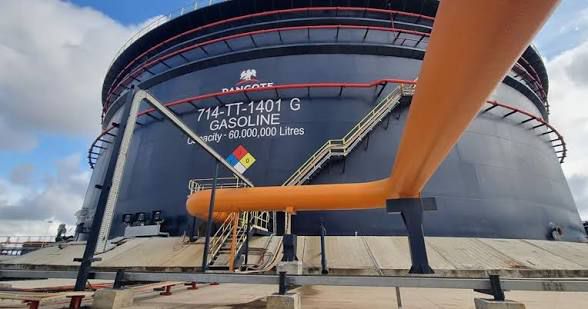
Dangote Refinery Fuel Supply Assurance Amid Crude Shortage Concerns
Nigeria’s energy landscape is facing renewed scrutiny as the Dangote refinery fuel supply assurance comes under focus amid rising concerns over crude oil shortages and increasing global demand for refined petroleum products.
The Dangote Petroleum Refinery has reaffirmed its commitment to meeting domestic fuel needs, even as it navigates supply constraints linked to inadequate crude oil allocation. The refinery, Africa’s largest with a processing capacity of 650,000 barrels per day, has become a central pillar in Nigeria’s efforts to achieve energy security and reduce dependence on fuel imports.
Speaking in a recent interview, Aliko Dangote disclosed that while demand for refined products remains exceptionally high, the facility is experiencing tight supply levels for key fuels such as aviation fuel and diesel.
According to him, the refinery currently holds excess petrol but is nearly depleted of other critical products due to surging consumption across local and international markets.
Rising Demand Tests Dangote Refinery Fuel Supply Assurance
The Dangote refinery fuel supply assurance is being tested at a time when global oil markets are experiencing volatility, particularly due to geopolitical tensions affecting supply routes. The ongoing Middle East crisis has disrupted petroleum flows, pushing countries across Africa, Europe, and Asia to seek alternative suppliers.
Industry observers note that Nigeria, despite being an oil-producing nation, remains vulnerable to such global shocks. This vulnerability has amplified reliance on the Dangote refinery as a stabilising force in the domestic fuel market.
A senior official within the Dangote Group confirmed that the company remains committed to prioritising local supply, provided adequate crude oil is made available. The official emphasised that the refinery would not allow Nigerians to face shortages, reinforcing the Dangote refinery fuel supply assurance as a strategic commitment to national energy stability.
However, the assurance comes with a caveat. If the refinery continues to rely on imported crude oil due to insufficient domestic supply, it may be compelled to export its refined products to remain commercially viable.
Crude Supply Gap Raises Strategic Concerns
One of the key challenges affecting the Dangote refinery fuel supply assurance is the shortfall in crude oil allocation. The refinery reportedly requires approximately 19.7 million barrels of crude monthly to operate optimally but currently receives less than five million barrels.
Discussions are ongoing between the refinery and Nigerian National Petroleum Company Limited, alongside other oil producers, to address the supply deficit. Industry experts warn that failure to resolve this gap could undermine Nigeria’s goal of achieving fuel self-sufficiency.
Further insights from refinery management reveal that the facility has had to source crude oil from international markets, often at higher costs. This development not only increases production expenses but also creates a paradox where locally produced crude is exported while the refinery imports feedstock.
Production Capacity and Export Dynamics
Despite these constraints, the refinery continues to operate at significant capacity, producing approximately 75 million litres of petrol, 25 million litres of diesel, and 20 million litres of aviation fuel daily.
Recent export activities underscore its growing influence in regional energy markets, with shipments delivered to countries such as Côte d’Ivoire, Ghana, Togo, Cameroon, and Tanzania.
The strong demand from international buyers highlights the refinery’s competitiveness but also raises questions about balancing export commitments with domestic supply obligations.
Analysts argue that the Dangote refinery fuel supply assurance will depend heavily on policy alignment between government agencies and private sector operators to ensure that local demand is not compromised.
Diesel Price Surge Signals Market Pressure
Compounding the situation is the sharp rise in diesel prices within Nigeria. Recent data indicates that diesel costs have surged by over 78 per cent since the onset of the Middle East crisis, placing Nigeria among countries with the highest increases globally.
This spike has had ripple effects across the economy, particularly in sectors reliant on diesel for power generation and logistics. Manufacturers, transport operators, and small businesses are bearing the brunt of rising energy costs, which are gradually being transferred to consumers through higher prices.
Economic analysts note that while the Dangote refinery has helped moderate potential price spikes, the current supply-demand imbalance continues to exert upward pressure on fuel costs.
Implications for Nigeria’s Energy Security
The evolving dynamics surrounding the Dangote refinery fuel supply assurance highlight broader structural issues within Nigeria’s oil and gas sector. While the refinery represents a major milestone in domestic refining capacity, its effectiveness is closely tied to consistent crude supply and supportive regulatory frameworks.
Experts suggest that improving coordination between upstream producers and downstream operators will be critical in maximising the refinery’s potential. Additionally, policies that prioritise domestic crude allocation could help stabilise production and reduce reliance on imports.
Outlook: Balancing Domestic Needs and Global Demand
Looking ahead, the Dangote refinery fuel supply assurance remains a crucial factor in determining Nigeria’s energy outlook. With global demand for refined products on the rise, the refinery is well-positioned to play a leading role in both local and international markets.
However, achieving this balance will require strategic decision-making to ensure that domestic supply is not overshadowed by lucrative export opportunities.
The Dangote refinery stands at the centre of Nigeria’s energy transformation, offering hope for improved fuel availability and reduced import dependence. Yet, the sustainability of the Dangote refinery fuel supply assurance hinges on resolving crude supply challenges and aligning national energy policies with operational realities.
As discussions continue between stakeholders, Nigerians will be watching closely to see whether the refinery can deliver on its promise of consistent and adequate fuel supply in an increasingly uncertain global energy environment.