Dangote alone can’t meet Nigeria’s fuel demands — marketers caution amid price cuts and supply pressures
Nigeria’s downstream petroleum market is witnessing renewed tension as major oil marketers caution that the Dangote Petroleum Refinery — despite its expanded output and sharp gantry price reductions — cannot single-handedly sustain the country’s petrol supply requirements.
They warn that overreliance on a single supplier has already triggered operational bottlenecks, uneven distribution, and dry retail stations in some locations.
The caution was issued by the Executive Secretary of the Major Energies Marketers Association of Nigeria (MEMAN), Clement Isong, who noted that while all member companies currently source petrol from the Dangote refinery, logistics constraints and delivery timing challenges make it unrealistic to depend solely on the facility for nationwide supply.
According to him, marketers with large retail networks require flexible sourcing options to meet their daily distribution obligations, adding that the realities of the market demonstrate that Dangote alone can’t meet Nigeria’s fuel demands under the current circumstances.
Isong disclosed that the regulatory authorities had already anticipated festive-season pressures and approved importation licences for some operators to supplement local supply — a move he described as necessary to stabilise market availability and prevent widespread disruptions.
He explained that although most MEMAN members continue to patronise the refinery, situations frequently arise where the volume required, the mode of delivery, or the timing conflicts with available supply windows — compelling marketers to either import fuel or procure from third-party importers.
He emphasised that sourcing petrol from a single refinery — operating from one major loading hub — naturally leads to congestion, delays, and distribution friction, particularly for marketers that require supply by both vessels and road loading gantries.
“It is structurally difficult for a single supplier to serve all marketers exactly when and how they require their volumes,” he noted, reiterating that Dangote alone can’t meet Nigeria’s fuel demands in a dynamic, high-volume market.
Despite the refinery’s ongoing supply efforts, Isong confirmed that some filling stations owned by major marketers have experienced temporary stock-outs as a result of scheduling constraints and product access delays.
He stressed that the prevailing situation does not indicate scarcity, but rather market dislocations arising from price volatility, logistical gridlocks, and cautious purchasing strategies among operators.
Supply glut but pricing risks forcing caution
Contrary to fears of looming shortages, the MEMAN executive maintained that Nigeria currently has excess petrol in circulation, with more imports and local supplies expected to enter the market in the coming weeks.
However, he explained that volatility in ex-depot and retail prices has made marketers hesitant to undertake large-volume purchases, as sudden price declines can erode margins and trigger heavy financial losses.
Many operators, he said, now adopt a controlled buying strategy, sourcing smaller batches to minimise exposure to abrupt price adjustments — a trend also contributing to intermittent station downtime.
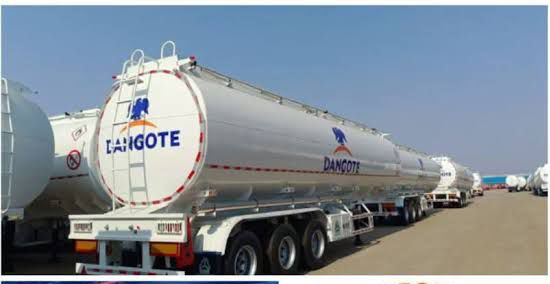
Isong added that the price slump triggered by the refinery’s recent gantry price cut — from about N828 per litre to N699 per litre — has intensified competitive pressure across the downstream value chain, resulting in retailers adjusting prices to retain customers even where margins are compressed.
He noted that the price war has also affected depots and independent traders, many of whom now operate at narrow or negative profit margins, further reinforcing the argument that Dangote alone can’t meet Nigeria’s fuel demands without supportive market flexibility and diversified sourcing.
Independent marketers move closer to Dangote refinery
Meanwhile, the Independent Petroleum Marketers Association of Nigeria (IPMAN) confirmed that its members have deepened partnership with the refinery, describing the collaboration as strategic for accelerating national product evacuation and improving last-mile distribution.
According to IPMAN spokesperson Chinedu Ukadike, competitive pricing dynamics are now driving patronage patterns within the sector, as motorists increasingly gravitate toward retail outlets offering lower pump prices.
He stated that any marketer who refuses to adjust prices in line with prevailing market realities risks losing customer traffic, particularly in states where Dangote-supplied petrol is already selling at reduced rates.
Ukadike argued that independent marketers remain critical to nationwide fuel evacuation due to their wide retail footprint and deep penetration in rural and semi-urban communities.
He added that even with IPMAN’s enhanced participation, the dispersed nature of national demand demonstrates why Dangote alone can’t meet Nigeria’s fuel demands without supplementary supply streams.
Dangote refinery insists on capacity readiness
In contrast, officials of the Dangote Petroleum Refinery maintain that the facility has sufficient capacity to meet Nigeria’s daily petrol consumption needs.
The company disclosed that it currently supplies around 50 million litres to the domestic market each day.
The refinery also expressed concern over import licences issued by regulators despite what it described as full local stock availability — a development it believes undermines price stability and market consolidation.
However, marketers contend that supply diversification is not only necessary, but strategic, to reduce operational risk and ensure sustained availability during periods of heightened demand or logistics disruptions.
Market outlook
Analysts say the current supply pattern reflects a transitioning downstream environment, where deregulation, price shifts, and refinery integration are reshaping distribution behaviour across the value chain.
While the Dangote facility has significantly reduced import dependence and lowered market prices, industry stakeholders maintain that structural realities — geography, logistics, and network size — mean that Dangote alone can’t meet Nigeria’s fuel demands without complementary importation and depot-level supply intervention.
They added that a balanced supply ecosystem remains essential to preventing market shocks, ensuring healthy competition, and sustaining long-term price stability for consumers.
About The Author