India’s Alang ship-breaking industry once defined global ship recycling, but today it stands hollowed out, silent, and uncertain along Gujarat’s windswept Arabian Sea coastline.
India’s Alang ship-breaking industry supported tens of thousands of workers for decades, dismantling rusting giants that arrived daily, turning steel hulls into livelihoods and prosperity.
Standing on the empty shore, veteran cutter Ramakant Singh gazes at the horizon, remembering when ships queued endlessly, their towering hulls crowding Alang’s once-booming skyline.
“In the old days, ships stood here like buffaloes before a storm,” Singh recalls. “Now, we count arrivals on our fingers,” he tells reporters quietly.
India’s Alang ship-breaking industry grew rapidly in the 1980s, powered by natural tides, cheap labour, and a sloping beach ideal for grounding massive vessels.
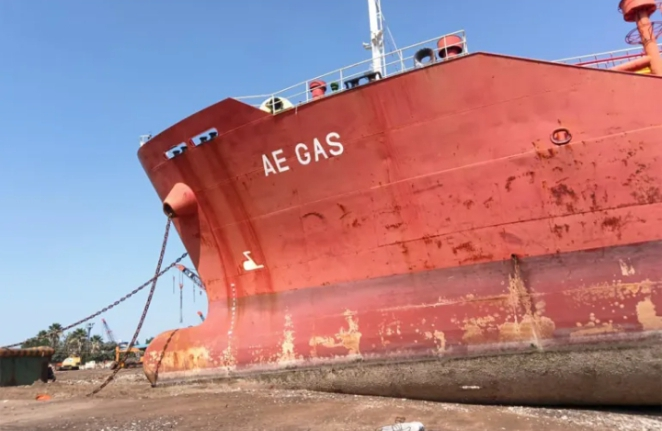
Over four decades, more than 8,600 ships were dismantled here, weighing nearly 68 million tonnes of light displacement tonnage, an unmatched global recycling feat.
At its height, Alang accounted for almost 98 percent of India’s ship recycling and roughly one-third of global dismantling activity, cementing international dominance.
Today, that dominance is fading fast, with only a handful of cruise ships and cargo carriers dotting a coastline once packed with industrial giants.
India’s Alang ship-breaking industry now operates at a fraction of former capacity, as shipowners delay scrapping vessels amid lucrative global shipping profits.
Shipping demand surged after COVID-19, pushing freight rates sky-high and encouraging owners to extend vessel lifespans rather than send ships for dismantling.
“Owners are earning well, so they don’t scrap ships,” explains Haresh Parmar of the Ship Recycling Industries Association. “That’s why our yards stand empty.”
Global disruptions further complicated matters, as conflicts reshaped trade routes and pushed shipping companies to maximise profits by keeping ageing fleets operational.
Attacks on Red Sea shipping linked to Israel’s war on Gaza forced vessels to reroute via the Cape of Good Hope, inflating costs and delaying retirements.
Meanwhile, rising marine fuel prices driven by geopolitical tensions have further incentivised owners to squeeze value from older ships instead of dismantling them.
As ship arrivals declined, Alang’s vast dismantling plots fell silent, with just 20 of 153 operational yards functioning at barely 25 percent capacity.
India’s Alang ship-breaking industry also faces stiff competition from regional rivals offering better prices for end-of-life vessels.
Bangladesh’s Chattogram yards now pay up to $550 per tonne, while Pakistan’s Gadani offers comparable rates, outbidding Alang’s struggling operators.
“We can’t match their prices without running losses,” Parmar admits, pointing to razor-thin margins and rising compliance expenses strangling local yards.
Compliance became unavoidable after India adopted the Hong Kong International Convention on ship recycling in 2019, transforming safety and environmental standards.
Yards invested heavily in pollution controls, hazardous waste pits, worker training, and toxic material inventories, raising operational costs dramatically.
“Compliance makes us safer but costlier,” says yard owner Chintan Kalthia. “It gives us an edge only on paper, not in real competition.”
India’s Alang ship-breaking industry now struggles to balance ethical reform with commercial survival, as higher standards erode price competitiveness.
While Alang modernised, neighbouring countries continued operating cheaper yards, attracting shipowners focused solely on profits rather than safety credentials.
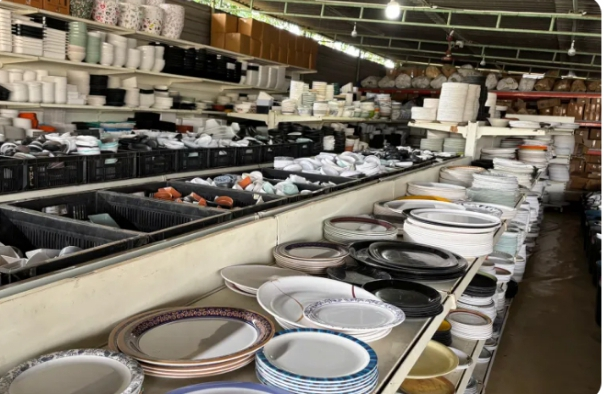
The downturn rippled beyond beaches into Alang’s sprawling recycling marketplace, where ship remnants once fueled thriving roadside economies.
Read also: Thailand-Cambodia border clashes intensify as fighting enters second week
From rescue boats to chandeliers, everything salvaged from ships once found eager buyers along Trapaj’s bustling roadside strip.
“Now business is dead,” says ceramic seller Ram Vilas. “We don’t even see one-tenth of the old crowd anymore.”
India’s Alang ship-breaking industry once fed hundreds of small enterprises, from gas plants to rolling mills, now starved of scrap steel.
Steel shortages have disrupted more than 60 induction furnaces and 80 rerolling mills in nearby Bhavnagar, crippling regional manufacturing chains.
Entrepreneur Jigar Patel says his flange unit suffers without Alang steel. “We now buy from Jharkhand. It’s expensive and harder to process.”
Workers too have borne the brunt, with migrants from Bihar, Odisha, Jharkhand, and Uttar Pradesh leaving in search of steady income elsewhere.
“Workers come only when ships arrive,” says union leader Vidyadhar Rane. “The rest of the time, they survive on odd jobs.”
Employment collapsed from over 60,000 workers at its peak to fewer than 15,000 today, hollowing out Alang’s social fabric.
India’s Alang ship-breaking industry is safer now, with training, helmets, and regulated practices replacing once-deadly working conditions.
“This used to be the deadliest job,” Singh reflects. “Now it’s safer, but safety means nothing without work.”
For many veterans, Alang has become a waiting game, dependent entirely on whether the next ship beaches on its silent shore.
The irony is stark: global shipping booms elsewhere while Alang, built to dismantle the world’s fleets, slowly fades.
Industry leaders warn that without policy support or price incentives, India risks losing ship recycling dominance permanently.
India’s Alang ship-breaking industry stands at a crossroads, caught between ethical reform, global competition, and shifting maritime economics.
As tides roll in and out, Alang’s empty coastline mirrors the uncertainty facing thousands whose lives were once anchored to steel hulls.
Without ships, the world’s largest graveyard of vessels risks becoming a graveyard of livelihoods, memories, and lost industrial might.
Everything now depends on arrivals that may never come, as Alang waits, quietly, for a revival still beyond the horizon.
About The Author