

China has signalled a major shift in its trade engagement with Nigeria as Beijing announces plans to accelerate the implementation of a long-expected zero-tariff access for Nigerian exports.
The development marks one of the most consequential economic commitments between both nations in recent years and comes as Nigeria and China commemorate 55 years of diplomatic partnership.
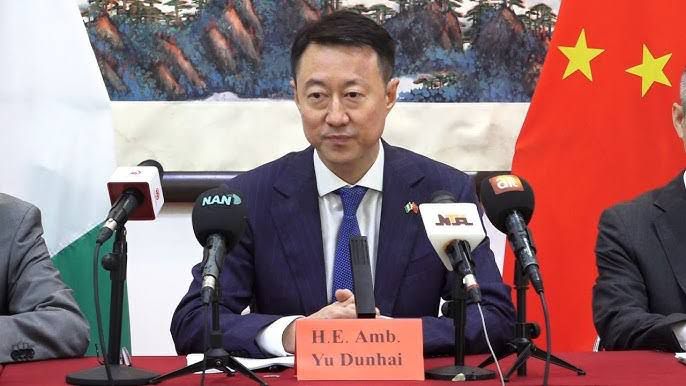
The pledge was delivered in Abuja by China’s Ambassador to Nigeria, Yu Dunhai, during his visit to Minister of Foreign Affairs, Yusuf Maitama Tuggar.
Discussions at the meeting centred on bilateral trade expansion, strategic cooperation and long-term development alignment between both nations — all in preparation for the 2026 China-Africa Year of Cultural Exchanges.
Yu described the decision to fast-track the initiative as a deliberate move to “deepen political trust, strengthen economic ties and deliver tangible benefits to citizens of both countries.”
He emphasised that the China–Nigeria Comprehensive Strategic Partnership had entered “the fast track,” backed by policy directions contained in the Chinese Communist Party’s recommendations for China’s upcoming 15th Five-Year Plan.
China’s Push for Zero-Tariff Access for Nigerian Exports
The ambassador’s announcement represents a significant opening for Nigeria, particularly as the country seeks to expand non-oil export earnings, support local industries and diversify its trade portfolio.
As China positions itself as one of the world’s largest import markets, Beijing’s commitment to zero-tariff access for Nigerian exports could reduce export barriers, strengthen market competitiveness and stimulate value-chain growth across agriculture, solid minerals, manufacturing, and processed foods.
China had earlier in the year extended zero-tariff treatment to all tariff lines for 33 African nations with which it maintains diplomatic relations.
The special consideration to fast-track similar access for Nigeria — Africa’s largest economy — is widely seen as acknowledgement of Nigeria’s strategic influence on the continent and its central role in Sino-African cooperation.
Yu reiterated China’s commitment to “shared prosperity, high-standard opening-up and global development initiatives,” stressing that Nigeria stands to benefit significantly from China’s increasing effort to expand trade concessions.
Nigeria Welcomes Policy Shift, Eyes Greater Trade Expansion
Responding to the announcement, Foreign Affairs Minister Yusuf Tuggar expressed appreciation, describing China as “one of Nigeria’s most dependable strategic partners.”
He emphasised that Nigeria remains committed to the One China principle and noted that cooperation between both countries spans security, manufacturing, critical infrastructure, technology, and vocational development.
Tuggar stated that Nigeria intends to align its development plans with China’s evolving economic direction, particularly in manufacturing, foreign direct investment, technology transfer and export competitiveness.
He noted that accelerating zero-tariff access for Nigerian exports would help bridge Nigeria’s trade deficit with China and unlock new earnings for businesses seeking entry into Asian markets.
According to the minister,
“China has consistently shown support for Nigeria’s social and economic ambitions. This new commitment strengthens our long-standing relationship and provides an opportunity to boost Nigerian exports, create jobs and enhance economic resilience.”
Implications for Nigeria’s Economy and Export Sector
Experts say the accelerated policy could reshape Nigeria’s export landscape in several ways.
First, industries such as cocoa, sesame seeds, cashew nuts, leather, textiles, petrochemicals, aluminium, pharmaceuticals and processed foods stand to benefit from improved access and reduced tariff constraints.
Secondly, the policy may drive Nigeria toward more structured export reforms — including improved quality control, certification standards, logistics efficiency and supply-chain transparency — to meet China’s entry requirements.
This could stimulate broader reforms within Nigeria’s export ecosystem and improve global competitiveness.
Thirdly, the move aligns with Nigeria’s ongoing efforts to diversify revenue sources away from crude oil.
With China currently Nigeria’s largest import partner, a more balanced and mutually beneficial trade framework could help reduce Nigeria’s import-export gap.
Analysts note that strengthening the bilateral trade framework is also strategic for China.
Nigeria remains a key gateway to West Africa’s 400 million–person market, and Beijing’s concessions could help deepen its presence in the region, particularly as global competition for African markets intensifies.
Broader Context of China–Africa Relations
China’s decision fits into its broader diplomatic and economic engagement with Africa.
In recent years, Beijing has positioned itself as a leading trade and development partner on the continent, offering debt relief, large-scale infrastructure financing, concessional loans and expanded support for urban transport, energy and manufacturing projects.
The accelerated zero-tariff access for Nigerian exports further signals China’s readiness to consolidate its role in Africa’s industrial and trade acceleration agenda.
It also reflects China’s commitment to its global development strategy and its pledge to support African countries in strengthening production capacity and increasing economic self-reliance.
As both nations prepare for the 2026 China–Africa Year of Cultural Exchanges, observers say trade, investment and people-to-people ties are expected to deepen even further.
China’s move to fast-track zero-tariff access for Nigerian exports represents a critical opportunity for Nigeria to expand its non-oil revenues and strengthen its export competitiveness.
For China, it affirms a long-standing commitment to its African partners and positions Nigeria as a central pillar of Sino-African diplomacy going forward.
With both governments expressing alignment and readiness, stakeholders now look toward implementation — and the real economic gains it could unlock for businesses and citizens in both nations.
About The Author


