

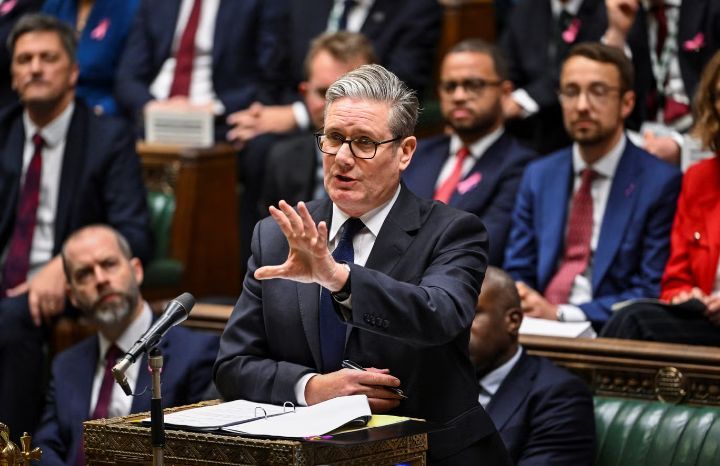
The British government has reiterated its alarm over the China national security threat to the UK, after witness statements revealed serious breaches of national intelligence integrity.
Prime Minister Keir Starmer and senior security officials have warned that Chinese espionage operations have placed critical pressure on British institutions and exposed sensitive data vulnerabilities across sectors vital to national stability.
Deputy National Security Adviser Matt Collins described the China national security threat to the UK as “clear, persistent, and highly capable,” citing aggressive intelligence collection against government and commercial interests.
In witness statements now released publicly, Collins said Chinese intelligence services conduct “large-scale espionage operations” that “threaten the UK’s economic prosperity and the integrity of our democratic institutions.”
The documents were disclosed as part of the ongoing fallout from the Keir Starmer China case, following accusations that two British men spied for China and endangered UK national interests.
The Crown Prosecution Service came under intense scrutiny for abruptly dropping the espionage case, prompting government calls for clarity about whether sufficient evidence was presented in court.
Collins, representing the UK intelligence services, warned that the two accused individuals had acted “in a manner prejudicial to the safety or interests of the UK.” Both men deny wrongdoing.
“The information and material passed to the Chinese state,” Collins added, “would be directly or indirectly useful to China and could harm the security of the United Kingdom.”
The controversy deepened after internal legal documents showed that officials had long recognised the China national security threat to the UK while still seeking diplomatic engagement with Beijing.
Collins wrote that while the threat was “undeniable,” the government remained “committed to pursuing a positive relationship with China to strengthen understanding, cooperation, and stability.”
Prime Minister Keir Starmer confirmed his disappointment over the case outcome, stating he was “deeply concerned that prosecutions could not proceed despite clear national security implications.”
The Keir Starmer China case has exposed tensions between political accountability, prosecutorial independence, and the urgent need to address the China national security threat to the UK comprehensively.
Stephen Kinnock, the government minister for Asia, told Sky News that the Crown Prosecution Service should explain why a case “95 percent complete” was suddenly abandoned.
Kinnock said: “The Director of Public Prosecutions confirmed that there was a five percent evidential gap. He must now explain what that missing five percent entailed.”
Opposition Conservatives called the disclosure “shocking,” accusing the prime minister of failing to prevent the collapse of a case that could have proven the China national security threat to the UK.
One Conservative MP said the revelations show “the extent of the threat China poses to the UK and the complacency that let this case fall apart.”
The Liberal Democrats demanded a statutory inquiry, insisting that the released statements raised “more questions than they answered” about the handling of the Keir Starmer China case.
Collins’s first statement detailed communications between one of the accused, Christopher Berry, and “Alex,” described as an alleged Chinese agent linked to the Communist Party’s upper ranks.
Berry reportedly met a senior Chinese official, while co-defendant Christopher Cash allegedly told him, “You’re in spy territory now,” suggesting active involvement in Chinese espionage operations.
“It is highly unlikely that one of China’s most senior officials would meet Mr Berry unless the state considered him a potential source of valuable information,” Collins testified.
He also cited evidence suggesting Berry had just thirteen hours to produce material for Chinese counterparts, saying it “indicated real-time decision-making relevance” in Beijing.
According to the UK intelligence services, the information provided included assessments of cabinet prospects and government policy positions, posing a substantial China national security threat to the UK.
Collins concluded: “Providing sensitive information of this nature gave the Chinese state a tactical or strategic advantage against Britain’s national interests.”
In response, Cash declared that he had been “put in an impossible position,” claiming he was denied a public trial to prove his innocence and challenge the evidence properly.
“I should not have to face a trial by media,” Cash said. “The released statements lack the context that a court process would have provided.”
He added that any intelligence assessments “would not have survived the scrutiny of a public trial,” maintaining his innocence amid growing political controversy over the Keir Starmer China case.
In his final August statement, Collins highlighted an “active espionage threat” from China during 2021 to 2023, targeting both government networks and private contractors tied to defence and technology.
He said Chinese espionage operations involved “persistent, clandestine techniques” that infiltrated critical systems and remained undetected for extended periods, amplifying the China national security threat to the UK.
Collins noted that Beijing’s intelligence network had targeted “a wide range of UK government and commercial entities” with the goal of “advancing the Chinese state’s interests and harming the UK’s.”
The deputy adviser recalled that in 2021, Britain attributed the Microsoft Exchange server breach to “Chinese state-linked actors,” calling it a “highly likely” attempt at Chinese espionage operations.
He described how these advanced persistent threat (APT) groups used “continuous, sophisticated hacking” to gain covert access, stay embedded, and exfiltrate data valuable to Chinese strategic ambitions.
Collins warned that this pattern of hacking showed why the China national security threat to the UK could not be underestimated, especially in the digital and defence infrastructure sectors.
“The scale and capability of Chinese intelligence activity,” he said, “make it one of the most serious threats faced by the United Kingdom today.”
Despite the stark warnings, Collins reiterated that the British government seeks “constructive engagement where possible” to “avoid escalation and maintain open lines of dialogue with China.”
However, analysts say the government’s dual approach—acknowledging a China national security threat to the UK while pursuing cooperation—reflects the global tension between security vigilance and economic dependence.
Former security officials have echoed those warnings, stating that UK intelligence services remain stretched amid growing cyber and human espionage risks from foreign states.
A retired MI5 officer said privately, “We are walking a tightrope—balancing diplomatic pragmatism with the undeniable fact that China sees Britain as a strategic intelligence target.”
The Crown Prosecution Service has since pledged to review internal handling of evidence but maintains that its original decision was based solely on legal sufficiency, not political pressure.
Ministers now hope the full release of evidence will clear the Labour government of allegations that it interfered in judicial matters linked to the Keir Starmer China case.
For Keir Starmer, the episode underscores his government’s ongoing struggle to navigate between transparency and security as Britain confronts the long-term China national security threat to the UK.
The prime minister said, “We will always defend Britain’s national interest and protect our democracy from those who wish to undermine it.”
Security experts warn that unless robust safeguards are reinforced, Chinese espionage operations will continue to exploit gaps within British cyber and political systems, compromising vital national interests.
About The Author
