China holds low-key Nanjing Massacre memorial as officials marked the anniversary quietly, balancing remembrance, diplomacy, and regional tensions amid a simmering dispute with Japan.
The ceremony commemorated atrocities committed in 1937, a defining trauma in Chinese historical memory, while signaling restraint during a period of heightened strategic unease.
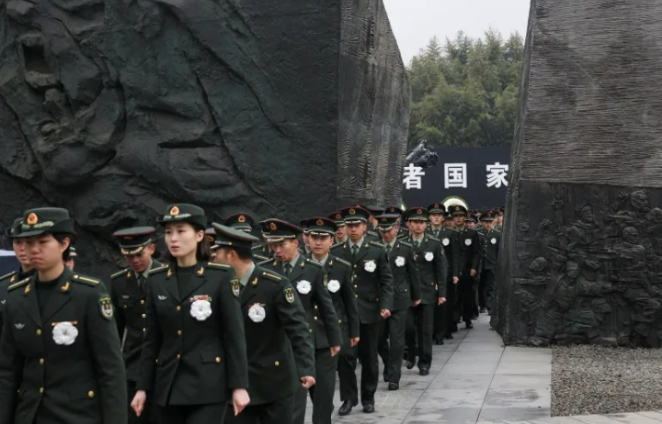
Attendance was limited, symbolism subdued, and speeches measured, reflecting Beijing’s calculation that remembrance could proceed without escalating already fragile relations with Tokyo.
President Xi Jinping’s absence was notable, interpreted domestically and abroad as intentional signaling during an intensifying row linked to Taiwan security concerns.
Chinese authorities emphasized solemn reflection rather than mobilizing nationalist fervor, avoiding mass participation or overtly confrontational messaging that might inflame diplomatic tensions.
At the memorial museum, participants included officials, students, and security personnel, maintaining tradition while underscoring an atmosphere of caution and brevity.
The event lasted under thirty minutes, a stark contrast to previous commemorations featuring expansive rhetoric and heavy political symbolism aimed at reinforcing national narratives.
Doves were released, symbolizing peace and mourning, a gesture designed to project dignity and restraint rather than anger or mobilization against perceived adversaries.
China holds low-key Nanjing Massacre memorial within a broader diplomatic context shaped by disputes over Taiwan, military posturing, and historical grievances.
Beijing has long accused Tokyo of downplaying wartime atrocities, while Japanese conservatives dispute casualty figures and interpretations surrounding the massacre.
Official Chinese accounts cite hundreds of thousands killed, framing the tragedy as a foundational lesson against militarism and historical revisionism.
International tribunals after World War Two provided lower estimates, fueling enduring disagreements that continue to complicate Sino-Japanese reconciliation efforts.
Recent remarks by Japan’s prime minister regarding potential responses to a Taiwan conflict aggravated Beijing, intensifying scrutiny surrounding commemorative events.
Against this backdrop, China opted for careful language, signaling resolve without amplifying rhetoric that could provoke further diplomatic retaliation.
Shi Taifeng delivered remarks emphasizing peace, justice, and the futility of reviving militarism, carefully avoiding explicit references to contemporary Japanese leaders.
His comments aligned with official messaging stressing international order and collective resistance to aggression, linking historical memory with modern geopolitical principles.
State media coverage mirrored the restrained tone, focusing on remembrance, education, and solemnity rather than confrontation or accusatory narratives.
Nevertheless, nationalist imagery appeared elsewhere, highlighting tensions between official restraint and popular sentiment circulating within military and online spaces.
A military social media post depicting violent symbolism drew attention, revealing contrasting approaches within China’s broader messaging ecosystem.
Such imagery underscored unresolved anger tied to historical trauma, complicating efforts by central authorities to maintain calibrated diplomatic communication.
China holds low-key Nanjing Massacre memorial while simultaneously managing internal expectations shaped by patriotic education and collective remembrance practices.
The challenge lies in honoring victims without triggering escalation, particularly as regional security dynamics grow increasingly volatile.
Japan’s recent defense initiatives near Taiwan, including missile deployments, have heightened Chinese concerns about encirclement and strategic pressure.
Tokyo frames these measures as defensive, while Beijing interprets them as provocations undermining regional stability and peace.
Diplomatic exchanges have grown sharper, featuring ambassadorial summons, public statements, and appeals to international institutions.
Travel advisories, trade restrictions, and cultural suspensions illustrate how political disputes increasingly spill into economic and social domains.
China’s renewed ban on Japanese seafood imports exemplifies leverage deployed beyond formal diplomatic channels during heightened tensions.
Cultural exchanges have also suffered, with performances and film releases postponed or cancelled amid worsening relations.
China holds low-key Nanjing Massacre memorial amid this complex environment, signaling selective restraint rather than reconciliation or escalation.
The decision reflects Beijing’s broader strategy of controlling escalation while asserting core interests, particularly regarding sovereignty and historical narratives.
Taiwan remains central, with Beijing insisting on eventual unification and rejecting foreign interference as destabilizing and illegitimate.
Japan’s security posture increasingly aligns with regional partners concerned about Chinese military expansion, deepening strategic mistrust.
Incidents involving military aircraft and radar locks have further strained ties, raising risks of miscalculation during close encounters.
Each side denies wrongdoing, emphasizing restraint publicly while preparing contingencies behind the scenes.
Historical memory amplifies these tensions, as unresolved grievances resurface during moments of strategic competition.
For China, the Nanjing Massacre symbolizes suffering, resistance, and a warning against complacency in national defense.
For Japan, debates over wartime history intersect with domestic politics and contemporary security anxieties.
China holds low-key Nanjing Massacre memorial to navigate these sensitivities without conceding narrative ground or inflaming conflict.
The subdued ceremony illustrates how remembrance can be adapted to geopolitical realities while preserving symbolic continuity.
Observers note that future commemorations may continue reflecting diplomatic temperature rather than fixed tradition.
Read also: Here we go: US Congress releases New Epstein estate photos linking powerful figures to disgraced financier
As regional competition intensifies, historical memory remains a potent instrument shaping perceptions, policies, and public sentiment.
Balancing remembrance and restraint will test leaders on both sides seeking stability without abandoning deeply held narratives.
Ultimately, the memorial served as a quiet reminder that history’s shadows still influence Asia’s present strategic calculations.
How China and Japan manage memory alongside military and diplomatic pressures may shape regional peace for years ahead.