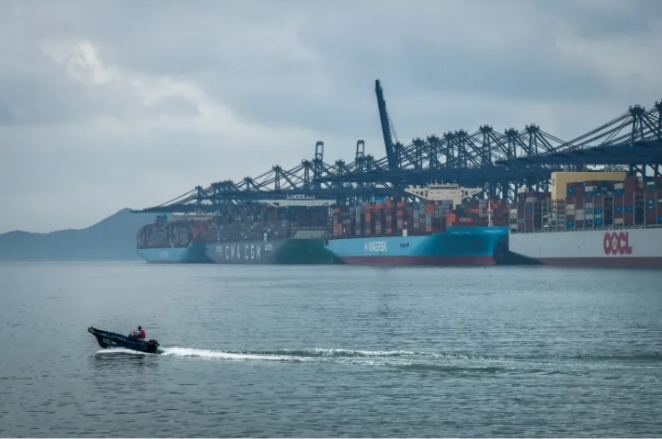
Russia damages Turkish-owned vessels in attack on Ukrainian ports, heightening Black Sea tensions, disrupting commercial shipping, and deepening concerns about civilian safety, diplomacy prospects, and regional economic stability.
Russian forces struck the Ukrainian ports of Chornomorsk and Odesa, officials said, damaging commercial ships and infrastructure critical to exports sustaining Ukraine’s economy during the prolonged war.
Ukraine’s navy confirmed three Turkish-owned vessels were damaged during the strikes, though full assessments were ongoing amid continued drone and missile threats.
One of the damaged ships was reportedly carrying food supplies, underscoring humanitarian risks when commercial maritime activity becomes entangled within active combat zones.

President Volodymyr Zelenskyy condemned the attacks, stating they had no military justification and were aimed solely at intimidating civilians and international trading partners.
He argued the strikes demonstrated Russia’s unwillingness to pursue diplomacy seriously, instead choosing escalation to undermine daily life and economic resilience.
Video footage released online showed firefighters battling flames aboard a civilian vessel, reinforcing claims that non-military targets were directly endangered.
Zelenskyy said the world must maintain moral clarity, distinguishing between those prolonging war through violence and those seeking peace through negotiations.
Ship owners later confirmed limited structural damage and no crew casualties, but acknowledged significant operational disruption and increased insurance costs.
Commercial operators warned that repeated strikes could deter shipping companies from Black Sea routes, compounding economic pressures already facing Ukraine.
In Odesa port, a separate attack injured a private company employee and damaged cargo-handling equipment, Ukrainian officials confirmed.
Authorities said Russia used drones and ballistic missiles, suggesting a coordinated effort to overwhelm air defenses protecting port facilities.
Ukraine’s Black Sea ports are vital economic arteries, facilitating grain exports, imports of essentials, and foreign currency earnings during wartime.
Sustained attacks on these hubs threaten global food supply chains, particularly for countries dependent on Ukrainian agricultural exports.
Turkiye’s Ministry of Foreign Affairs confirmed a Turkish-owned vessel was hit in Chornomorsk, noting no Turkish citizens were injured.
Ankara expressed concern that the war’s spread into the Black Sea endangers maritime security and freedom of navigation.
The ministry reiterated calls for suspending attacks on port and energy infrastructure to prevent further regional escalation.
Turkish officials stressed that safeguarding navigation routes is essential for international trade and regional economic stability.
President Recep Tayyip Erdogan earlier urged calm in the Black Sea during talks with Russian leadership in Ashgabat.
He suggested limited ceasefires protecting ports and energy facilities could reduce risks and build confidence toward broader negotiations.
With the longest Black Sea coastline, Turkiye views stability in the region as a core national security interest.
Ankara has sought to balance its NATO commitments with mediation efforts between Kyiv and Moscow.
Previous Turkish-brokered agreements demonstrated the potential for diplomacy to protect shipping lanes despite ongoing hostilities.
The latest attacks followed Russian threats to cut Ukraine off from the sea, escalating maritime confrontation.
Those threats came after Ukrainian maritime drone strikes on Russia’s so-called shadow fleet of unmarked oil tankers.
Kyiv argues these tankers help Moscow evade sanctions and fund its war effort through energy exports.
Ukraine has increasingly targeted maritime and energy infrastructure to squeeze Russian revenues.
Russian officials say port strikes are retaliatory measures against Ukrainian actions in the Black Sea.
Analysts warn such tit-for-tat escalation increases the risk of miscalculation involving third-country commercial vessels.
Insurance premiums for Black Sea shipping have already risen sharply, raising costs for exporters and importers alike.
Shipping industry representatives caution that sustained insecurity could reroute trade away from the region.
Read also: Israel bombards Southern Lebanon amid rising tensions over ceasefire violations
For Ukraine, reduced maritime access would severely constrain economic survival during the conflict.
For Turkiye, instability threatens coastal security, trade flows, and broader regional influence.
International observers say the strikes complicate diplomatic efforts already struggling to gain traction.
Western allies condemned attacks on civilian shipping, reiterating calls for adherence to international humanitarian law.
Russia has repeatedly denied deliberately targeting civilians, maintaining ports serve dual military purposes.
Ukraine counters that commercial vessels and logistics infrastructure are clearly civilian under international law.
The incidents revive memories of earlier disruptions to grain corridors that rattled global food markets.
African and Middle Eastern importers previously warned of price spikes following Black Sea shipping interruptions.
Diplomats say protecting maritime routes remains one of the few areas where limited agreements are possible.
Turkiye continues offering mediation, leveraging its relationships with both Kyiv and Moscow.
Whether such efforts succeed may determine the future security of Black Sea commerce.
For now, commercial operators remain cautious, navigating heightened risks amid ongoing hostilities.
As winter deepens, Ukraine’s reliance on functioning ports grows increasingly critical.
The attacks underline how the war’s maritime dimension continues expanding beyond battlefields.
They also highlight the vulnerability of civilian trade amid modern, multi-domain warfare.
Without restraint, analysts warn, Black Sea escalation could draw in more international stakeholders.
The strikes demonstrate how economic warfare and military action are increasingly intertwined.
Ultimately, Russia damages Turkish-owned vessels in attack on Ukrainian ports, reinforcing fears that civilian shipping is becoming an enduring casualty of the conflict.
About The Author