Nigeria’s economic outlook for 2026 is expected to consolidate the reform gains recorded in recent years, with stronger investor confidence, improved macroeconomic fundamentals, and renewed private sector participation positioning the country for a more resilient growth trajectory.
According to the Central Bank of Nigeria (CBN), the economy is projected to expand by 4.49 per cent in 2026, driven by structural reforms, enhanced production capacity, and supportive fiscal and monetary coordination.
The projection, contained in the CBN’s 2026 Macroeconomic Outlook released on Tuesday, reflects a stronger performance when compared with the estimated 3.89 per cent growth recorded in 2025.
The bank noted that sustained reform momentum, increased investment inflows, and improved foreign exchange stability have collectively strengthened the growth outlook.
CBN Projects Economy to Grow by 4.49% in 2026 as Reform Gains Deepen Across Key Sectors
The CBN explained that the forecast is anchored on the implementation of well-sequenced fiscal and monetary policies, particularly the full execution of the 2025–2027 Medium-Term Expenditure Framework (MTEF).
The fiscal stance, it added, is expected to stimulate domestic consumption, support job creation, and encourage capital formation across the productive sectors.
According to the bank, ongoing broad-based structural reforms have significantly improved the business environment and restored market confidence.
These reforms, it stated, have contributed to higher capital inflows, increased government revenue mobilisation, and greater stability in the foreign exchange market — key indicators underpinning the projection that the CBN projects economy to grow by 4.49% in 2026.
The apex bank also disclosed that its gradually accommodative monetary policy stance will help lower borrowing costs and improve access to credit for households and businesses, thereby stimulating productive investment and expansion.
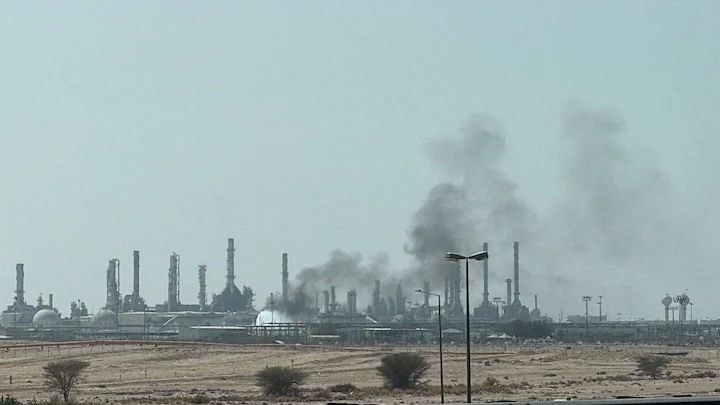
Major private sector-led projects — including the operations of the Dangote Refinery and new midstream energy investments — are expected to further brighten the growth outlook.
Higher crude oil production output, supported by strengthened security surveillance around oil infrastructure and the activities of the Production Monitoring Command Centre, is also forecast to reinforce growth.
Increased domestic refining capacity and relatively stable energy prices are projected to support industrial performance and reduce import pressure.
The outlook also anticipates higher fiscal spending, including pre-election-related expenditure, which could stimulate aggregate demand across key consumption segments.
The central bank stressed that sustained coordination between fiscal and monetary authorities would be essential in maintaining exchange rate stability, supporting job creation, and moderating inflationary pressures.
Reform Gains Offset Risks, but Challenges Remain
Despite the positive baseline projection that the CBN projects economy to grow by 4.49% in 2026, the outlook is not without risks.
The CBN warned that failure to achieve the expected moderation in inflation could compel policy tightening, which may slow credit expansion and weaken growth momentum.
Persistent structural bottlenecks such as high operating costs, inadequate infrastructure, and pockets of insecurity could also constrain business productivity and delay investment decisions.
In addition, corporate cost-cutting measures could increase unemployment and shrink the formal labour market, thereby affecting consumer purchasing power.
The bank further identified adverse weather patterns as a potential threat to agricultural output, food supply chains, and transportation networks, with implications for inflation and rural livelihoods.
Furthermore, unexpected disruptions to crude oil production — whether from security breaches or force majeure — remain a critical vulnerability.
Growth Assumptions Strengthen Confidence
The CBN’s projection that the CBN projects economy to grow by 4.49% in 2026 is premised on key macroeconomic assumptions, including:
- Average crude oil price of $55 per barrel in 2026
- Domestic crude oil output of 1.50 million barrels per day (excluding condensates)
- Nigerian Foreign Exchange Market rate averaging N1,400/$
- Petrol pump price expected to hover around N950 per litre
- Monetary Policy Rate maintained at 27 per cent
- Cash Reserve Ratio sustained at 45 per cent
These assumptions are reinforced by expectations of improved investor sentiment, stronger capital inflows, enhanced security in oil-producing regions, and rising activity across the midstream refining and petrochemical value chain.
Sectoral output is also projected to play a decisive role in achieving the growth target.
The mining and quarrying subsector is expected to benefit from operational reforms, while transport, wholesale and retail trade, and ICT are forecast to remain significant growth drivers.
The expansion of 5G infrastructure, improved digital penetration, and accelerated digital transformation are also expected to stimulate productivity.
The real estate subsector is projected to benefit from growing mortgage opportunities and sustained urban infrastructure demand, further supporting aggregate output.
Inflation Expected to Ease as Policy Coordination Improves
On price stability, the CBN projected that inflation will continue its downward trajectory in 2026, supported by exchange rate stability, energy market moderation, and the lagged impact of interest rate adjustments.
Headline inflation is expected to ease to 12.94 per cent in 2026, from an estimated 21.26 per cent in 2025.
The bank attributed the anticipated moderation to declining food costs, increased domestic refining capacity, and competitive pricing in the petroleum supply chain, which is expected to ease logistics and distribution pressures.
Outlook Signals Stronger Confidence for 2026
Overall, the CBN maintained that the reform-driven environment, coupled with strengthened investor confidence and improved macroeconomic coordination, provides a strong basis for its positive projection that the CBN projects economy to grow by 4.49% in 2026.
However, the bank emphasised that sustaining reform execution, strengthening security architecture, and addressing structural deficiencies will be critical to realising the projected growth path.
About the Author