Bill and Hillary Clinton agree to testify in House Epstein investigation, ending months of resistance as Congress moved closer to holding the former president and secretary of state in contempt.
The decision came just days before the House of Representatives was expected to vote on criminal contempt charges tied to subpoenas issued by a Republican-led committee.
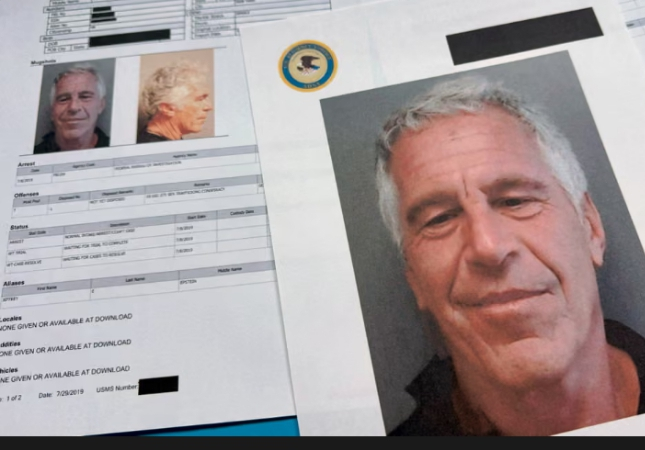
The House oversight committee, chaired by Republican James Comer, has been investigating the handling of matters linked to convicted sex offender Jeffrey Epstein.
For weeks, the standoff between the Clintons and congressional Republicans intensified, with both sides accusing the other of bad faith and political maneuvering.
On Monday, the Clintons confirmed they would comply by appearing for sworn testimony before the committee, reversing their earlier refusal to participate.
A spokesperson for the Clintons said the couple was prepared to testify under oath and cooperate fully with the investigative process.
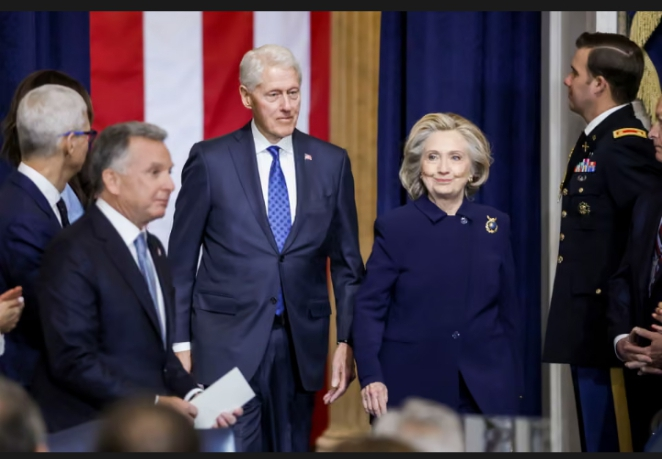
“They negotiated in good faith. You did not,” said Angel Ureña, a Clinton spokesperson, responding sharply to Comer on social media.
Ureña added that the former president and former secretary of state “look forward to setting a precedent that applies to everyone.”
Comer, however, rejected claims of compromise, insisting that lawful subpoenas must be honored without conditions set by those summoned to testify.
“The Clintons do not get to dictate the terms of lawful subpoenas,” Comer said in a statement released by the oversight committee.
Before agreeing to testify, the Clintons had argued that the subpoenas were legally invalid and lacked a legitimate legislative purpose.
Their legal team described the demands as unenforceable and accused Republicans of weaponizing congressional power for partisan retaliation.
According to letters sent by their attorneys, the Clintons believed the investigation was designed to embarrass political rivals rather than uncover new facts.
The oversight committee had advanced criminal contempt of Congress charges last month following the Clintons’ refusal to appear.
If approved by the full House, those charges could have resulted in significant fines and even potential jail sentences upon conviction.
That looming threat raised the stakes considerably, prompting renewed negotiations between the Clintons’ lawyers and congressional investigators.
A committee letter indicated the Clintons previously offered limited cooperation, including a transcribed interview for Bill Clinton.
Hillary Clinton had proposed submitting a sworn written declaration instead of appearing in person before lawmakers.
Republicans rejected those terms, demanding full sworn depositions from both individuals to satisfy the subpoenas.
Nine Democrats on the committee joined Republicans in supporting contempt charges against Bill Clinton, citing transparency concerns.
Three Democrats also backed contempt proceedings against Hillary Clinton, underscoring bipartisan frustration surrounding the Epstein investigation.
Epstein’s death in 2019, while awaiting trial on sex trafficking charges, has fueled years of controversy and unanswered questions.
The renewed scrutiny intensified after the Department of Justice released more than three million Epstein-related files last month.
Those materials included thousands of videos, hundreds of thousands of images, and extensive correspondence involving powerful figures.
Among the revelations were emails suggesting a closer relationship between Epstein and billionaire Elon Musk than previously known.
Democrats have since accused the Trump administration of orchestrating a cover-up by prematurely closing the federal investigation.
Many lawmakers from both parties claim millions of additional pages remain withheld by the justice department.
Bill Clinton’s past association with Epstein has resurfaced repeatedly as Republicans push for a political reckoning.
Clinton maintained a social relationship with Epstein in the late 1990s and early 2000s, according to public records.
However, the former president has not been accused of criminal wrongdoing in connection with Epstein’s activities.
Still, Republicans argue that full testimony is necessary to establish accountability and public trust.
The Clintons countered that Comer failed to pursue Trump administration officials responsible for releasing Epstein files.
Their lawyers argued that the investigation selectively targeted political opponents while ignoring executive branch delays.
A January letter from the Clintons’ attorneys said the subpoenas violated separation of powers principles.
They cited supreme court precedent limiting congressional investigative authority without a valid legislative objective.
“It is clear the subpoenas themselves are nothing more than a ploy to embarrass political rivals,” the letter stated.
Despite these objections, the threat of contempt proceedings shifted the balance toward compliance.
House leaders were preparing for votes that could have escalated the conflict into a constitutional showdown.
By agreeing to testify, the Clintons effectively defused that immediate confrontation.
Yet the political fallout is expected to continue as hearings proceed under intense public scrutiny.
Republicans view the agreement as a victory for congressional oversight and rule of law.
Democrats remain divided, with some praising transparency and others condemning what they call political harassment.
Read also: Costa Rica presidential election: Laura Fernández wins presidency as Latin America shifts right
The testimony is expected to focus on what the Clintons knew about Epstein and when.
It may also examine how past administrations handled investigations related to Epstein’s crimes.
Observers say the case reflects broader tensions over accountability, power, and partisanship in Washington.
With both Clintons set to appear under oath, the House Epstein investigation enters its most consequential phase.
The outcome could shape future congressional subpoena battles and redefine limits on executive-era political figures.
About The Author