

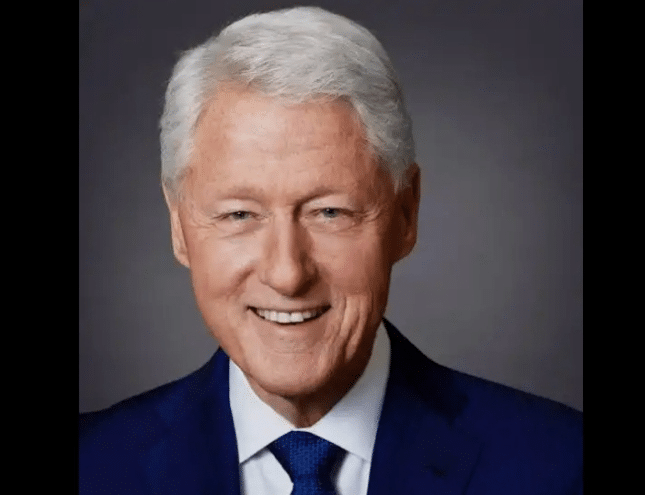
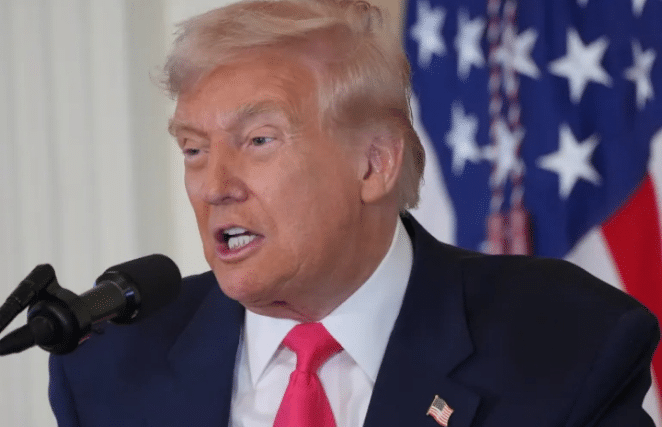
United States President Donald Trump has urged the Department of Justice to investigate former President Bill Clinton’s ties to Jeffrey Epstein, intensifying debate over political accountability.
Trump framed the call as a response to Democrats’ attacks, insisting his own connection to Epstein has been misrepresented, repeatedly labeling the scrutiny a “Democrat hoax,” he said.
“This is another Russia, Russia, Russia Scam, with all arrows pointing to the Democrats,” Trump wrote, describing the renewed focus on Epstein as politically motivated and misleading to the public.
The president emphasized that financial institutions and Democratic figures had closer ties to Epstein than he did, writing, “Epstein was a Democrat, and he is the Democrat’s problem, not mine.”
Trump requested Attorney General Pam Bondi investigate Clinton, his Treasury Secretary Larry Summers, venture capitalist Reid Hoffman, and JPMorgan Chase for alleged connections to Epstein and potential misconduct.
Bondi promptly assigned U.S. Attorney Jay Clayton to the case, assuring the public, “The Department will pursue this with urgency and integrity to deliver answers to Americans.”
Jeffrey Epstein, a convicted sex offender, had a notorious social network including Trump, Clinton, and former UK royal Andrew Mountbatten-Windsor, raising long-standing questions about elite protection from accountability.
Epstein’s 2008 conviction for sexually abusing a minor and solicitation was widely criticized as lenient, and at the time of his 2019 suicide, he faced federal sex-trafficking charges in New York.
Hundreds of women accused Epstein of sexual abuse and trafficking, prompting critics to question how his connections allowed him to evade legal consequences for so many years.
Newly released emails have reignited scrutiny of Trump, showing communications between Epstein, Ghislaine Maxwell, and journalist Michael Wolff discussing Trump’s interactions with Epstein and visits to his properties.
In one email, Epstein wrote, “I want you to realize that that dog that hasn’t barked is Trump… [Victim] spent hours at my house with him,” implying awareness of misconduct.
Another email suggested Trump knew about Epstein’s sexual relationships, stating, “Of course he knew about the girls as he asked Ghislaine to stop,” raising further ethical and legal concerns.
Trump’s administration quickly dismissed the email releases as selectively edited and politically motivated, with Press Secretary Karoline Leavitt calling the documents a “Democratic smear campaign” targeting the president.
Republican members of the House Oversight Committee later released 20,000 additional documents, including emails that described Trump as “dangerous” and “not one decent cell in his body,” according to Epstein.
Trump characterized the scrutiny as a distraction from the recent government shutdown, writing that Democrats used the Epstein controversy to divert attention from failed policy negotiations and legislative setbacks.
“The Democrats are doing everything in their withering power to push the Epstein Hoax again, despite DOJ releasing 50,000 pages, in order to deflect from their bad policies,” Trump said.
Trump has repeatedly insisted his association with Epstein was limited, framing the ongoing coverage as a politically motivated attack and referring to it publicly as a “Democrat hoax,” he stated.
Attorney General Bondi previously claimed possession of an Epstein “client list,” fueling conspiracy theories, though the Justice Department later denied such a list existed, clarifying Bondi had misspoken on Fox News.
Media reports indicate Bondi briefed Trump on the full Epstein files, which remain unreleased, including documents allegedly mentioning the president, further complicating public perceptions of his involvement.
Trump has said he severed ties with Epstein after discovering the financier recruited young female employees from Trump’s Mar-a-Lago resort, stating, “Out of here,” when the behavior continued.
Former President Clinton also traveled on Epstein’s private jet multiple times and met him at the White House, though he has consistently denied knowledge of Epstein’s criminal activities, spokesperson Angel Urena said.
Financial institutions, including Deutsche Bank and JPMorgan Chase, faced lawsuits over their business with Epstein, ultimately paying settlements to survivors of sexual abuse in 2023, acknowledging lapses in oversight.
Deutsche Bank settled for $75 million after allegations it profited from Epstein’s trafficking schemes, while JPMorgan Chase paid $290 million, highlighting systemic failures in monitoring high-profile clients.
Additional lawsuits against Bank of America and Bank of New York Mellon have been filed, though those institutions sought dismissal, challenging the connection between Epstein’s crimes and their operations.
The House of Representatives reconvened recently, allowing Democrat Adelita Grijalva to provide the 218th signature on a discharge petition forcing a vote on the release of all government-held Epstein documents.
This bipartisan effort, led by Republican Thomas Massie and Democrat Ro Khanna, underscores cross-party concern for transparency, compelling lawmakers to address the public’s demand for accountability regarding Epstein.
House Speaker Mike Johnson, a staunch Trump ally, minimized the initiative, calling the vote “a totally pointless exercise,” despite acknowledging the petition successfully achieved the required signatures.
Victims’ advocacy groups continue to push for transparency, emphasizing that the release of documents is critical to preventing future abuse and holding powerful figures accountable for past misconduct.
Virginia Giuffre, a prominent Epstein accuser, tragically died by suicide this year, underscoring the human cost of abuse and the urgent need for justice and comprehensive public disclosure.
U.S. lawmakers have called for former UK royal Andrew, Duke of York, to testify regarding Epstein, following Giuffre’s allegations and his subsequent loss of royal titles due to involvement in the scandal.
The renewed focus on Epstein has coincided with multiple crises for Trump, including the 42-day government shutdown, creating additional pressure and increased media scrutiny on his handling of political responsibilities.
Trump’s framing of the investigation as targeting Democrats reflects a broader political strategy, positioning himself as unfairly targeted while attempting to shift attention to his opponents’ alleged wrongdoing.
Legal analysts note it is unusual for a sitting president to request an investigation into a political rival while under scrutiny for similar allegations, heightening concerns about impartiality.
“The optics and implications are significant,” one analyst said. “It’s hard to separate legitimate inquiry from political maneuvering when a president makes such requests publicly.”
Transparency advocates argue that full disclosure is necessary, noting that settlements by banks and institutions provide restitution but do not address systemic issues in financial oversight and accountability.
As additional documents are released, congressional inquiries continue, keeping public attention focused on the intersection of politics, wealth, and criminal conduct involving Epstein’s network of associates.
The Epstein scandal remains a complex story involving Trump, Clinton, and numerous high-profile individuals, illustrating the challenges of accountability when power, privilege, and criminal misconduct intersect.
Both domestic and international observers closely watch the ongoing legal and political processes, eager to understand how Epstein’s criminal activities intersected with prominent politicians and global financial institutions.
Trump’s insistence that scrutiny of his own ties is a “Democrat hoax” has become a central part of his narrative, framing media coverage and political attacks as partisan rather than factual.
The debate over the release of documents, congressional investigations, and Trump’s requests for scrutiny of Clinton illustrates how partisan politics complicates efforts to achieve transparency in high-profile criminal cases.
Ultimately, the Epstein files controversy highlights systemic challenges in U.S. politics, ethics, and law, where powerful individuals’ misdeeds intersect with political calculations and media scrutiny.
As the investigations proceed, public, media, and political attention will likely continue to focus on Trump, Clinton, financial institutions, and other figures tied to Epstein’s extensive network.
Trump’s administration faces ongoing scrutiny and legal pressure, with the House vote on releasing Epstein documents likely to shape public perception of accountability and the president’s handling of related controversies.
The Epstein scandal underscores broader societal issues, including the protection of vulnerable victims, financial oversight, and the need for comprehensive accountability of high-profile figures implicated in serious crimes.
Trump’s repeated labeling of his association with Epstein as a “Democrat hoax” frames the narrative for his supporters, reinforcing partisan interpretations while the legal and political inquiries unfold.
High-profile settlements by banks and public pressure for transparency illustrate the complex intersection of corporate responsibility, political influence, and justice for survivors of Epstein’s criminal actions.
As additional hearings, document releases, and investigations proceed, the public remains attentive, with expectations for clarity, justice, and accountability for the network surrounding Jeffrey Epstein.
The Epstein case continues to dominate political discourse, legal debates, and media coverage, underscoring its lasting impact on American governance, accountability, and the perception of elite privilege.
Trump’s insistence on framing the scrutiny as partisan, and his call to investigate Clinton, ensures the controversy remains central to national political discussions for the foreseeable future.
The long-term implications of the Epstein scandal, combined with Trump’s political maneuvers, will likely influence public trust in institutions, the presidency, and the broader political system in the coming years.
About The Author

Your article helped me a lot, is there any more related content? Thanks! https://accounts.binance.info/zh-TC/register?ref=DCKLL1YD