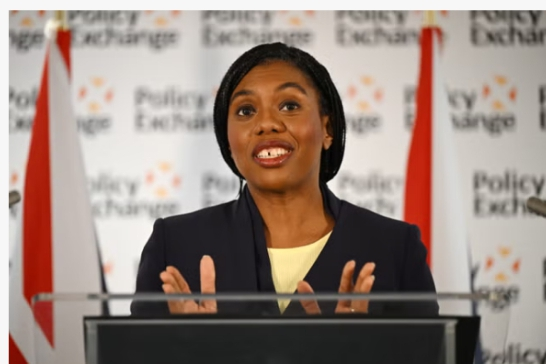
Badenoch attacks Starmer’s Iran policy, accusing the Labour leader of failing to act decisively after a humiliating by-election loss in Gorton and Denton last week.
Speaking at the Conservative Party spring conference in Harrogate, Mrs Badenoch said the prime minister’s hesitation had left the UK trailing in global military decisions during the unfolding Middle East conflict.
The by-election defeat to the Green Party raised concerns among Labour MPs that further losses could follow in other constituencies. Badenoch argued that the setback had clearly influenced Starmer’s reluctance to support decisive action against Iran, suggesting the prime minister is now “too scared” to take strong foreign policy positions.
According to Badenoch, Starmer’s cautious approach contrasts sharply with countries like Canada and Australia, which quickly voiced support for allies in the region and acted without delay. She emphasised that moral clarity in international crises is essential, warning that hesitation can have serious consequences.
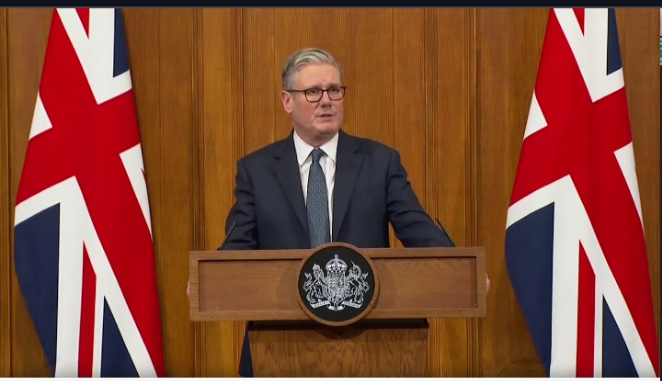
“Everyone remembers the mistakes of the Iraq War,” Badenoch said, noting that while reckless action is not advised, decisive leadership cannot be replaced by fear of upsetting a small electoral group. “We need leaders willing to make difficult decisions, not political hostages of backbench factions.”
The Conservative leader accused Labour of “playing student politics” while global powers rearm and respond decisively to emerging threats. She described Starmer as a “political hostage,” constrained by left-wing MPs who she claimed fail to understand the severity of the world situation Britain faces today.
Concerns have also been raised about Britain’s operational readiness. RAF Akrotiri in Cyprus was recently targeted by a drone attack, highlighting perceived gaps in air defence measures. Critics say Starmer’s hesitation may have delayed the implementation of robust protective measures for UK forces stationed abroad.
On Thursday, Starmer announced the deployment of four additional Typhoon fighter jets to Qatar to strengthen defensive operations in the Middle East, but chose not to join initial strikes on Tehran over the weekend. Badenoch criticised this approach as insufficient, arguing that it reflects political caution rather than a clear strategic plan.
Armed forces minister Al Carns responded to Badenoch’s remarks, calling political point-scoring during a security crisis “deeply irresponsible.” He stressed that serious situations require calm decision-making and praised British troops for their professionalism amid escalating regional tensions.
The Middle East conflict entered its eighth day with US warnings of an increased strike capability against Iranian targets. RAF Fairford in Gloucestershire received a B-1 Lancer bomber on Friday, signalling approval from Starmer for US “defensive action” against Iranian missile sites operating from UK bases.
Armed forces chief Sir Richard Knighton indicated that US missions could launch from the Gloucestershire base “within the next few days,” underlining the urgency of military preparedness. While Britain has facilitated the deployment of allied forces, Badenoch insists the prime minister’s hesitancy risks undermining the country’s credibility as a global partner.
The UK government has also coordinated evacuation operations for British citizens in the region. A second charter flight from Oman landed at Gatwick Airport on Saturday morning, joining more than 6,500 Britons evacuated from the UAE since the outbreak of the conflict.
Badenoch framed Labour’s caution as a political weakness, suggesting Starmer’s fear of electoral fallout is overshadowing the UK’s strategic responsibilities. She contrasted Britain’s approach with that of Canada and Australia, which she said demonstrated immediate moral and military clarity.
“While the rest of the world acts decisively, Britain risks falling behind,” she said. Badenoch argued that clear, firm decisions are required to maintain international respect and protect UK interests abroad.
The by-election results in Gorton and Denton, which saw a surge for the Green Party, have amplified what Badenoch perceives as Labour’s fear-driven approach to foreign policy.
She warned that domestic political considerations should not take priority over national security and international obligations.
Badenoch also questioned Starmer’s ability to manage internal party pressures. She said that left-wing MPs’ lack of understanding of global conflict constrains the Labour leader, leaving the UK less prepared to respond to escalating threats.
The deployment of Typhoon jets to Qatar, while a step toward strengthening defensive operations, was described by Badenoch as a limited measure that does not demonstrate the moral clarity Britain needs in the current conflict.
Armed forces minister Al Carns reiterated that political rhetoric should not undermine the work of military personnel. He praised troops and civil service staff for their dedication and competence in complex operational environments.
Observers noted that Badenoch’s speech aligns with a broader Conservative strategy to highlight perceived Labour weaknesses on foreign policy, contrasting them with the party’s messaging on decisive leadership and moral clarity.
Starmer’s approach, characterised by legal consultations and internal deliberations before announcements, has been criticised for appearing slow compared with rapid responses from allied nations. This delay, Badenoch argues, reflects the influence of domestic politics over strategic decision-making.
Evacuation efforts remain ongoing, with charter flights from Oman, Egypt, and other conflict zones continuing to repatriate British citizens safely. These operations underscore the UK’s logistical capability amid challenging conditions, though Badenoch maintains that decisive leadership is still required.
The conflict has tested Britain’s military readiness, including air defence, strategic deployments, and coordination with US forces. Analysts note that hesitation at the political level can affect operational effectiveness and global perceptions of UK power.
Badenoch also stressed that moral leadership is central to international engagement. She suggested that clear positions during crises are essential to maintain influence and protect national interests.
Political commentators see Badenoch’s remarks as a deliberate attempt to frame Labour as indecisive, highlighting the contrast between Conservative calls for firm action and Labour’s perceived cautious stance.
The ongoing Middle East crisis illustrates the challenge for UK leaders to balance domestic political considerations with international security obligations, particularly when allied operations require rapid coordination.
Analysts argue that Starmer’s cautious approach may be designed to avoid internal conflict within Labour while still supporting allied operations, though it risks creating an image of indecision internationally.

Badenoch’s public criticism underscores the tension between domestic politics and foreign policy imperatives. She frames Starmer’s hesitation as a failure to demonstrate moral and strategic leadership in a volatile region.
As conflict continues, UK military readiness, strategic positioning, and political leadership remain under scrutiny. Decisions in the coming days will likely influence both the trajectory of the Middle East crisis and domestic political narratives.
Badenoch concluded by emphasising that Britain must act decisively and not allow fear of electoral consequences to override international responsibility. She maintained that a strong and clear policy stance is critical to maintaining Britain’s credibility on the global stage.
The contrast between Starmer’s cautious approach and other nations’ decisive actions illustrates the political pressures facing UK leaders and the challenges of navigating international crises under domestic scrutiny.
Observers suggest that the debate will continue to dominate UK political discourse, with Badenoch’s critique signalling that foreign policy decisions will remain closely tied to party politics and perceptions of leadership strength.
Keyphrase List
Badenoch attacks Starmer’s Iran policy, Labour by-election defeat, UK Middle East response, British military readiness, Kemi Badenoch criticism, Keir Starmer hesitation
About The Author