

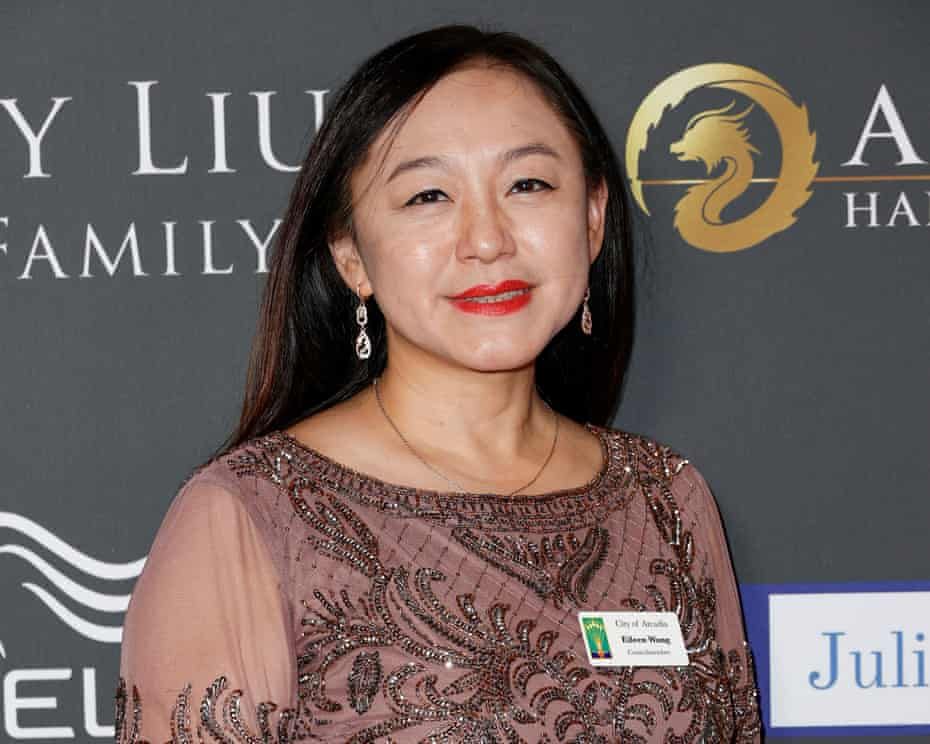
Arcadia Mayor Eileen Wang resigns after pleading guilty to acting as a China foreign agent, according to the US Department of Justice (DoJ), in a case that has intensified global concerns over alleged Chinese influence operations targeting democratic institutions and overseas communities.
Wang, 58, who served as mayor of Arcadia in southern California, agreed to plead guilty to a felony charge of acting as an illegal foreign agent for the People’s Republic of China (PRC). Prosecutors alleged she worked with Chinese officials and associates to promote Beijing-backed propaganda through a media platform focused on the Chinese American community.
The Guardian reports that Wang resigned from office shortly after federal authorities unsealed the plea agreement.
DOJ Details Alleged China Foreign Agent Activities
According to the DoJ, Wang and Yaoning “Mike” Sun allegedly coordinated with PRC officials to distribute pro-China messaging through a website called US News Center.
“Individuals in our country who covertly do the bidding of foreign governments undermine our democracy,” said Bill Essayli, an assistant US attorney.
“This plea agreement is the latest success in our determination to defend the homeland against China’s efforts to corrupt our institutions,” Essayli added.
Federal prosecutors said Wang used encrypted WeChat conversations to receive and distribute articles supporting Beijing’s positions on politically sensitive issues, including allegations concerning Xinjiang.
In one cited exchange from June 2021, a PRC official shared pre-written articles denying accusations of genocide and forced labor in Xinjiang.
Within minutes, Wang reportedly reposted the material to her website and responded with a publication link.
“So fast, thank you everyone,” the PRC official allegedly replied.
Why The Case Matters Beyond The United States
The Eileen Wang case is being viewed by analysts as part of a wider geopolitical struggle between China and Western democracies over influence, information control, and political power.
In recent years, governments in the United States, Canada, the United Kingdom, Australia, and several European countries have raised alarms over alleged covert Chinese influence campaigns involving politicians, universities, diaspora groups, media organizations, and business networks.
Critics argue that Beijing increasingly relies on “soft power” strategies and covert influence networks to shape global narratives, protect Chinese political interests abroad, and counter criticism over issues such as Taiwan, Xinjiang, Hong Kong, and human rights.
Supporters of China, however, argue that Western governments often exaggerate such fears as part of a broader strategic rivalry aimed at containing China’s rise as a global superpower.
The case also highlights how digital platforms, ethnic media outlets, and encrypted messaging apps have become central battlegrounds in modern geopolitical competition.
What China’s Alleged Covert Operations Could Mean For The World
Security experts warn that covert foreign influence operations can gradually erode trust in democratic institutions if elected officials secretly act on behalf of foreign governments.
Such operations may influence:
- public opinion,
- local elections,
- policy debates,
- media narratives,
- and diplomatic relationships.
Analysts say the long-term danger is not always direct espionage, but the quiet normalization of foreign political influence inside democratic societies.
For China, aggressive influence operations could further damage its international image at a time when Beijing is trying to expand global leadership through trade, infrastructure investment, technology, and diplomacy.
Several countries are already tightening national security laws and increasing scrutiny of foreign political lobbying, particularly activities linked to China, Russia, and other geopolitical rivals.
Read also: Keir Starmer resignation calls explode as 69 Labour MPs demand PM step down amid leadership revolt
Some observers fear the growing tensions could deepen global polarization and trigger a new era resembling a digital-age Cold War between major world powers.
Others believe increased transparency and stronger democratic safeguards could help countries resist covert influence without fueling anti-Chinese sentiment or harming legitimate cultural and economic ties.
Arcadia Officials Respond To Eileen Wang Resignation
Arcadia city officials stressed that the alleged conduct occurred before Wang assumed office in December 2022.
“The allegations at the center of this case, that a foreign government sought to exert influence over a local elected official, are deeply troubling. We take them seriously,” said Arcadia city manager Dominic Lazzaretto.
“We want to be clear: this investigation concerns individual conduct, and the charges are for conduct that ceased after Ms Wang was sworn into office in December 2022,” he added.
Lazzaretto also stated that no city finances, personnel, or official decision-making processes were compromised during Wang’s tenure.
The Arcadia city council is expected to appoint a new mayor and mayor pro tem during its next official meeting.
DOJ Warns About Foreign Influence In US Politics
Senior US officials described the case as part of broader efforts to combat foreign influence operations in American politics.
“Individuals elected to public office in the United States should act only for the people of the United States that they represent,” said John A Eisenberg, assistant attorney general for national security.
“It is deeply concerning that someone who previously received and executed directives from PRC government officials is now in a position of public trust at all,” Eisenberg added.
Links To Other China Agent Investigations
The DoJ also linked Wang’s case to convicted Chinese agent John Chen, described by prosecutors as a senior PRC intelligence figure with ties to Chinese president Xi Jinping.
According to prosecutors, Wang contacted Chen in November 2021 requesting assistance in distributing material she described as messaging the “Ministry of Foreign Affairs wants to send.”
Chen pleaded guilty in 2024 to acting as an illegal agent of China and conspiracy to bribe a public official. He was later sentenced to 20 months in federal prison.
Meanwhile, Yaoning “Mike” Sun was arrested in December 2024 and later sentenced to four years in prison after pleading guilty to acting as an illegal foreign agent.
The case has renewed debate surrounding foreign influence, national security concerns, and alleged Chinese espionage activities within US political circles.
https://shorturl.fm/h9EuD
https://shorturl.fm/epxOg