America First or America Isolated? What Trump’s “Monroe” Doctrine Means for Trade, Capital and Alliances
The resurgence of the “America First” doctrine under the Trump administration is reshaping global trade, investment flows, and strategic alliances, prompting economists and policymakers worldwide to reassess the role of the United States in the 21st-century geopolitical order.
Originally framed as a pledge to protect domestic industries and reduce trade deficits, the policy now represents a more assertive and, some analysts argue, unilateral approach to economic diplomacy.
Since taking office, the Trump administration has implemented sweeping tariffs, recalibrated trade agreements, and signalled an intent to limit foreign capital influence in strategic sectors.
While proponents argue that this strengthens U.S. industrial competitiveness, critics caution that the doctrine risks isolating the country economically and diplomatically.
America First or America Isolated? Implications for global trade
The central question for international markets remains: is the America First doctrine positioning the U.S. as a protective economic powerhouse, or pushing it towards isolation?
The doctrine’s trade provisions focus heavily on reciprocal tariffs, renegotiated agreements, and selective import restrictions, designed to shield domestic manufacturers from perceived unfair competition.
Global trade analysts note that these measures have produced mixed outcomes. U.S. manufacturing has seen short-term gains in some sectors, yet global supply chains have been disrupted, creating friction with longstanding trade partners.
Countries in Asia, Europe, and the Americas are increasingly exploring alternative alliances to bypass unilateral U.S. measures, which some argue undermines Washington’s historical role as the central architect of global trade frameworks.
Impact on capital flows and investment patterns
The America First doctrine is also reshaping capital flows. By prioritising domestic investment and selectively restricting foreign acquisitions in key industries, the U.S. seeks to reclaim technological and industrial sovereignty.
This has created a surge in onshore investment, particularly in critical sectors such as semiconductors, energy, and aerospace.
However, foreign investors face heightened regulatory scrutiny, increased tariffs, and the unpredictability of discretionary trade policies, which has prompted some multinational firms to reconsider long-term projects in the U.S.
“The doctrine encourages domestic strength but complicates long-term foreign direct investment,” said a Washington-based trade strategist. “Capital is fluid, and investors seek predictability.”
Shifting alliances and geopolitical recalibration
The doctrine’s effects extend beyond economics, influencing alliances and defence commitments. Traditionally, the United States has leveraged economic and military ties to secure influence in Europe, Asia, and Latin America.
The Trump-era emphasis on self-interest and bilateral negotiation challenges multilateral frameworks such as NATO, the World Trade Organization, and climate-related pacts.
Alliances are being recalibrated as partner nations navigate the balance between engagement and strategic independence.
Europe, in particular, has accelerated efforts to strengthen intra-regional trade and investment networks, while Asian economies explore alternative security and economic arrangements to mitigate reliance on Washington.
Domestic industrial resurgence and strategic self-reliance
At home, the America First doctrine has achieved notable successes in reinvigorating manufacturing hubs and promoting energy independence.
Tax incentives, regulatory reforms, and infrastructure investment have bolstered industrial output.
Proponents argue this enhances the U.S.’s bargaining power in global markets, allowing the country to negotiate from a position of strength.
Yet, experts caution that the benefits may be uneven. While core industries see growth, sectors dependent on global supply chains—such as electronics, automotive, and agriculture—experience higher input costs and potential trade retaliation.
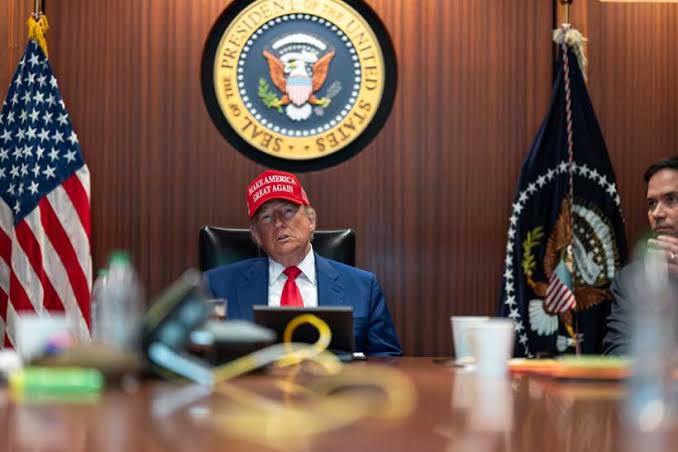
This tension underscores the complexity of pursuing protectionist policies in a highly interconnected global economy.
Balancing domestic priorities with global leadership
Policymakers face a critical challenge: reconciling the America First doctrine with the need to maintain U.S. leadership on the global stage.
The administration’s approach signals a willingness to prioritise domestic objectives, yet sustaining influence requires strategic engagement, credible alliances, and consistent trade policies.
Analysts argue that the doctrine may evolve into a hybrid model, combining strong domestic industrial policy with selective international cooperation. This could preserve U.S. competitiveness without triggering long-term isolation.
Looking ahead: lessons for global stakeholders
The unfolding consequences of the America First doctrine offer valuable lessons for governments, investors, and multinational corporations.
Adapting to a more assertive U.S. requires flexibility, diversification, and strategic contingency planning. Countries and firms must weigh the risks of dependence on U.S. markets against the opportunities presented by a resurgent domestic economy.
Ultimately, the doctrine is more than a domestic policy—it is a signal to the world that economic and strategic recalibration is underway.
How the United States balances national priorities with its historical role as a global anchor will define international trade, capital flows, and alliances for years to come.