Ukraine’s allies say the push to end Russia’s war has reached a critical moment in Ukraine diplomacy, with European leaders insisting unity is essential to shaping any credible peace pathway.
European officials warned that European security tensions are rising rapidly, stressing that hesitation from the West could embolden Moscow at a time when Ukraine faces mounting pressure on multiple fronts.
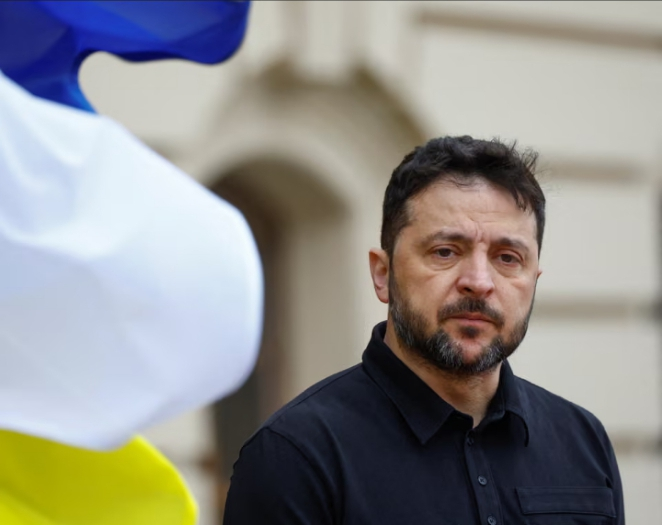
UK Prime Minister Keir Starmer said Europe “must stand firm together”, adding that “this is not the moment for drift”, reiterating shared concern about Russia’s widening military ambitions.
President Volodymyr Zelenskyy said Ukraine will present its revised security proposal on Tuesday, saying it reflects the “realities of the battlefield and the expectations of a sovereign nation”.
Zelenskyy acknowledged disagreements remain over territory, remarking, “Compromise cannot come at the expense of our people, our land, or our security—those principles are not negotiable.”
European leaders expressed anxiety over Trump peace plan reactions, noting the US president’s shifting tone and the risk that pressured negotiations could leave Ukraine vulnerable to long-term instability.
French President Emmanuel Macron warned that diplomacy must not be narrowed to “unilateral visions”, stressing that any peace agreement “must respect Ukraine’s independence and the security of the entire continent”.
Germany’s Chancellor Friedrich Merz urged stronger coordination, saying, “The world is watching whether democracies can remain united in the face of authoritarian expansion.”
Following their London meeting, leaders from Finland, Italy, Poland, Norway, the Netherlands, Denmark, Sweden and Turkiye joined discussions to demonstrate wide regional alignment behind Ukraine.
Zelenskyy travelled to Brussels after the call, where NATO and EU officials expressed frustration with Washington’s uncertainty, emphasising the need to stabilise expectations before negotiations proceed.
European diplomats say this critical moment in Ukraine diplomacy requires clarity, as Russia attempts to exploit divisions and reposition itself as a reasonable party in peace deliberations.
Ukraine’s partners highlighted concerns about escalating Kremlin attacks, pointing to intensified missile and drone strikes on cities including Zaporizhzhia, Kharkiv and Donetsk since the start of December.
Macron stated, “Civilians continue to suffer. Any reduction in aid or unity would be a dangerous signal to Moscow at this volatile stage.”
UK officials confirmed that five apartment blocks and numerous civilian facilities were destroyed in Zaporizhzhia on Monday, reinforcing fears that Russia is escalating to pressure negotiators.
Zelenskyy described this strategy as “terror used as leverage”, saying Russia’s battlefield violence increases whenever diplomatic conversations begin gaining traction among Western capitals.
Meanwhile, the Kremlin welcomed elements of Washington’s new national security strategy, with spokesperson Dmitry Peskov saying the US document “corresponds to many of Russia’s positions”.
Peskov praised references opposing NATO expansion, arguing that the shift “opens opportunities” for a different security structure—comments that further unsettled European policymakers.
Diplomats warned that Moscow’s messaging aims to divide allies, especially as some governments grow nervous about long war costs and domestic discontent.
The UK stated that Western military backing would continue, including ammunition supplies, air defence systems and financial assistance to stabilise Ukraine’s wartime economy.
Starmer argued the war represents a wider struggle, saying, “If Ukraine falls, the security architecture of Europe collapses with it. No responsible leader should allow that.”
European officials acknowledged concerns about war fatigue but insisted the political stakes have never been higher since Russia’s 2022 invasion reshaped continental geopolitics.
Analysts say this critical moment in Ukraine diplomacy stems from simultaneous battlefield challenges, diplomatic recalibrations, and Washington’s evolving stance under Trump.
Ukraine faces intensified pressure in Donetsk, where Russian forces have advanced in Lysivka, Sukhyi Yar, Hnativka, Rih and Novopavlivka according to monitoring platform DeepState.
Military commanders warn these manoeuvres are designed to achieve tactical advantages ahead of possible ceasefire negotiations, giving Moscow leverage in territorial discussions.
Ukrainian officials stressed that sovereignty cannot be negotiated, with Foreign Minister Dmytro Kuleba saying, “Our borders are determined by international law, not by Russian bombardment.”
In Brussels, NATO Secretary-General Jens Stoltenberg warned that Russia continues seeking “military dominance”, making unity crucial as winter fighting intensifies.
European Commission President Ursula von der Leyen stated, “Supporting Ukraine is supporting Europe. There is no separating the two in today’s security environment.”
The EU is preparing additional sanctions targeting Russian energy revenues and logistics networks believed to support Moscow’s military industrial output.
Italy’s Prime Minister Giorgia Meloni told reporters that discussions with Zelenskyy centred on maintaining consistent pressure: “Putin must not misinterpret diplomacy as surrender.”
European intelligence assessments indicate Russia hopes the US will push Ukraine into accepting a settlement close to Moscow’s preferences.
These concerns shaped high-level conversations in London, where leaders emphasised that Ukraine must not be forced into “concessions of desperation”.
Analysts say European security tensions are driven partly by Russia’s belief that time is on its side as Ukrainian resources diminish.
Crowded diplomatic schedules reflect fear that a misstep now could define the war’s trajectory for decades, reshaping the strategic balance across Europe.
Zelenskyy acknowledged the burden, saying, “We are standing not only for our country, but for the future of European stability.”
European leaders encouraged Washington to coordinate more closely, arguing that mixed signals weaken the entire negotiation process.
US pressure to accelerate talks has unsettled Kyiv, especially after Trump said he was “disappointed” with Zelenskyy’s handling of proposals.
Ukraine maintains that any peace framework must include guarantees against future Russian aggression, including binding commitments from NATO and EU partners.
Diplomatic sources told journalists that talks remain fluid, with Europe insisting that Ukraine’s territorial integrity must remain central to all discussions.
Meanwhile, continued escalating Kremlin attacks complicate negotiations, undermining trust and reaffirming Russia’s reliance on coercive military pressure.
Zelenskyy said Moscow’s latest bombings “demonstrate their real intentions”, arguing that Russia seeks not peace but dominance.
Humanitarian agencies reported rising displacement as families flee intensified shelling, heightening concerns about winter suffering.
Analysts believe the ongoing offensives show Russia wants to secure “facts on the ground” before any ceasefire parameters are discussed.
Merz remarked, “Peace must be built on justice, not on fear. Otherwise, we repeat the mistakes of history.”
The presence of nine additional European leaders on the London call highlighted Europe’s attempt to project overwhelming unity.
Despite differences in tone or pacing, officials stressed that Ukraine’s survival remains a shared strategic priority.
Diplomats say this critical moment in Ukraine diplomacy has galvanised European capitals to reassert their leadership amid US ambiguity.
Experts argue that Europe now views the conflict as existential, recognising that Ukrainian defeat would embolden authoritarian actors globally.
Macron said, “History is watching. Europe must take responsibility for its own defence and its own values.”
NATO members emphasised that long-term security guarantees for Ukraine must be credible, sustainable and backed by enforceable commitments.
The coming weeks will determine whether diplomatic momentum can be stabilised before battlefield realities shift further in Russia’s favour.
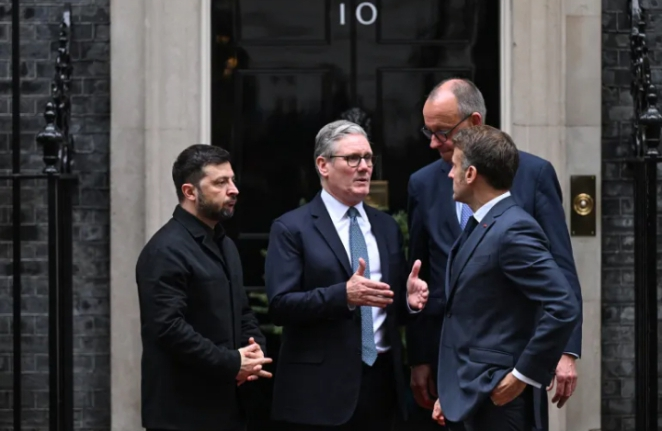
European leaders insist failure is not an option, promising deeper coordination as negotiations enter a decisive phase.
Zelenskyy closed his London remarks with a warning: “This is not just our war. It is Europe’s test—and the world’s test—of resolve.”
About The Author