Alaafin, Soun Not Seen as Oyo 50th Anniversary Programme Begins
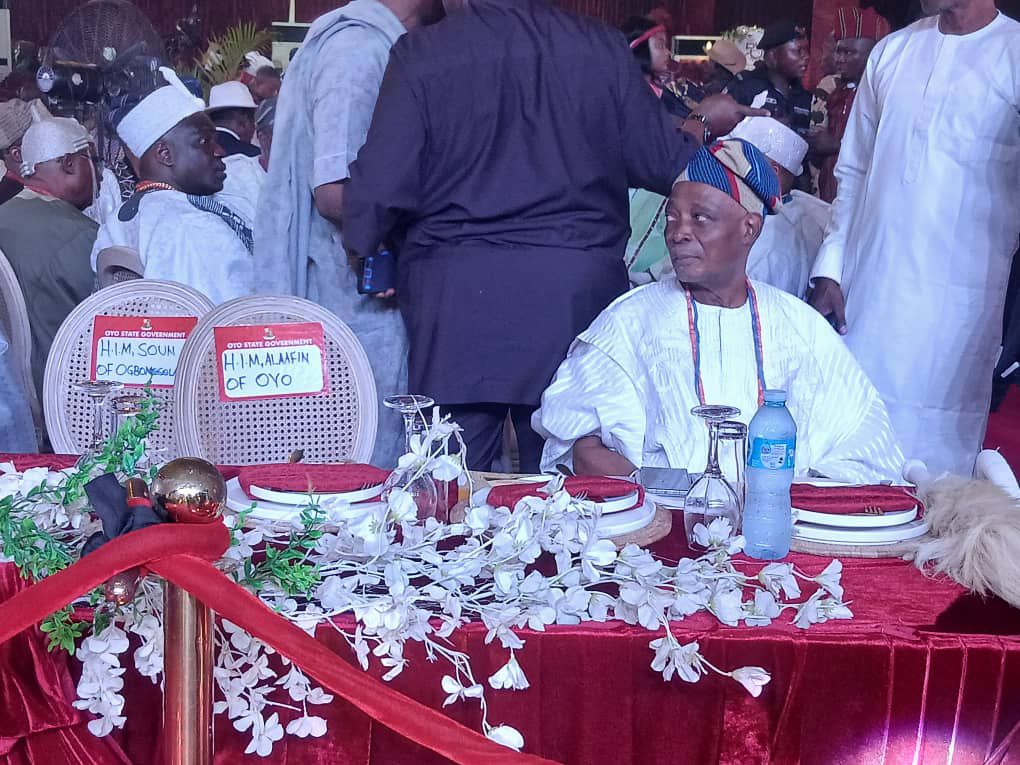
The atmosphere in Ibadan, the ancient city of Oyo state was notably subdued on Monday as the long-awaited 50th anniversary celebration of the state commenced without the presence of two of its most revered traditional rulers, the Alaafin of Oyo and the Soun of Ogbomoso.
The two monarchs were conspicuously absent from the opening ceremony of the anniversary programme, which had drawn several dignitaries, political leaders, and traditional titleholders from across the state.
Their absence has generated intense speculation among residents and observers, especially given the historical significance of the event.
The anniversary programme, which is billed as a series of cultural, historical, and developmental activities to mark the state’s golden jubilee, began with a formal event attended by key political officeholders, including the state governor, members of the State Executive Council, lawmakers, and leaders of various socio-cultural organisations.
While the programme opened in a solemn and orderly manner, the absence of the Alaafin and Soun was immediately felt.
Their traditional seats carry immense symbolic weight, and their absence at such a milestone event has raised questions about internal political dynamics and the relationship between the traditional institution and the state government.
Alaafin, Soun Not Seen as Oyo 50th Anniversary Programme Begins
The absence of the Alaafin and Soun from the 50th anniversary programme has drawn criticism from cultural leaders and some political analysts who believe the monarchs should have played a central role in the state’s golden jubilee celebration.
A senior traditional chief, who spoke on condition of anonymity, expressed disappointment, saying: “This is a historic moment for Oyo State. The Alaafin and Soun are the pillars of our culture. Their absence is not only unexpected but also saddening.”
The monarchs have not publicly disclosed the reasons for their non-attendance, and no official statement has been issued from their palaces at the time of filing this report.
However, insiders suggest that the absence may be connected to unresolved issues involving state politics and the role of traditional institutions in governance.
Observers say the absence could also stem from concerns about the direction of the anniversary celebrations and perceived marginalisation of the traditional rulers in key state functions.
The Alaafin and Soun are regarded as the spiritual custodians of the state, and their presence is often seen as a seal of legitimacy for major events.
In contrast, other notable traditional rulers, including the Olubadan of Ibadanland and Olugbon of Ile Gbon, were present at the event.
Their participation ensured that the ceremony retained some level of traditional representation, even as the two key monarchs remained absent.
The state government has, however, maintained a calm posture, describing the anniversary programme as a “collective celebration of Oyo State’s progress” and emphasising the inclusion of all stakeholders in the activities planned for the year.
A government official told reporters that the programme would proceed as planned and that the state remains open to dialogue with traditional institutions.
“We respect the institution of the Alaafin and the Soun. We have reached out and will continue to engage with them,” the official said.
The anniversary programme, which is expected to last several weeks, includes cultural displays, public lectures, town hall meetings, and developmental projects across the state.
The programme is also expected to provide a platform for showcasing Oyo State’s rich cultural heritage, history, and economic achievements since its creation.
Political analysts believe that the absence of the Alaafin and Soun at the opening ceremony may not necessarily indicate a breakdown in relations but could be a strategic move to highlight concerns about the state’s political leadership and the role of traditional rulers in public affairs.
A political analyst in Ibadan, who requested anonymity, noted:
“Traditional rulers are deeply embedded in our cultural fabric. If the Alaafin and Soun were absent, it may be a message that needs to be decoded. It could be about respect, recognition, or simply a disagreement on how the anniversary is being managed.”
Residents who gathered at the venue expressed mixed reactions. Some dismissed the absence as an internal matter that should not affect the celebration, while others believe it could undermine the success of the anniversary programme.
A youth leader in Oyo said: “We are here to celebrate our state. The anniversary is bigger than individuals. But we also understand that the absence of the Alaafin and Soun may have deeper reasons.”
Meanwhile, traditional institutions and community leaders have urged calm and emphasised the need for unity.
They called on all stakeholders to work together to ensure that the 50th anniversary is a unifying event that promotes peace, progress, and cultural identity.
As the programme continues, the question remains whether the Alaafin and Soun will join later events or remain absent throughout the anniversary activities.
For now, their absence has become the most talked-about aspect of the opening ceremony, casting a shadow over what was expected to be a historic celebration.
About The Author