Africa’s upstream oil and gas sector is on course for a major revival as new data projects a fresh surge in capital inflows, particularly from offshore exploration and production activities.
According to the State of African Energy 2026 Outlook Report by the African Energy Chamber, the continent is set to attract about $41bn in upstream spending next year — a figure that underscores renewed investor interest in Africa’s hydrocarbon potential despite conservative global trends.
The report, obtained on Friday, reveals that Africa’s share of global exploration and production expenditure is strengthening steadily as both international oil companies (IOCs) and indigenous operators intensify operations across deepwater and ultra-deepwater basins.
This resurgence comes against a backdrop of global capital spending expected to reach $504bn in 2026, slightly higher than the projected $500bn for 2025.
Africa’s Upstream Investment Rebounds
The renewed appetite for upstream development is evident in the gradual but consistent rebound seen since the sector plunged during the COVID-19 pandemic in 2020.
The chamber’s report shows that Africa is projected to draw $40bn in 2025, rising to $41bn in 2026, reflecting strengthening investor confidence and improving fiscal conditions across many producing nations.
Despite the modest rise in global E&P budgets, the report emphasises that oil majors remain cautious, prioritising cash retention, balance-sheet sustainability, and shareholder returns over aggressive reserve replacement.
This global conservatism, the report notes, continues to shape investment decisions even in regions with promising geology like Africa.
Countries with longstanding production profiles — notably Nigeria, Angola, and Libya — are positioned to absorb a significant share of the new capital.
These nations benefit from large hydrocarbon reserves, existing production and export infrastructure, and ongoing policy reforms aimed at unlocking new investments.
However, industry analysts warn that the long-term outlook hinges strongly on political stability and predictable regulatory frameworks.
The report states:
“African upstream spending has risen consistently for three years following pandemic-induced lows. Yet, global growth remains significantly below the surge in upstream cash flows, as companies maintain conservative capital strategies.”
Deepwater Surge and Offshore Expansion
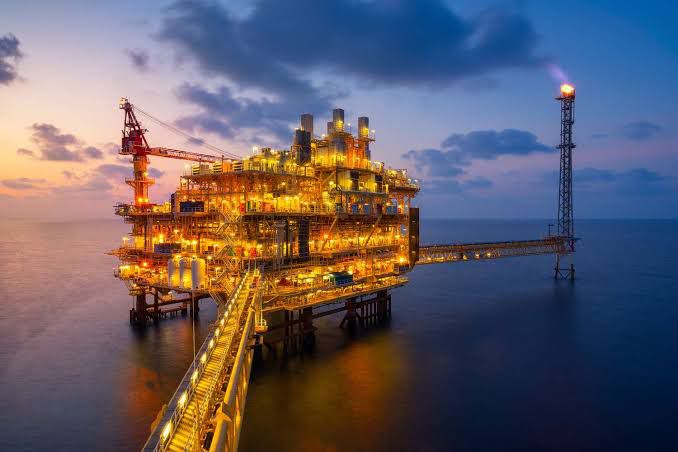
A standout trend in the 2026 outlook is the escalating investment in offshore assets.
While onshore spending is expected to remain around $22bn as operators prioritise optimising mature fields, offshore investment is projected to hit $19bn next year and grow at a 6.6 per cent compound annual rate through the forecast period.
Although Africa still accounts for a relatively small fraction of global offshore capex, its offshore sector is expected to deliver stronger growth than most regions worldwide.
This expansion is driven by improved offshore drilling technologies, favourable geological prospects, and the high-impact potential of deepwater and ultra-deepwater discoveries.
Recent large-scale discoveries in emerging hotspots such as Namibia, Mozambique, and Tanzania are also boosting optimism and drawing new explorers to the continent.
The chamber explains:
“The surge in offshore spending is supported by technological advancements, positive geology, and the strong economic outlook of deepwater projects. Companies are well-positioned to ramp up activities and capitalise on favourable project economics in African offshore basins.”
Changing Ownership Landscape and the Rise of Indigenous Operators
Africa’s upstream landscape is undergoing significant restructuring as IOCs divest from some mature or non-core assets.
This shift is creating opportunities for national oil companies (NOCs), regional independents, and new market entrants.
Nigeria and Angola are among the countries experiencing the sharpest transition, with indigenous players increasingly taking over operatorship of onshore and shallow-water assets.
This development aligns with national local-content regulations that prioritise domestic participation, job creation, and value retention within host economies.
The chamber’s report highlights that local-content policies continue to play a foundational role in expanding Africa’s oil and gas ecosystem.
For instance, Ghana recorded over 7,000 direct oil and gas jobs under its local-content programmes.
However, challenges remain. Many African nations struggle with limited industrial capacity, inadequate technical expertise, and restricted access to financing — factors that often delay project execution and limit competitiveness.
It noted: “Indigenous companies face constraints including weak industrial bases, limited financial resources, and gaps in technology and managerial capability.
These factors make it challenging to fully meet local-content targets and compete effectively with established international service providers.”
Onshore Stability Amid Offshore Boom
While most of the projected growth is concentrated offshore, onshore operations remain strategically important for maintaining production stability in many countries.
The chamber forecasts that operators will continue favouring production optimisation, cost minimisation, and asset integrity management over new large-scale onshore expansion.
This reflects a broader industry trend toward operational efficiency rather than aggressive exploration.
A Continent Back on the Investment Map
The African Energy Chamber’s projections indicate that Africa is steadily regaining prominence on the global energy investment map.
As global E&P spending edges higher and major producers diversify portfolios, Africa is positioning itself as a high-value destination for upstream capital — provided political conditions remain stable and regulatory reforms continue.
With offshore projects expected to drive the next phase of growth and indigenous companies assuming more control of national assets, Africa’s oil and gas outlook for 2026 is shaping up to be its most promising in years.
About The Author