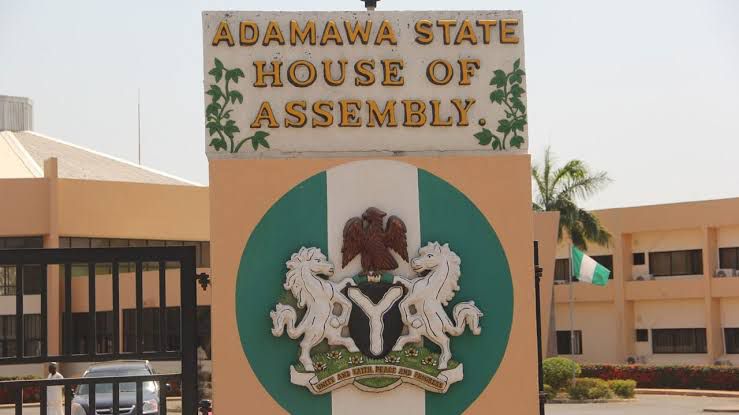
The Adamawa State House of Assembly has taken a significant legislative step by passing the Social Protection Bill, a measure designed to institutionalise welfare support for vulnerable residents across the state.
The decision was reached during plenary on Monday after lawmakers debated the proposal and unanimously endorsed it at the third reading.
The Social Protection Bill seeks to establish a structured welfare framework that will coordinate interventions for disadvantaged groups.
These include persons living with disabilities, unemployed youths and adults, elderly citizens, widows, and individuals battling serious illnesses.
Lawmakers explained that the intention is to move beyond temporary or fragmented assistance programmes and instead create a durable system backed by law.
The Majority Leader, Kate Raymond Mamuno, sponsored the bill and formally moved the motion for its third reading on the floor of the House.
The motion was seconded by the Minority Leader, Sulaiman Umar Alkali, demonstrating bipartisan agreement on the need for comprehensive welfare reforms in Adamawa State.
After deliberations, members voted in favour, allowing the bill to scale through its final legislative stage.
The passage of the Social Protection Bill followed months of consultations and technical input from development partners.
The draft legislation was developed with support from the German Federal Ministry for Economic Cooperation and Development through GIZ Nigeria, alongside the European Union.
This collaboration was undertaken under the Supporting Sustainable Social Protection, Participation, and Economic Resilience in North East Nigeria (SEPIN-SUSI) programme, which focuses on strengthening social systems in the region.
According to lawmakers, the new legal framework will ensure that welfare initiatives are properly coordinated across ministries, departments, and agencies.
By creating clear guidelines for identification, registration, and monitoring of beneficiaries, the government hopes to enhance transparency and accountability in the delivery of services.
Officials emphasised that the absence of a unified framework in the past often resulted in duplication of efforts and inefficiencies.
The Social Protection Bill is also expected to provide a foundation for data-driven policy implementation.
With a structured database of vulnerable residents, authorities will be able to respond more swiftly to emergencies and economic shocks.
The measure is seen as particularly important in Adamawa State, where economic hardship and social vulnerabilities have been heightened by security challenges and displacement in parts of the North-East.
Supporters of the legislation argued that a comprehensive welfare framework will not only provide immediate relief but also promote long-term economic resilience.
By supporting unemployed individuals with targeted programmes and empowering vulnerable groups, the government aims to reduce dependency and create pathways toward sustainable livelihoods.
During the plenary session, Speaker Bathiya Wesley, who presided over proceedings, commended members for their thoughtful contributions.
He described the passage of the bill as a milestone in the Assembly’s commitment to inclusive governance.
Following its adoption, he directed the Clerk of the House to prepare a clean copy of the document for transmission to the state governor for assent.
Observers note that once signed into law, the Social Protection Bill will provide legal backing for the expansion of social investment programmes in Adamawa State.
It is expected to harmonise existing welfare schemes while allowing room for innovative initiatives tailored to emerging needs.
Stakeholders in civil society have welcomed the development, describing it as a proactive approach to poverty reduction.
They stressed that effective implementation will be crucial to achieving the objectives outlined in the legislation.
Transparency in beneficiary selection and consistent funding are likely to determine the long-term success of the initiative.
The adoption of the Social Protection Bill reflects a broader trend among subnational governments seeking to strengthen safety nets in response to economic pressures.
In Adamawa State, lawmakers believe the framework will promote dignity, inclusion, and shared prosperity by ensuring that no vulnerable resident is left behind.
As the bill awaits gubernatorial assent, expectations remain high that the new welfare structure will translate legislative intent into tangible improvements in the lives of thousands of residents.
Ireport247news
About The Author