

No fewer than 25 people were confirmed dead after a deadly attack on two rural communities in Adamawa State which shook the northeastern part of Nigeria.
The coordinated raids, which occurred on Tuesday, February 24, 2026, left homes in ruins, families displaced, and fresh fears about the fragile security situation in the region.
The affected communities, Kirchinga in Madagali Local Government Area and Garaha in neighbouring Hong Local Government Area, sit close to the fringes of the Sambisa Forest.
The forest has for years served as a hideout for insurgent factions including Boko Haram and the Islamic State West Africa Province (ISWAP).
Their presence has contributed to repeated cycles of violence across the northeast.
Witnesses said the Adamawa attack began in the evening when armed men stormed Kirchinga dressed in military-style uniforms.
Their appearance initially misled villagers, who assumed they were legitimate security operatives conducting routine patrols.
That moment of confusion, residents explained, gave the gunmen the opportunity to advance deeper into the settlement before opening fire.
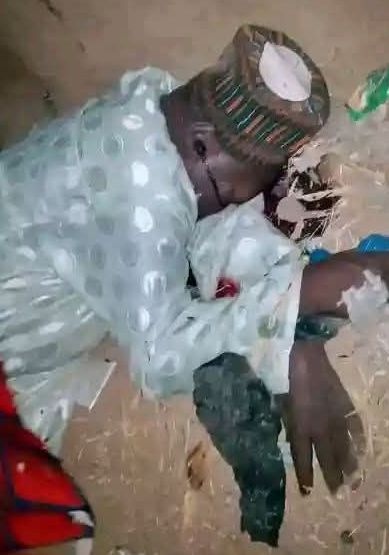
Abubakar Lawan Kanuri, the village head of Kirchinga, disclosed that 18 bodies were recovered after the assailants moved through the area.
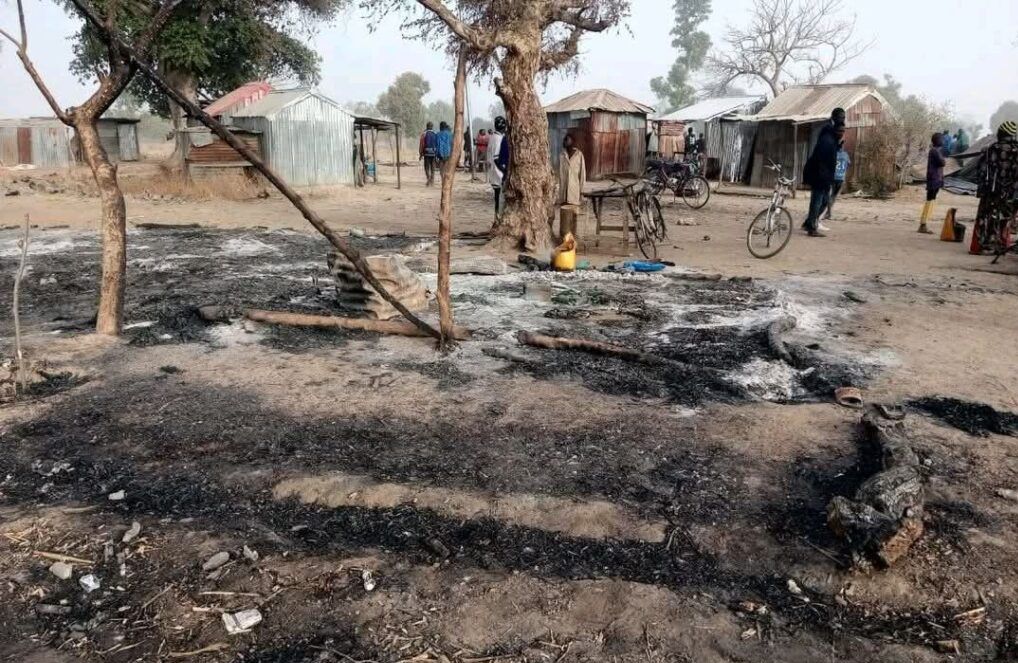
Several houses were also set ablaze, forcing residents to run for safety under chaotic conditions. Survivors described scenes of panic as families scrambled to escape the gunfire.
In Garaha, the second community affected by the Adamawa attack, seven people were reportedly killed when dozens of gunmen arrived on more than 50 motorcycles.
According to Musa Isa, a resident who narrowly escaped, the attackers advanced from different directions, overwhelming the community within minutes.
The attackers did not restrict their assault to civilians. Reports indicate that they also targeted a nearby military base during the Adamawa attack, resulting in the death of three soldiers.
The confrontation intensified fear among residents, who had relied on the security post for protection.
Four villagers attempting to flee were shot, while a school building was burned during the violence.
The destruction of public infrastructure has further complicated recovery efforts, particularly for children whose education has once again been disrupted by insecurity.
Following the Adamawa attack, many survivors abandoned their homes and fled toward Mubi, a larger town considered relatively safer.
Families arrived with little more than the clothes they were wearing. Local sources say temporary shelters are now hosting displaced persons as community leaders appeal for urgent assistance.
Humanitarian concerns are mounting, especially as food supplies, clean water, and medical services remain limited in remote settlements.
Aid workers warn that repeated displacement often worsens poverty levels and increases vulnerability among women and children.
Governor Ahmadu Umaru Fintiri of Adamawa State strongly condemned the killings, describing them as cowardly and unacceptable acts of terrorism.
In a statement released by his spokesperson, Humwashi Wonosikou, the governor reassured citizens that security agencies were working to prevent further attacks.
He emphasized that the government would not allow insurgents to undermine ongoing peace-building efforts.
The governor also called for improved intelligence gathering and closer collaboration between local communities and security forces.
The latest violence highlights the enduring insecurity across Nigeria’s northeast, a region that has endured more than 17 years of insurgency.
Despite sustained military operations aimed at dismantling extremist networks, remote communities continue to experience sporadic yet deadly raids.
Security analysts note that insurgent groups have adapted their tactics over time. The use of military-style disguises and coordinated motorcycle convoys suggests a calculated approach designed to confuse residents and outmaneuver local defenses.
Communities bordering the Sambisa axis remain particularly vulnerable because of their proximity to forested terrain that offers cover to armed groups.
Residents often depend on farming and small-scale trading, activities frequently disrupted by attacks.
Community leaders are urging federal authorities to strengthen surveillance and expand security presence in isolated areas.
Some residents have called for the deployment of additional troops and improved communication systems to enable quicker emergency responses.
Experts also stress the importance of addressing root causes such as poverty, unemployment, and limited educational opportunities, which can contribute to instability in the long term.
As families mourn their losses, the emotional toll of the Adamawa attack remains evident. Survivors are left to rebuild homes and livelihoods while coping with trauma.
The tragedy has reignited national conversations about how to secure vulnerable communities without disrupting daily life.
For now, the people of Kirchinga and Garaha face the daunting task of recovery. Their hope rests on sustained security efforts and meaningful support to prevent a recurrence of such devastating events.
About The Author


