The socio-cultural organisation, Ìgbìnmó Májékóbájé Ilé-Yorùbá, has strongly criticised the Federal Government’s decision to accelerate the National Ranching Programme in Kwara State, warning that the move could heighten tension in communities already battling insecurity.
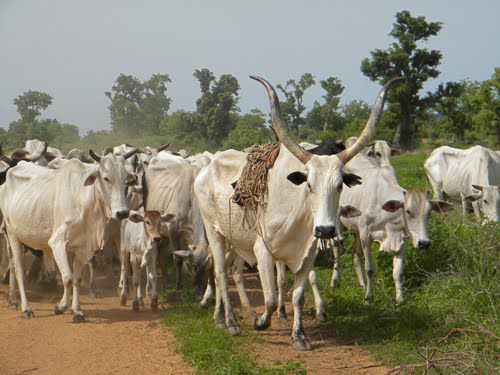
The group argued that the policy, introduced at a time of frequent kidnappings and killings, fails to address the immediate safety concerns of residents.
In a detailed statement issued by its Convener, Olusola Badero, and released through the Home Director, Princess Balogun, the union expressed deep reservations about the timing and intention of the ranching initiative.
According to the organisation, the Yoruba people in affected areas have been subjected to persistent attacks that have forced many families to flee their ancestral homes.
The union maintained that there is no established pattern of farmer–herder clashes between indigenous farmers and pastoralists in Kwara State.
Instead, it claimed that criminal elements have carried out repeated assaults, kidnappings, and killings in rural communities.
It argued that presenting ranching as a solution to insecurity misrepresents the real nature of the crisis.
Community representatives cited reports of deserted villages where residents abandoned farms and properties due to fear.
They contended that restoring law and order should be prioritised before embarking on agricultural reforms or livestock management schemes.
The safety of the Yoruba population, the group stressed, must not be compromised for any policy objective.
The statement also raised concerns about potential land disputes. According to the organisation, introducing ranches in areas where communities have been displaced could create long-term ownership conflicts.
The union warned that policies perceived as favouring external interests may deepen mistrust and ethnic tensions.
Furthermore, the group questioned whether ranching addresses the behaviour of armed gangs allegedly responsible for abductions.
It asserted that many attackers reportedly move on motorcycles and operate with sophisticated weapons rather than cattle, suggesting that insecurity in the region is driven by criminality rather than traditional pastoral activity.
In its view, conflating violent crime with herding practices oversimplifies the issue.
The organisation also linked the debate to broader political calculations. It suggested that the Federal Government’s approach may be influenced by preparations for the 2027 presidential race.
While acknowledging the need for national unity and economic development, the union insisted that governance decisions must be rooted in protecting citizens’ lives above all else.
For many Yoruba residents, the immediate concern is survival, not livestock policy reform.
Citing recent developments, the group referenced reports of a disturbing video allegedly showing over 176 residents of Woro community in Kaiama Local Government Area held captive by suspected insurgents.
The victims reportedly included women, nursing mothers, and children.
The union described the footage as a stark reminder that communities remain vulnerable and in urgent need of rescue operations and strengthened security presence.
According to the statement, launching ranching projects amid such distress sends the wrong signal.
It argued that communities struggling to recover from trauma and displacement require reassurance, investment in security infrastructure, and transparent engagement from authorities.
Without these measures, the union believes that any major land-based initiative risks being viewed with suspicion.
The group therefore called on President Bola Tinubu to reconsider the timeline of the ranching programme in Kwara State.
It urged the administration to temporarily suspend implementation until a comprehensive security assessment is conducted and affected residents are safely returned to their homes.
The protection of Yoruba ancestral lands, it said, is a matter of cultural survival and identity.
Beyond security concerns, the union emphasised the importance of consultation.
It argued that policy decisions impacting rural livelihoods should involve local stakeholders, traditional rulers, farmers’ associations, and community leaders.
Transparent dialogue, it suggested, could reduce misinformation and foster cooperation rather than confrontation.
While reiterating that it does not oppose livestock development in principle, the organisation maintained that timing and context are crucial.
It warned that proceeding without first stabilising the security situation could produce unintended consequences that linger for years.
Trust between communities and government institutions, once broken, can be difficult to rebuild.
Ireport247news
About The Author