

Global Turmoil Deepens as Media Layoffs, Gaza Violence and Political Scandals Dominate Headlines
From sweeping newsroom layoffs in the United States to renewed bloodshed in Gaza and political aftershocks across Africa and Europe, global developments this week reflect mounting pressures on democratic institutions, media freedom, fragile ceasefires and political accountability.
A convergence of economic strain, armed conflict and unresolved historical legacies is reshaping the international landscape, raising questions about governance, transparency and the protection of civil liberties worldwide.
Libya investigates killing tied to Gaddafi legacy
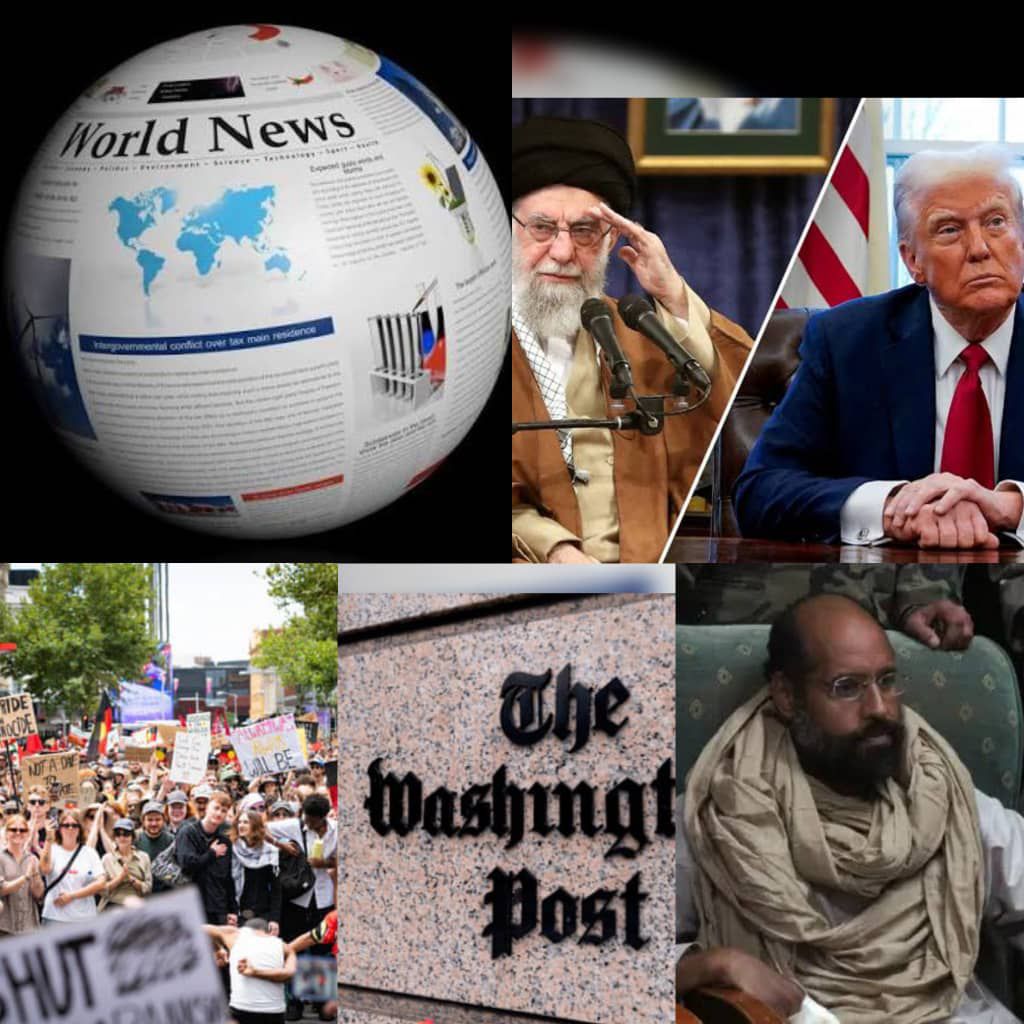
In North Africa, Libyan prosecutors have opened an investigation into the killing of Saif al-Islam Gaddafi, son of former Libyan leader Muammar Gaddafi, following reports that he died from gunshot wounds after an attack on his home in Zintan.
Authorities said four unidentified gunmen stormed the residence, but conflicting accounts from relatives and legal representatives have raised questions about where and how the killing occurred. No group has claimed responsibility.
The case has reignited political tensions surrounding the Gaddafi legacy, which continues to divide Libya more than a decade after the 2011 uprising.
Analysts warn that unresolved grievances tied to the former regime remain a destabilising factor in Libya’s fragile political environment.
Epstein files revive global scrutiny
In the United States, the re-emergence of names linked to Jeffrey Epstein in newly released Justice Department documents has reopened old wounds and sparked renewed public scrutiny.
Melinda French Gates said the resurfacing of her former husband Bill Gates’s name in the Epstein files brought back “very painful” memories from their marriage. Speaking on an NPR podcast, she stressed that individuals named in the documents must answer questions themselves.
The files do not accuse Gates of wrongdoing, and Epstein, a convicted sex offender, died in jail in 2019 while awaiting trial. Still, the disclosures have reignited debates about accountability among powerful figures and the long-lasting impact of association with Epstein’s network.
Russia tightens grip on speech
In Russia, a Moscow court sentenced stand-up comedian Artemy Ostanin to more than five years in a penal colony over a joke referencing a disabled war veteran. Prosecutors argued that the routine incited hatred against the armed forces — a charge Ostanin denied.
Human rights groups say the case reflects the increasingly restrictive environment for free expression in Russia since the invasion of Ukraine. Critics argue that humour, satire and dissent are being criminalised as authorities broaden the definition of “extremism” and “discrediting the military.”
World in Brief: Washington Post cuts staff, Gaza violence, Mugabe named and global unrest
One of the most striking developments came from the United States, where the Washington Post announced one of the most dramatic newsroom overhauls in its history, laying off approximately one-third of its workforce.
The move includes the closure of the paper’s sports desk and deep cuts to foreign, books and local coverage.
Management said the decision was driven by the need to ensure long-term financial sustainability amid declining advertising revenues and shifting digital consumption patterns.
However, journalists and media analysts warned that the cuts could severely weaken the paper’s watchdog role.
Former executive editor Marty Baron described the layoffs as “one of the darkest days in the Washington Post’s history,” arguing that the reductions risk hollowing out a newsroom once regarded as a pillar of investigative journalism.
The shake-up underscores the wider crisis facing legacy media organisations struggling to adapt to economic and technological disruption.
Gaza ceasefire under renewed strain
Meanwhile, the Middle East witnessed a sharp escalation in violence, with Israeli air and tank strikes killing at least 20 Palestinians across Gaza, including children and a paramedic.
The incident marks one of the deadliest episodes since a ceasefire was brokered three months ago.
Israeli authorities said the strikes followed an attack in which fighters opened fire on Israeli troops near the Yellow Line, wounding an officer.
Hamas rejected that account, accusing Israel of using the incident as a pretext to resume military operations.
The exchange has fuelled fears that the fragile truce is rapidly unravelling, with humanitarian agencies warning that civilians are once again bearing the brunt of renewed hostilities.
Observers say the escalation highlights the fragility of ceasefire agreements in the absence of sustained diplomatic engagement and accountability mechanisms.
Africa: executions, drugs and political uncertainty
Across Africa, authorities in Somalia’s Puntland region carried out the rare execution of a woman convicted of murdering a 14-year-old domestic worker, sparking protests and renewed debate over child protection and capital punishment.
Officials said the execution followed Islamic legal principles that allow a victim’s family to demand retribution.
In Zambia, security forces arrested Tanzanian national Ahmed Muharram, described as a notorious transnational drug trafficker, during intelligence-led raids in Lusaka. Large quantities of marijuana and codeine-based cough syrup were seized, though Muharram has yet to comment on the charges.
South Africa also faces political uncertainty after Democratic Alliance leader John Steenhuisen announced he would not seek re-election, raising questions about the future stability of the country’s coalition government formed after the 2024 elections.
Mugabe named, no wrongdoing alleged
Zimbabwe’s former president Robert Mugabe was named in the Epstein files, according to newly released documents suggesting possible historical financial contacts.
The files include unverified testimony and emails proposing economic engagement with Zimbabwe.
Being named does not imply criminal conduct, and Mugabe, who died in 2019, was not accused of wrongdoing. Nevertheless, the disclosure has drawn attention due to his long-standing influence on Zimbabwean politics and international relations.
Climate emergencies intensify
In Morocco, authorities ordered mass evacuations as flooding worsened across multiple regions, with more than 108,000 people displaced. Heavy rainfall and swelling rivers prompted warnings that water releases from full dams could further exacerbate flooding.
Emergency shelters have been established, while meteorological agencies warned that further rainfall is expected, highlighting the growing impact of climate-related disasters across North Africa.
A world under strain
Taken together, these developments illustrate a world grappling with institutional fragility, unresolved conflicts, shrinking civic space and climate-driven emergencies.
From media layoffs in Washington to battlefield deaths in Gaza and political tremors across Africa, the stories reflect interconnected pressures shaping global affairs in 2026.
About The Author


