

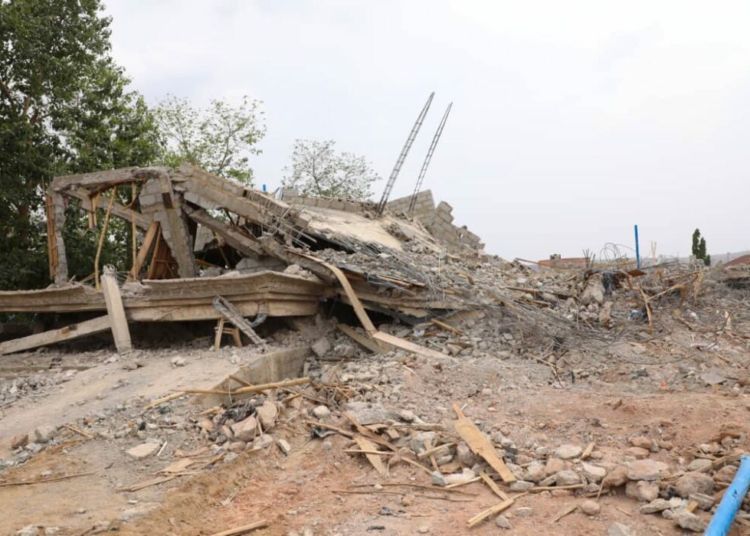
In a decisive move to reinforce urban safety and regulatory compliance, the Minister of the Federal Capital Territory (FCT), Nyesom Wike, has ordered the takeover of a parcel of land in Jikwoyi, a district within Abuja, following the collapse of a multi-storey hotel building.
The directive forms part of broader efforts by the FCT Administration to clamp down on illegal construction and enforce building standards across the capital.
The incident, which occurred last Friday, has drawn attention to ongoing concerns about structural safety and compliance in rapidly developing parts of the FCT.
According to officials, the building was erected without the necessary approvals from the Department of Development Control, a key regulatory body tasked with monitoring construction activities in the territory.
Despite repeated warnings and stop-work notices, the developer allegedly continued construction, ultimately leading to the building’s failure.
During an inspection visit to the site, Wike expressed strong dissatisfaction with the blatant disregard for regulatory procedures.
He stated that the FCT would no longer tolerate such violations, especially when they pose a direct threat to public safety.
The Minister confirmed that the land would be confiscated and repurposed for public use, adding that discussions would be held with the host community to determine a suitable project for the reclaimed space.
This action underscores the seriousness with which the FCT authorities are approaching the issue of non-compliance.
The FCT Minister also directed law enforcement agencies to ensure the immediate arrest of the building’s owner.
He emphasized that accountability is essential in deterring future infractions, noting that developers who bypass approval processes must face the full weight of the law.
The move has been widely interpreted as a signal that the FCT Administration is prepared to take tougher measures against erring developers.
Although no fatalities were recorded in the Abuja building collapse, several individuals sustained injuries and were promptly taken to nearby medical facilities.
Officials noted that the situation could have been far worse, considering the scale of the structure and the potential number of occupants.
This near-miss has further intensified calls for stricter oversight and proactive enforcement of building regulations within the FCT.
Wike highlighted that obtaining proper building approval is not merely a bureaucratic requirement but a critical safety measure.
Through the approval process, authorities can assess structural designs, monitor construction phases, and ensure that only approved materials are used.
He warned that unauthorized projects often rely on substandard materials and unqualified personnel, increasing the risk of structural failure.
In reiterating the administration’s stance, the Minister directed relevant agencies to strengthen enforcement mechanisms across the FCT.
This includes identifying and demolishing structures that fail to meet regulatory standards or lack proper authorization.
He stressed that proactive monitoring and timely intervention are essential to preventing similar incidents in the future.
The FCT Administration’s decision to seize the land also reflects a broader strategy to promote responsible urban development.
By converting the site into a public-use facility, the government aims to turn a negative incident into an opportunity for community benefit.
Residents of the area are expected to play a role in deciding how the land will be utilized, ensuring that the outcome aligns with local needs.
Urban development experts have long warned about the dangers of unchecked construction activities in fast-growing cities like Abuja.
The latest incident adds to a growing list of structural failures that have been linked to poor oversight, lack of compliance, and the use of inferior materials.
Analysts believe that consistent enforcement of regulations, coupled with public awareness, is key to addressing these challenges.
Furthermore, the Minister’s actions highlight the importance of institutional accountability within the FCT framework.
By holding developers responsible and empowering regulatory agencies, the government is seeking to rebuild public confidence in the system.
This approach also serves as a deterrent to others who might consider bypassing established procedures.
As part of ongoing reforms, the FCT Administration is expected to intensify inspections and collaborate with professional bodies in the construction industry.
These partnerships aim to ensure that best practices are upheld and that developers adhere strictly to approved guidelines.
In conclusion, the response to the Abuja building collapse demonstrates a renewed commitment by the FCT leadership to safeguard lives and property.
Through decisive enforcement, community engagement, and a focus on long-term planning, authorities hope to prevent future occurrences and promote sustainable development across the capital.
About The Author
