

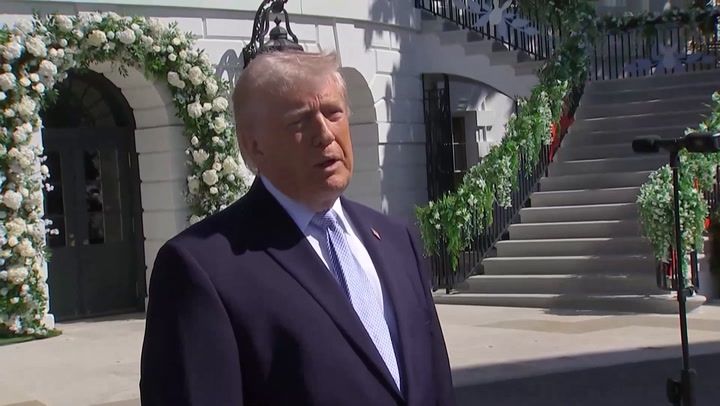
Iran ceasefire – Political leaders and many Americans breathed a sigh of relief on Tuesday evening when Donald Trump announced a provisional ceasefire deal with Iran. This followed threats to destroy Iran’s “whole civilization.”
The announcement came roughly 90 minutes before the 8pm ET deadline. Trump had pledged to bomb Iran’s power plants and bridges, a move legal and military scholars warned could constitute a war crime.
A last-minute intervention by Pakistan reportedly led Trump to suspend his ultimatum, temporarily preventing widespread attacks. He posted on social media outlining the conditions for a two-week pause in hostilities.
“Subject to the Islamic Republic of Iran agreeing to the COMPLETE, IMMEDIATE, and SAFE OPENING of the Strait of Hormuz, I agree to suspend bombing for two weeks,” Trump wrote on Tuesday evening.
Shortly after, Iran’s foreign ministry confirmed passage through the Strait of Hormuz would be allowed for the next two weeks, under Iranian military management, calming fears of immediate escalation.
Trump’s earlier statements had been apocalyptic. He warned that “a whole civilization will die tonight, never to be brought back again” if Iran failed to allow safe commercial shipping through the strait.
Democrats, former allies, and Pope Leo condemned the comments. Many viewed Trump’s rhetoric as reckless brinkmanship, threatening international stability and prompting urgent calls for congressional action to check presidential power.
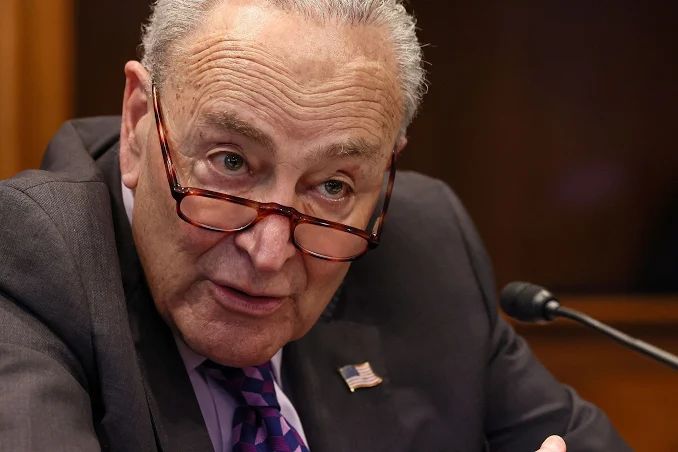
Senate Democratic leader Chuck Schumer expressed relief at the ceasefire. “I’m glad Trump backed off and is desperately searching for any sort of exit ramp from his ridiculous bluster,” he said.
Schumer previously called Trump “an extremely sick person” waging a “wanton war of choice.” The ceasefire did not stop calls from lawmakers for impeachment or invoking the 25th Amendment.
Progressive voices, including Marjorie Taylor Greene and Candace Owens, condemned Trump’s threats as “evil” and “madness.” Many former supporters warned that further escalation could risk catastrophic conflict in the Middle East.
Representative Alexandria Ocasio-Cortez criticized the deal as symbolic. “The President has threatened a genocide against the Iranian people and is continuing to leverage that threat,” she said on social media.
House Minority Leader Hakeem Jeffries also denounced Trump’s behavior as “unhinged, unpresidential, and unconscionable,” warning that Americans oppose “this reckless war of choice” and demand a clear exit strategy.
Democrats called for the House to reconvene and pass a war powers resolution, aiming to permanently end the conflict and prevent further unilateral military actions by the president.
Congressional Republicans offered a contrasting view. While previously muted, many hailed the ceasefire as a tactical maneuver, framing Trump’s action as strategic rather than reckless.
Senator Rick Scott of Florida called it “a strong first step toward holding Iran accountable,” praising Trump’s approach of “peace through strength” over perceived weak appeasement policies.
Senator Lindsey Graham expressed hope that diplomacy could end “the reign of terror of the Iranian regime,” cautioning that Iran must not be rewarded for prior attacks on freedom of navigation.
Representative Dan Crenshaw criticized those panicking over Trump’s rhetoric. “Take a breath,” he wrote. “President Trump speaks in terms of POWER, the only language our adversaries understand.”
The ceasefire drew international attention as a temporary measure. Analysts note that, despite prior US-Israeli strikes, Iran’s leadership remains hardened, consolidated, and wary of external threats in the region.
Political commentators argue the ceasefire shows the limits of military threats. US objectives of regime change remain unrealized, highlighting the need for careful diplomatic engagement with Iran.
The agreement comes amid rising international concern over regional stability. A pause in hostilities temporarily protects commercial shipping and reduces the immediate risk of escalation in global energy markets.
Critics argue the two-week period is too short to resolve underlying tensions. Without a broader diplomatic framework, the ceasefire risks becoming a temporary pause before hostilities resume.
Domestic political implications are significant. Trump’s handling of the crisis may influence public opinion, both among supporters who admire his assertiveness and opponents who see his methods as dangerous.
US allies in Europe and the Middle East are monitoring closely. Diplomatic channels are active, aiming to leverage the temporary ceasefire toward longer-term stability in the region.
The broader significance of the ceasefire lies in demonstrating diplomacy’s potential influence on US decision-making. Pakistan’s intervention and Iran’s willingness to negotiate highlight this dynamic.
As the two-week window begins, global attention focuses on Washington and Tehran. Analysts caution that missteps or miscommunications could unravel the fragile arrangement quickly.
The Trump-Iran ceasefire illustrates modern conflict management challenges. Even with military power, achieving objectives requires diplomacy, careful messaging, and attention to regional dynamics.
The provisional ceasefire offers a temporary reprieve but leaves unresolved questions regarding long-term security, political stability, and US leadership credibility.
The coming weeks will reveal whether this agreement represents meaningful progress or a brief pause in a volatile situation, with consequences for both domestic and international policy.
Read also: Trump ceasefire deal: Two-week pause in Iran conflict signals possible Middle East breakthrough
About The Author
