

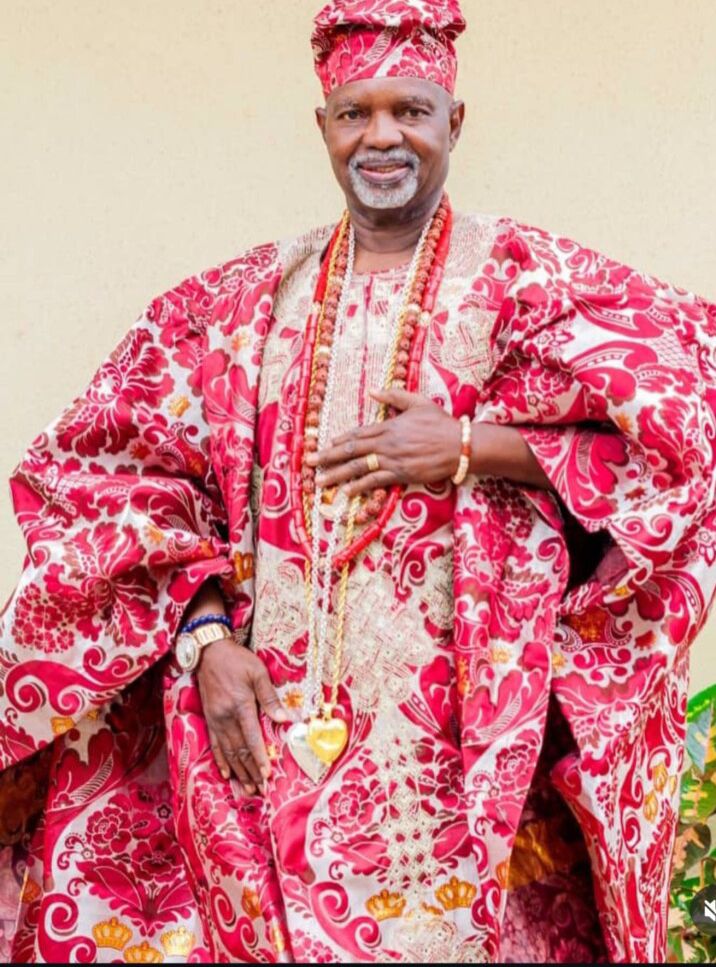
Nigeria’s journalism community and the people of Oyo State are mourning the loss of one of the country’s most accomplished media professionals following the death of veteran journalist, author, public relations expert and cultural advocate, Oloye Lekan Alabi.
The respected communicator, who also held the traditional title of Abese Olubadan of Ibadanland, passed away on Saturday morning in Lagos at the age of 76.
His death was announced in a statement released by the Olubadan Palace through the Media Aide to the Olubadan of Ibadanland, Adeola Oloko. Family members disclosed that he would be buried in accordance with Islamic rites.
For decades, Oloye Lekan Alabi remained one of the most recognizable figures in Nigerian journalism, public communication and Yoruba cultural promotion.
His professional journey reflected an unwavering commitment to truth, excellence, public service and the preservation of history.
Through his work in the media, government and traditional institutions, he earned admiration across different generations and became a respected voice on issues relating to leadership, culture and society.
Born on October 27, 1950, in Ibadan, Oyo State, Alabi developed a passion for learning from an early age. He began his education at Seventh-Day Adventist Primary School, Oke-Foko, Ibadan, where he studied between 1958 and 1963.
He later attended African Church Grammar School, Apata-Ganga, from 1964 to 1969. After completing his secondary education, he briefly worked as a classroom teacher before deciding to pursue a career in journalism, a profession that would define his life’s work.
His first major opportunity in the media industry came at Onibonoje Press Limited in Ibadan, where he worked as an editorial assistant.
The position gave him practical experience in newspaper production and sharpened his editorial skills.
Determined to build a successful career, he later joined Sketch Publishing Company Limited in 1973 as a reporter, writer and newsreader.
At Sketch, Alabi quickly distinguished himself through his ability to communicate effectively in both English and Yoruba.
His bilingual reporting made him popular among readers and listeners, while his professionalism and dedication earned him the respect of colleagues within the media industry.
Seeking to improve his knowledge, he travelled to London to study journalism before returning to Nigeria to continue his flourishing career.
His influence expanded further when he joined the Nigerian Television Authority (NTA), Ibadan, where he worked between 1978 and 1982.
During that period, television broadcasting was still developing in Nigeria, and Alabi became part of a generation of journalists that helped shape the country’s broadcast media landscape.
He later became one of the pioneer editorial staff members of the Television Service of Oyo State, now known as BCOS Television.
His name remains permanently associated with the station’s history because he was the first reporter to appear on its screen.
He also became the first Chairman of the Nigerian Union of Journalists (NUJ) Chapel established at the station, further demonstrating the confidence his colleagues had in his leadership abilities.
Outside journalism, Alabi enjoyed a distinguished career in public service. He served as Chief Press Secretary to four governors of the old Oyo State, including the administration of the late Chief Bola Ige.
His years in government communication showcased his ability to manage public information with professionalism, credibility and tact, making him one of the country’s respected public relations practitioners.
His expertise also proved valuable in the corporate sector when he became the pioneer General Manager of Corporate Affairs at Odu’a Investment Company Limited.
In that capacity, he played an important role in strengthening corporate communications and improving stakeholder engagement for one of the South-West’s leading investment organisations.
Beyond his professional accomplishments, Oloye Lekan Alabi devoted much of his life to promoting Yoruba culture and preserving historical records.
As a respected traditional title holder in Ibadanland, he actively participated in cultural activities and worked tirelessly to document the traditions, values and heritage of the Yoruba people.
His contributions also extended to the National Museum and Monuments in Ile-Ife, where he served as a cultural ambassador.
Alabi was equally celebrated as an accomplished author and columnist. Over the years, he wrote books and numerous articles on history, leadership, culture, governance and national development.
His writings reflected deep research, historical accuracy and a desire to educate younger generations. As a motivational speaker, he inspired students, journalists, public servants and aspiring communication professionals with lessons drawn from his decades of experience.
To many who knew him, Oloye Lekan Alabi was more than a journalist. He was a mentor, historian, communicator and bridge between traditional institutions, government and the media.
Countless journalists and public relations practitioners benefited from his guidance, while his dedication to ethical journalism earned him lasting respect within the profession.
Although his passing marks the end of an extraordinary life, the impact of his work will continue to be felt across Nigeria.
His contributions to journalism, public administration, corporate communication and Yoruba cultural preservation have secured him a lasting place in the country’s history.
As tributes continue to pour in from colleagues, traditional rulers, government officials and admirers, many remember Oloye Lekan Alabi as a man whose life exemplified integrity, service, intellectual excellence and an enduring commitment to preserving the heritage of his people.
His legacy will remain an inspiration to generations of journalists, communicators and cultural advocates across Nigeria.