Waidi Shaibu has emerged as a central figure in Nigeria’s evolving military structure, a man whose name now resonates across the corridors of national defence and strategic command.
When President Bola Ahmed Tinubu executed his cabinet reshuffle and appointed new service chiefs, Waidi Shaibu’s selection as Chief of Army Staff symbolised continuity, trust, and calculated reform within Nigeria’s national security framework.
Having served as Principal Staff Officer at the Defence Headquarters in Abuja, Waidi Shaibu displayed a rare blend of field-hardened insight and headquarters-based strategic prudence essential for national security.
In 2024, he received the Security Watch Award for the most outstanding defence command in Africa, affirming his strong record of operational brilliance and national defence leadership excellence.
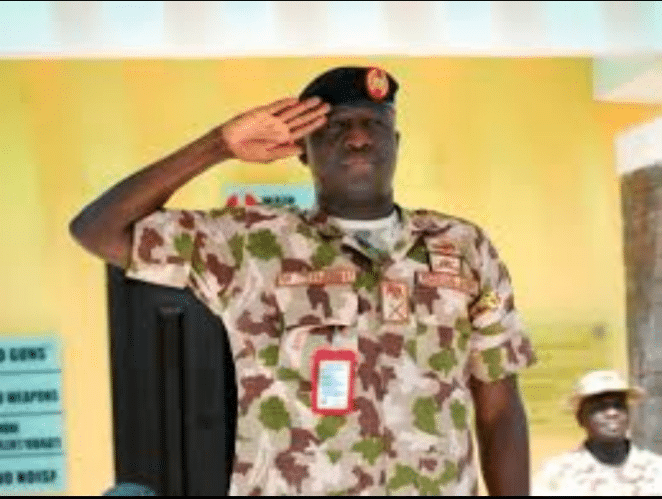
For those within military circles, the award was not just ceremonial recognition; it reflected measurable results, tactical innovation, and his ability to strengthen army morale under demanding counter-insurgency environments.
Waidi Shaibu’s rise is also symbolic of renewed purpose in Nigeria’s counter-insurgency operations, an arena that has tested successive commanders yet defined the country’s contemporary defence evolution in crucial and costly ways.
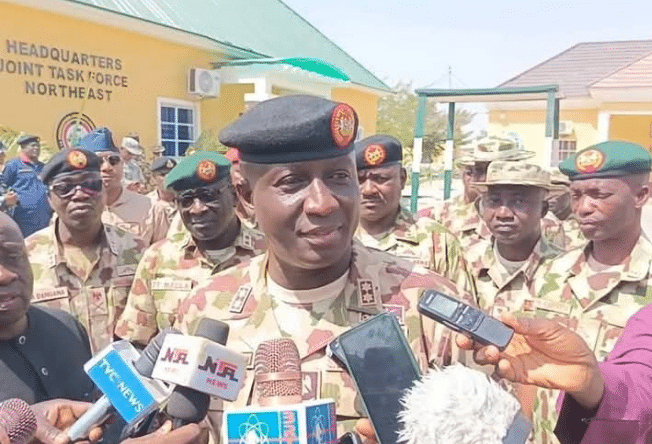
As Commander of the 7 Division and later Theatre Commander of Operation Hadin Kai, he battled Boko Haram and ISWAP, demonstrating consistency, resolve, and genuine engagement with community structures.
He once remarked, “My coming to the theatre is an opportunity to serve. We owe Nigeria our loyalty, our diligence, and our results.”
Such a statement encapsulates the humility and patriotic zeal that distinguish Waidi Shaibu’s leadership ethos—one that leans heavily on collaboration, disciplined performance, and sustained frontline engagement against complex insurgencies.
At Maimalari Cantonment in Maiduguri, his tenure was marked by intensified patrols, better troop welfare, and innovative intelligence coordination that restored confidence among both soldiers and civilians.
That confidence-building process aligned with his belief that effective military-community cooperation is the backbone of modern warfare, especially within asymmetric conflict zones like the Lake Chad region and northern Borno.
He prioritised dialogue with local rulers, encouraged inclusive briefings, and created participatory structures to strengthen trust between the army and communities long scarred by terrorism’s devastation.
“Security is everyone’s duty,” he said during an inspection visit, reinforcing his conviction that lasting peace emerges not from isolation but shared responsibility between state and society.
This approach was complemented by a steady focus on operational precision—ensuring troops received timely reinforcements, equipment upgrades, and psychological support in Nigeria’s harshest operational theatres.
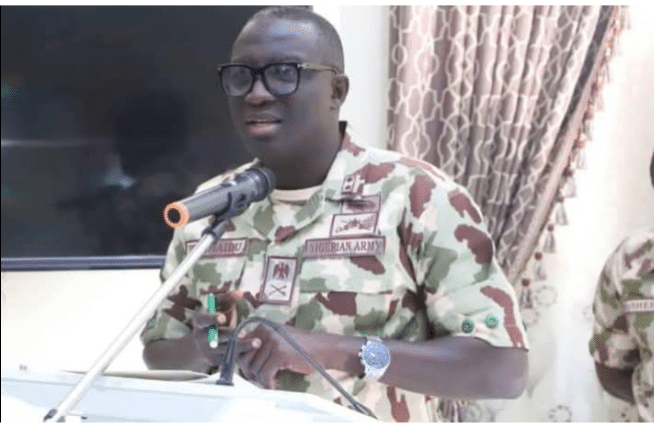
Waidi Shaibu understands that counter-insurgency success requires both kinetic and non-kinetic responses, merging technology, human intelligence, and psychological resilience into an adaptive command structure for sustained impact.
His years as Principal Staff Officer deepened his insight into inter-service coordination, planning logistics, and aligning budgetary priorities with mission realities—skills vital for strategic military reform.
Now as Chief of Army Staff, his immediate challenge lies in stabilising volatile regions, reshaping doctrine, modernising training, and rekindling public confidence in Nigeria’s military institutions.
President Tinubu’s reshuffle was not merely about changing faces; it reflected a recalibrated effort to strengthen internal security while reaffirming civil-military harmony within national governance.
Waidi Shaibu’s appointment represents continuity of purpose—an attempt to merge combat experience with policy foresight and ensure institutional synergy across Nigeria’s defence architecture.
Those who have worked closely with him describe an officer of calm demeanour, patient listening, and meticulous planning—a man who thinks before commanding and leads by example.
Under his leadership, Nigeria’s army is expected to pursue strategic military reform through digital integration, enhanced discipline, and improved collaboration with regional partners confronting trans-border terrorism and criminality.
Waidi Shaibu has consistently urged his officers to remember that “victory in the field begins with order at the barracks,” a reminder of his insistence on internal discipline.
Such internal discipline resonates with his belief that soldiers must embody integrity, humility, and professional excellence—the three tenets he calls “the backbone of credible command.”
The emphasis on ethics and integrity underlines why his appointment was widely applauded by defence analysts, who viewed it as a pragmatic choice rooted in performance rather than politics.
His command style reveals an instinctive understanding of the social complexities that define Nigeria’s contemporary conflict map, where tribal identities intersect with militant recruitment and resource competition.
To address those complexities, Waidi Shaibu has pushed for broader military-community cooperation and local intelligence frameworks that convert communities from passive observers into proactive partners in national defence.
He believes that Nigeria’s stability cannot depend solely on elite directives but must emerge from collective responsibility among citizens, civil institutions, and regional administrations.
His approach dovetails neatly with President Tinubu’s broader security philosophy—an integrated national security system combining federal coordination, community resilience, and advanced counter-insurgency mechanisms.
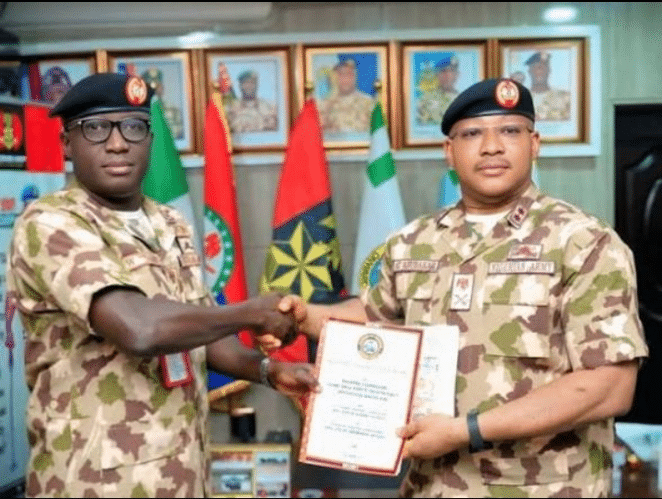
Observers see in Waidi Shaibu a soldier-strategist bridging the field and the boardroom—a man equally comfortable leading patrols or delivering briefings at Defence Headquarters Abuja.
In the hierarchy of Nigeria’s national defence leadership, few officers possess his blend of battlefield credibility and bureaucratic dexterity, qualities indispensable to modern command effectiveness.
When he accepted his current post, Waidi Shaibu pledged to “consolidate ongoing reforms, enhance troop welfare, and restore public trust in the uniformed service.”
Such pledges are not rhetorical flourishes; they are extensions of his long-held vision of turning Nigeria’s army into a 21st-century defence institution worthy of regional admiration.
That ambition connects directly with his counter-insurgency operations experience, where patience, adaptation, and consistent communication proved far more powerful than sporadic military offensives.
Each of these experiences will shape how Waidi Shaibu navigates his tenure—balancing external partnerships, internal restructuring, and long-term institutional stability amidst Nigeria’s shifting security landscape.
His Security Watch Award was not an end but a milestone—a recognition that military effectiveness rests on foresight, courage, and unrelenting dedication to national duty.
The public perception of the Nigerian army has often fluctuated between scepticism and pride, yet officers like Waidi Shaibu rekindle faith in professionalism and measured confidence in results.
Defence analysts suggest his tenure may define the success of Tinubu’s broader reforms, especially in the context of wider regional insecurity spreading across the Sahel and Gulf of Guinea.
In this light, strategic military reform under his supervision becomes more than doctrine—it transforms into a living policy aimed at resilience, modernisation, and democratic accountability in armed service.
Waidi Shaibu’s leadership will thus test the limits of institutional transformation while affirming that Nigeria’s path to peace lies in disciplined adaptation, regional cooperation, and national unity.
He once told officers, “The difference between authority and leadership is empathy. Soldiers fight harder when they know their commander fights for them too.”
Such words underline the moral foundation of his command: compassion without weakness, authority tempered by humanity, and a relentless drive to defend Nigeria’s territorial integrity.
As Nigeria confronts insecurity’s multiple faces—insurgency, banditry, piracy, and cyber threats—his steady hand at the helm could redefine how the armed forces approach multi-dimensional defence.
In all, Waidi Shaibu’s legacy will depend not on rhetoric but measurable progress—safer roads, fewer attacks, stronger morale, better coordination, and renewed trust between civilians and soldiers.
His mission transcends operational success; it represents a generational call for service, innovation, and sacrifice—a pursuit that unites soldiers, policymakers, and citizens in the defence of one homeland.
About The Author