Venezuela has declared Trinidad and Tobago’s Prime Minister Kamla Persad-Bissessar persona non grata, escalating tensions after her public support for US military activity in Caribbean waters.
The decision follows Trinidad and Tobago’s hosting of US warships involved in strikes targeting alleged drug-trafficking vessels near Venezuelan territorial waters, prompting accusations of deliberate regional destabilization.
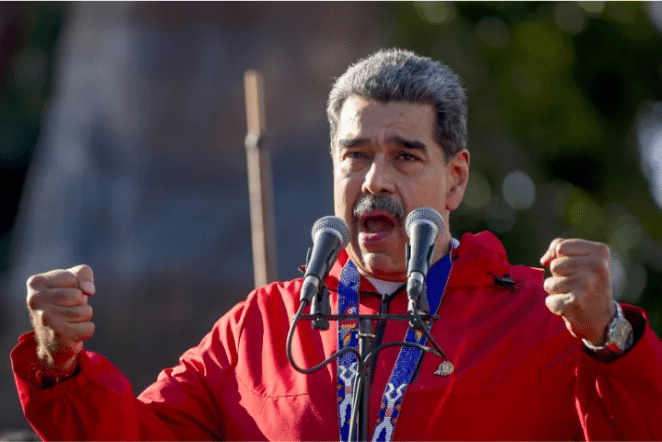
Venezuelan President Nicolas Maduro criticized Trinidad and Tobago for allowing its territory to serve as a platform for US aggression, calling the Caribbean nation’s alignment “a direct threat to regional sovereignty.”
Venezuela’s National Assembly voted on October 28, 2025, to formally bar Persad-Bissessar from entering the country, reinforcing the persona non grata designation and signaling a worsening diplomatic rift with Trinidad and Tobago.
Persad-Bissessar praised the US strikes, stating, “I have no sympathy for traffickers; the US military should neutralize them all,” while Maduro described Trinidad and Tobago’s support as “illegal, immoral, and dangerously provocative to Caribbean peace.”
Legal analysts argue the US strikes violate international law, raising human rights concerns due to extrajudicial killings and indiscriminate attacks, implicating Trinidad and Tobago in military operations near Venezuelan waters.
At least 13 US strikes have targeted 14 vessels near Venezuela, resulting in roughly 57 deaths, most unidentified, highlighting the lethal consequences of Trinidad and Tobago’s alignment with Washington’s military operations.
Observers say the Trump administration’s Caribbean strategy pressures smaller nations, using Trinidad and Tobago as a strategic outpost while undermining Maduro and Venezuela’s sovereignty in the region.
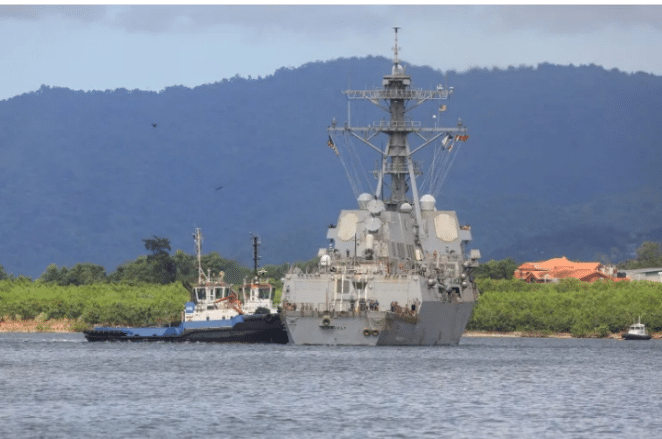
Relations worsened further when Maduro suspended a major gas deal with Trinidad and Tobago on October 27, accusing the island nation of acting as a “US aircraft carrier” against Venezuelan interests.
Trinidad and Tobago’s government reportedly considered mass deportations of undocumented Venezuelans, escalating domestic tension and drawing international scrutiny over potential human rights violations.
A memorandum from Trinidad and Tobago’s homeland security ministry confirmed suspension of releases for “illegal immigrants,” reflecting the government’s increasingly hardline response to regional disputes.
The Pentagon deployed seven warships, fighter jets, drones, and a submarine to Caribbean waters, signaling a show of force and highlighting Trinidad and Tobago’s central role in US military strategy.
Recent US strikes extended to the Eastern Pacific near Colombia, showing the operational reach and broader implications of Trinidad and Tobago’s cooperation with Washington in regional security operations.
Persad-Bissessar’s public support of US strikes inflamed tensions with Caracas, positioning Trinidad and Tobago as a key flashpoint in an intensifying geopolitical struggle across the southern Caribbean.
Observers warn that continued US military activity could disrupt trade, energy partnerships, and diplomatic channels, further implicating Trinidad and Tobago in regional economic and political risks.
The persona non grata declaration demonstrates Venezuela’s readiness to confront nations like Trinidad and Tobago that support foreign military intervention in Caribbean affairs.
Humanitarian concerns are mounting, with Venezuelan migrants in Trinidad and Tobago facing deportation risks and rising hostility, exacerbated by the island nation’s alignment with US operations.
Energy markets across the Caribbean are affected, with Venezuela suspending gas deals highlighting economic fallout tied to Trinidad and Tobago’s political and military decisions.
Experts note that small nations like Trinidad and Tobago face heightened vulnerability when caught between global superpowers, with domestic policy choices having international repercussions.
Venezuela’s move carries both symbolic and practical consequences, affecting trade, diplomatic engagement, and regional security involving Trinidad and Tobago in ongoing tensions.
Observers suggest the US-Caribbean military campaign may coerce nations like Trinidad and Tobago into compliance, increasing polarization and challenging the sovereignty of smaller states.
The Caribbean’s stability is at risk as US military deployments and political disputes escalate, with Trinidad and Tobago emerging as a central actor in this volatile environment.
Persad-Bissessar’s unwavering support for the US reveals a prioritization of foreign military objectives over Caribbean diplomacy, leaving Trinidad and Tobago vulnerable to long-term geopolitical fallout.
Venezuela continues rallying regional allies, warning that American intervention undermines sovereignty and that nations such as Trinidad and Tobago could face severe diplomatic and economic consequences.
With no immediate resolution, tensions between Venezuela and Trinidad and Tobago threaten long-term regional stability, potentially disrupting trade, migration, and diplomatic relations across the Caribbean.
The escalating crisis highlights the risks small nations face when entangled in superpower rivalries, as Trinidad and Tobago becomes a symbol of vulnerability in a turbulent Caribbean theater.
Human rights organizations have criticized Trinidad and Tobago’s cooperation with US strikes, emphasizing the humanitarian cost of its alignment with Washington’s aggressive military operations.
Venezuela’s persona non grata declaration is a strategic warning that nations siding with US military interventions, including Trinidad and Tobago, may face both economic and political retaliation.
Experts predict that continued US-Caribbean military activity will deepen mistrust among regional nations, with Trinidad and Tobago caught in the crossfire of strategic power plays.
The international community has urged dialogue, but Trinidad and Tobago’s stance alongside the US raises concerns that military escalation could become inevitable, worsening Caribbean instability.
Reports indicate that US drones and fighter jets operating from Trinidad and Tobago’s territory have monitored Venezuelan waters, drawing condemnation from Maduro and further inflaming bilateral tensions.
Some analysts believe Trinidad and Tobago’s alignment with the US undermines the collective security of the Caribbean, risking a domino effect where other small nations may be coerced into supporting foreign military agendas.
The Biden administration previously criticized Trinidad and Tobago for insufficient oversight, but under Trump, the island nation has increasingly become a hub for US naval deployments against Venezuela.
Caribbean political leaders have called on Trinidad to adopt a neutral stance, warning that current alignment with Washington could provoke regional instability and fuel anti-American sentiment.
Venezuela’s foreign ministry has repeatedly described Trinidad and Tobago’s actions as a violation of international norms, stating that using the island as a base for US operations constitutes “direct interference in sovereign affairs.”
Analysts note that Trinidad and Tobago’s support for US operations is controversial domestically, with critics arguing the nation risks being drawn into conflicts that do not directly threaten its security.
Regional trade could be disrupted as a consequence of Trinidad’s actions, particularly in energy and gas exports, which remain vulnerable to political retaliation from Venezuela.
The Caribbean’s humanitarian situation may worsen, with migration pressures escalating as Venezuelans fleeing US strikes encounter hostile policies in Trinidad.
Trinidad and Tobago’s continued involvement in US military strategy could provoke retaliatory measures, including economic sanctions and restrictions on bilateral trade with Venezuela.
The persona non grata declaration may serve as a diplomatic warning, signaling that Venezuela is willing to take unilateral action against nations that support hostile US operations.
Observers warn that the US-Caribbean military presence, coupled with Trinidad and Tobago’s active support, risks creating long-term instability in an already volatile region.
As tensions rise, Trinidad faces growing scrutiny from both regional allies and international organizations, highlighting the political and economic costs of siding with a superpower’s military ambitions.
Venezuela’s actions demonstrate a willingness to escalate diplomatic confrontation while emphasizing the consequences for nations like Trinidad that fail to respect regional sovereignty.
The unfolding crisis underscores the delicate balance Caribbean nations must maintain between superpower influence and regional independence, with Trinidad’s alignment becoming increasingly controversial.
About The Author