The United States has escalated pressure after US seizes second oil tanker off Venezuela’s coast, intensifying a maritime blockade ordered by President Donald Trump against sanctioned Venezuelan crude exports.
US officials say the operation targets illicit oil movements funding organised crime, while Caracas condemns the seizure as piracy, theft, and an unlawful act in international waters.
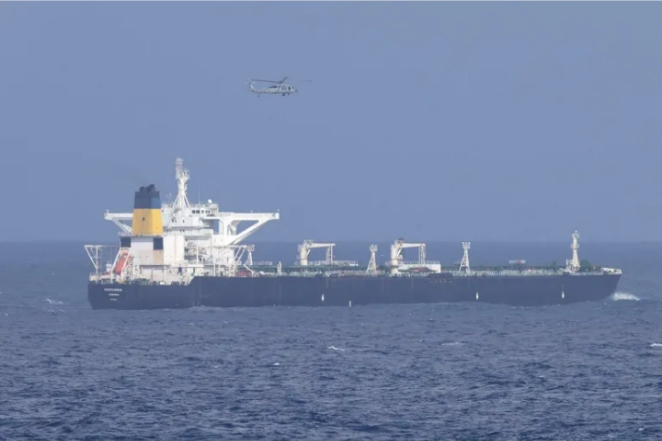
The interception occurred in the Caribbean Sea, where a US Coast Guard operation supported by Pentagon assets stopped a large oil tanker travelling east of Barbados.
Homeland Security Secretary Kristi Noem confirmed the seizure, stating the United States would continue pursuing vessels allegedly involved in sanctioned Venezuelan oil shipments worldwide.
She warned operators that US forces would identify, intercept, and stop tankers moving oil linked to narcotics trafficking and sanctioned state networks.
The announcement followed the release of aerial footage showing a military helicopter hovering low above the tanker’s deck during the early morning operation.
This action marks the second tanker seized in recent weeks, highlighting a sharp expansion of US enforcement activities near Venezuelan territorial waters.
President Trump earlier ordered a “total and complete blockade” of sanctioned oil tankers entering or leaving Venezuela, dramatically raising regional tensions.
Venezuelan authorities reacted angrily, calling the seizure a serious violation of international law and an unprecedented act of maritime aggression.
Vice President Delcy Rodriguez accused US forces of hijacking a private vessel and forcibly disappearing its civilian crew during the operation.
She vowed that Venezuela would pursue all diplomatic and legal avenues, including formal complaints at the United Nations Security Council.
Caracas argues the seizure undermines established principles of free navigation and sovereignty protected under international maritime conventions.
UK-based maritime risk firm Vanguard identified the intercepted ship as the Panama-flagged Centuries, seized east of Barbados in international waters.
Legal experts noted the Centuries itself was not listed under current US sanctions, complicating Washington’s justification for the seizure.
Washington-based attorney Jeremy Paner described the move as a significant escalation beyond previously stated limits of Trump’s blockade policy.
According to Reuters, internal PDVSA documents show the tanker carried about 1.8 million barrels of Merey crude destined for China.
The reports allege the ship operated under a false name and belonged to a so-called shadow fleet used to evade sanctions.
US officials claim such fleets disable tracking systems and falsify documentation to obscure oil origins and shipping routes.
Since the first tanker seizure, Venezuelan crude exports have reportedly dropped sharply amid fears of further interceptions.
Several loaded tankers remain anchored in Venezuelan waters, unwilling to risk sailing under heightened US enforcement operations.
While many vessels linked to Venezuelan oil face sanctions, others carrying crude from Iran or Russia remain outside current restrictions.
Some authorised shipments, including those by US oil major Chevron, continue under special licenses granted by Washington.
Beyond maritime seizures, Trump’s pressure campaign includes expanded military deployments throughout the Caribbean and eastern Pacific regions.
US forces have conducted numerous strikes on alleged drug trafficking vessels near Venezuela, operations criticised by legal scholars worldwide.
Human rights groups argue several strikes amount to extrajudicial killings, violating both US constitutional standards and international humanitarian law.
The Trump administration insists the operations disrupt criminal financing networks linked to Venezuela’s political leadership.
Trump has also suggested potential land-based strikes, further alarming regional governments and international observers.
President Nicolas Maduro accuses Washington of plotting regime change to seize control of Venezuela’s vast oil reserves.
Venezuela holds the world’s largest proven crude reserves, making energy control central to the geopolitical dispute.
Trump recently cited historic US investments, claiming Venezuela illegally expropriated American energy assets over past decades.
Under international law, however, natural resources belong to sovereign states through the principle of permanent sovereignty.
Venezuela nationalised its oil industry in 1976, placing PDVSA firmly under state ownership and control.
Further nationalisations under President Hugo Chavez in 2007 expelled several major US oil corporations from Venezuelan projects.
The latest seizure coincided with a Mercosur summit, where regional leaders debated Venezuela’s suspension and broader security risks.
Brazilian President Luiz Inacio Lula da Silva warned military escalation could trigger a devastating humanitarian catastrophe across South America.
Lula described the growing foreign military presence as a dangerous precedent threatening regional stability decades after the Falklands conflict.
Argentine President Javier Milei, a Trump ally, welcomed US pressure, arguing it could help liberate Venezuelans from authoritarian rule.
The divided reactions underscore deep political rifts within South America over how to address Venezuela’s crisis.
Analysts warn continued seizures risk accidental confrontation between US forces and foreign-flagged commercial vessels.
Shipping insurers have already raised premiums for routes near Venezuela, increasing costs for global energy markets.
China, a major buyer of Venezuelan crude, has yet to formally respond but monitors developments closely.
Read also: Russian attack on Odesa deepens war as peace talks stall
Energy experts caution prolonged disruptions could reshape oil trade flows across the Caribbean and Atlantic basins.
As US seizure of the oil tanker off Venezuela’s coast echoes diplomatic tensions, legal disputes, and security risks continue mounting rapidly.
The unfolding standoff signals a volatile phase in US-Venezuela relations, with significant implications for global energy and regional peace.
About The Author