The Trump administration is reportedly weighing a new wave of punitive measures as the US mulls further sanctions on Russia, this time aimed directly at its powerful banking sector.
Officials familiar with the discussions told Reuters that Washington is exploring measures that could cripple Russian financial institutions and restrict infrastructure used to transfer energy revenues abroad.
The sanctions, if implemented, would represent one of the most aggressive US economic offensives since Moscow launched its invasion of Ukraine, signaling intensifying pressure from Washington.
Trump advisers say the proposals are designed to choke Russia’s financial capacity to fund its prolonged war, potentially targeting major state banks and oil-export payment networks.
Though no final decision has been made, the US mulls further sanctions on Russia as policymakers debate whether such financial strikes could destabilize global markets and raise energy prices.
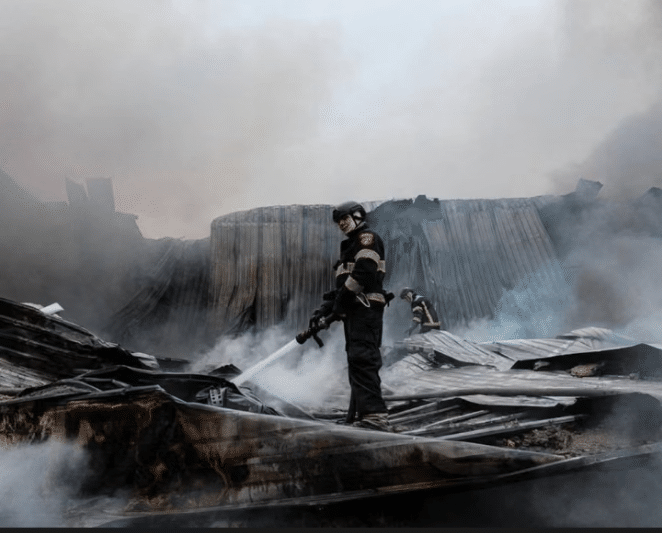
The plan comes amid reports of escalating Russian drone and missile attacks that continue to devastate Ukrainian cities, killing civilians and crippling power infrastructure.
Trump’s latest remarks indicated growing frustration with Putin’s refusal to negotiate, even as American intelligence warns that Moscow appears determined to prolong the war indefinitely.
Speaking aboard Air Force One, Trump said he would not meet with Putin unless he was certain the Russian leader was ready for genuine talks to end hostilities.
“I’m not going to waste my time,” Trump said sharply. “We’ll talk only if there’s a real deal to make. This situation is deeply disappointing.”
He added that he had expected progress before “peace in the Middle East,” a line reflecting irritation over what he views as Moscow’s deliberate stonewalling of diplomacy.
The statement came shortly after a deadly overnight Russian drone attack on Kyiv that killed three people and wounded twenty-seven others, including six children.
Kyiv mayor Vitali Klitschko confirmed the toll on Telegram, describing scenes of destruction as rescuers searched through rubble and flames engulfed residential areas.
The attack followed Saturday’s Russian missile and drone strikes that left at least four people dead and twenty wounded, according to Ukraine’s emergency authorities.
Ukraine’s air force said Russia launched nine missiles and sixty-two drones, adding that four missiles and fifty drones were successfully intercepted before striking populated zones.
In Kyiv, police confirmed two more deaths and thirteen injuries from an earlier ballistic missile strike that shattered windows and triggered fires in non-residential buildings.
The US mulls further sanctions on Russia as these renewed air assaults expose Moscow’s continuing defiance and Ukraine’s urgent need for advanced air-defense systems.
President Volodymyr Zelenskyy again appealed for Patriot systems and other Western support, warning that without stronger defenses, Ukrainian cities remain dangerously vulnerable.
“It’s exactly because of such attacks that we need Patriot systems,” Zelenskyy wrote on X, urging America, Europe, and the G7 to “make good on their promises.”
He said the Patriot systems are crucial to “stop this horror” and protect civilians from Russia’s sustained bombing campaigns that show no sign of abating.
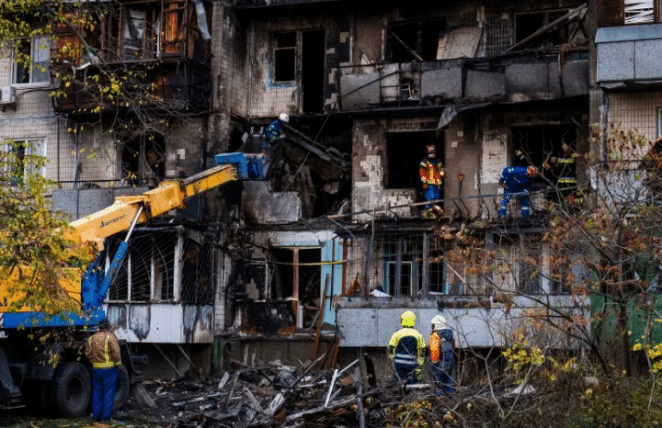
In the Dnipropetrovsk region, two people were killed and seven wounded as Russian strikes damaged homes and apartment blocks, officials said Sunday morning.
Acting regional governor Vladyslav Haivanenko confirmed widespread destruction, noting that emergency crews fought multiple fires triggered by explosions throughout the night.
Russia’s defense ministry, meanwhile, claimed its forces shot down 121 Ukrainian drones overnight inside Russian territory, portraying the interceptions as proof of effective air defense.
Analysts say the US mulls further sanctions on Russia not only to respond to these intensifying assaults but also to disrupt Moscow’s wartime financing networks.
Economic strategists in Washington argue that the Kremlin’s dependence on state-controlled banks for energy transactions makes the financial sector a pressure point ripe for targeting.
Such sanctions could freeze overseas assets, restrict global transfers, and isolate Russian banks from critical payment systems like SWIFT, deepening the country’s economic isolation.
However, European allies have warned that striking too broadly could harm markets and disrupt oil supply chains that still run through Russian financial intermediaries.
Trump’s economic team has drafted contingency measures aimed at cushioning global fallout should sanctions destabilize prices or affect Western investors tied to Russian debt.
The potential steps include coordinated actions with G7 partners to stabilize currency markets and ensure uninterrupted humanitarian trade channels, officials familiar with the discussions said.
Yet internal divisions persist inside the administration over how forceful the United States should be, with some advisers urging restraint until diplomatic channels are fully exhausted.
Others insist that incremental penalties will not shift Putin’s calculations and that only large-scale sanctions against Russia’s banking sector can alter Moscow’s strategic calculus.
The US mulls further sanctions on Russia as Trump faces pressure from Congress to show stronger leadership after months of limited economic action against Moscow.
Earlier in the week, the administration announced targeted sanctions on several Russian oil companies and defense suppliers, its first major economic move since January.
Those sanctions were symbolic, officials admit, aimed at warning Moscow without triggering major economic turbulence or retaliatory cyberattacks from the Kremlin.
But this proposed new round would go much further, potentially freezing major Russian institutions out of international finance and blocking transactions critical to the state’s revenue.
Kremlin spokesperson Dmitry Peskov denounced the possibility of expanded US sanctions as “economic warfare,” accusing Washington of attempting to “strangle Russia’s sovereignty through illegal coercion.”
Russian state media quickly echoed those claims, calling the potential sanctions proof that Trump’s talk of diplomacy was “deception designed to weaken Moscow.”
Independent Russian economists warned that a full financial blockade could devastate small businesses and further collapse the ruble, which already faces intense inflationary pressure.
As the US mulls further sanctions on Russia, energy analysts caution that global oil markets could react violently, with prices possibly surging past $120 per barrel.
European leaders remain wary, balancing outrage at Moscow’s brutality with fears of domestic economic backlash that could deepen political divisions within the bloc.
Still, several G7 officials have indicated private support for Washington’s tougher stance, arguing that Russian aggression must be met with a united economic front.
Inside Ukraine, morale remains fragile but defiant. Each new Russian strike fuels public anger and a sense of betrayal at the world’s slow pace of protection.
Civilians sheltering in basements say they fear long winters ahead, with power shortages expected to worsen as energy infrastructure remains a prime Russian target.
Emergency workers in Kyiv continue clearing debris from destroyed homes while volunteers distribute food and medical aid to families displaced by the relentless air raids.
As international condemnation grows, the US mulls further sanctions on Russia as perhaps the last economic weapon left to force the Kremlin to the negotiation table.
As US mulls further sanctions on Russia, whether Trump proceeds or pauses will determine not just the future of Moscow’s economy but possibly the direction of the entire war itself.
Washington’s decision now stands at a critical juncture—between financial escalation and diplomatic fatigue—while Ukraine bleeds and Russia digs in for another long winter.
About The Author