The US-China military-to-military channels initiative marks a renewed diplomatic step aimed at stabilising relations between the two global powers after years of escalating rivalry and mutual suspicion.
Following the Trump-Xi summit in South Korea, US Defence Secretary Pete Hegseth confirmed that both nations will re-establish formal communication links between their militaries to “deconflict and deescalate” potential flashpoints in Asia’s contested waters.
Hegseth said he and China’s Defence Minister Dong Jun reached the agreement during a late-night call after the summit, describing the step as “a path toward peace, stability, and predictable engagement between two great nations.”
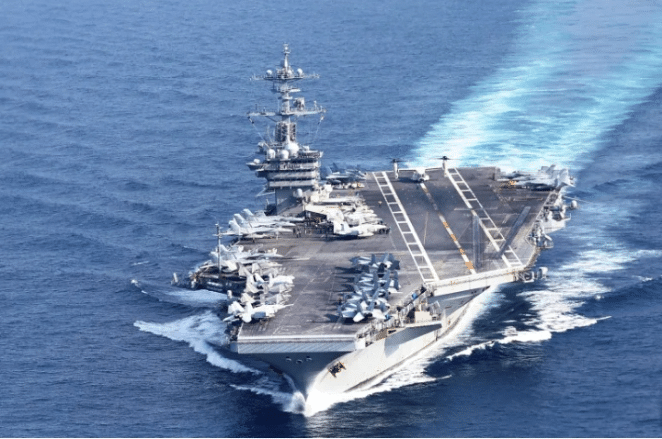
Experts on both sides of the Pacific have long pushed for US-China military-to-military channels, arguing that without them, the risk of miscalculation in the South China Sea, Taiwan Strait, or broader Indo-Pacific region remains dangerously high.
Beijing has yet to issue a detailed response, but Hegseth’s statement reflects cautious optimism after years of fractured defence communication and increasing militarisation across the region.
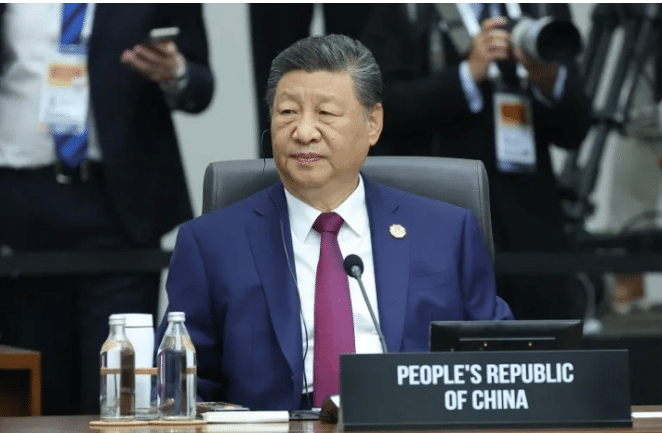
The announcement comes as part of a broader thaw following the high-stakes Trump-Xi meeting in Busan, where both leaders pledged to ease tensions that have roiled trade, technology, and security since the original trade war began in 2018.
Analysts say the decision to reopen US-China military-to-military channels is particularly significant given that most of the 90 official communication lines between Washington and Beijing collapsed during Trump’s first term.
China fully severed remaining defence ties in 2022 after then-US House Speaker Nancy Pelosi’s controversial visit to Taiwan. That move led to months of close military encounters between the two nations’ forces across the South China Sea.
In May 2023, a near-collision between a Chinese fighter jet and a US surveillance aircraft over international waters brought tensions to a boiling point, underscoring the dangers of having no functioning crisis hotline.
The reactivation of the US-China military-to-military channels now aims to prevent such incidents from spiralling into broader conflict, a goal shared by international observers wary of any confrontation involving nuclear powers.
Hegseth noted that while the United States “does not seek confrontation,” it would “defend its regional interests and allies” while maintaining a “balance of power” across the Indo-Pacific theatre.
His Chinese counterpart, Dong Jun, reportedly reiterated Beijing’s stance on Taiwan, calling reunification an “unstoppable historical trend” while urging Washington to act with restraint on the issue.
Chinese state media later quoted Dong saying that Beijing remained committed to peaceful development but would “resolutely safeguard its sovereignty and national security” if challenged by foreign interference.
Strategic analysts view the move as a pragmatic step forward. Dr. Lin Zhao of the Singapore Institute for Strategic Studies said, “Direct communication can prevent miscalculation. When two militaries operate in close proximity, silence is the most dangerous condition.”
Others cautioned that structural mistrust remains deep. “A hotline alone cannot erase decades of competition,” said US-based security analyst David Friedman. “But it offers a necessary safety valve when politics run hot.”
The establishment of the US-China military-to-military channels also aligns with a series of de-escalatory measures agreed at the summit. Trump announced a reduction of tariffs on Chinese goods from 57 to 47 percent, and Beijing pledged to maintain the flow of critical rare earth exports vital to American industry.
Still, no progress was made on contentious issues like the sale of TikTok or restrictions on advanced semiconductor exports, indicating that the broader rivalry in technology and trade remains unresolved.
Trump confirmed plans to visit Beijing in April 2026, while Xi Jinping is expected to make a reciprocal trip to Washington soon after, underscoring efforts to revive personal diplomacy as a stabilising force.
In the wake of these announcements, regional powers including Japan, South Korea, and Australia have cautiously welcomed the renewed dialogue, though many remain wary of how long the calm might last.
Observers note that past attempts at defence communication—like those revived under President Biden in 2023—often faltered once tensions over Taiwan, maritime patrols, or economic sanctions resurfaced.
The US-China military-to-military channels, however, are being described by both sides as “continuous and institutionalised,” suggesting a stronger intent to maintain them regardless of shifting political winds.
As global attention turns to the Indo-Pacific, many analysts believe the world’s two largest economies are acknowledging that competition must coexist with communication.
“The era of total hostility is unsustainable,” said retired admiral Thomas Greene. “Even adversaries must have a line to talk when the seas get rough.”
For now, the reopening of the US-China military-to-military channels stands as one of the clearest signs that Washington and Beijing may be seeking a functional coexistence—if not friendship—in a world defined by rivalry and mutual necessity.
Whether this fragile understanding endures will depend on what happens the next time a US carrier and a Chinese destroyer cross paths in contested waters.
About The Author