The US airstrikes on Islamic State targets in Syria have escalated sharply, marking one of Washington’s most sustained military operations in the country in recent years and underlining a strategic shift toward closer coordination with Damascus.
According to official statements, the campaign involved multiple precision strikes aimed at dismantling what American commanders described as “critical infrastructure and weapons storage facilities” belonging to the extremist group.
The renewed operation comes amid warnings that Islamic State is attempting to regroup in the aftermath of Syria’s political upheaval and the collapse of long-standing security structures.

Between early and mid-February, the United States carried out a series of coordinated attacks across several regions of Syria, striking dozens of locations linked to Islamic State cells.
US Central Command confirmed that the operation targeted “command nodes, logistics hubs and arms depots” used to plan attacks in both Syria and neighbouring Iraq.
The Pentagon described the action as a “direct response” to recent ambushes that killed US personnel and allied forces, stressing that the strikes were designed to “degrade and disrupt” the group’s operational capacity.
At the heart of the campaign is what American officials have labelled a renewed counter-terrorism push, framed as both defensive and preventive. Islamic State, also known as ISIS, has repeatedly been declared territorially defeated, yet US and regional intelligence agencies argue the group has shifted toward insurgent tactics.
Analysts say the US airstrikes on Islamic State targets in Syria reflect concern that the organisation is exploiting gaps left by the drawdown of international forces and the fragmentation of local militias.
The latest wave of attacks was conducted under an operation launched after an ambush near the historic city of Palmyra. In that incident, militants affiliated with Islamic State reportedly targeted joint patrols, resulting in American casualties and injuries among Syrian security forces.
US officials said the operation aimed to “send a clear signal” that attacks on coalition personnel would be met with decisive force. One defence official was quoted as saying the strikes demonstrated that “the United States retains both the capability and the will to act swiftly.”
A significant political dimension underpins the military action. Speaking on the sidelines of international diplomatic meetings, Marco Rubio publicly praised the Syrian government’s evolving role in counter-terrorism efforts.
In comments described by aides as “deliberate and measured,” Rubio said Damascus had shown “a willingness to cooperate fully” with the US-led coalition.
This marks a notable shift after years of strained relations, and underscores how the US airstrikes on Islamic State targets in Syria are intertwined with broader diplomatic recalibration.
Syria’s leadership, under President Ahmed al-Sharaa, has sought to position itself as a central partner in the fight against extremist groups following the fall of the previous regime.
Since formally joining the international coalition late last year, Damascus has taken control of several detention facilities and camps that previously held suspected Islamic State members and their families.
Syrian officials have described these moves as “essential steps” toward restoring sovereignty and security, while critics warn of humanitarian risks and legal uncertainties.
Human rights organisations have raised concerns about the fate of thousands of detainees transferred or relocated during the campaign. Over recent weeks, the US military has overseen the evacuation of thousands of male detainees accused of Islamic State affiliation, transferring them to Iraq for trial.
American commanders framed the move as part of a “responsible transition,” noting that the United States is gradually reducing its troop presence in Syria after nearly a decade of continuous deployment.
The closure of long-standing bases, including facilities near strategic border crossings, has fuelled debate about whether local forces can prevent an Islamic State resurgence.
Despite official optimism, security analysts caution that Islamic State’s ability to adapt should not be underestimated. Following the collapse of the Assad government in late 2024, vast quantities of weapons were abandoned, and many experienced fighters melted back into civilian populations.
According to one regional expert, the group is pursuing a “low-visibility revival strategy,” relying on assassinations, ambushes and intimidation rather than holding territory.
In this context, the US airstrikes on Islamic State targets in Syria are seen as an attempt to deny the group safe havens before it can rebuild command structures.
The humanitarian situation remains complex. Camps such as al-Hawl, which once housed tens of thousands of women and children linked to suspected Islamic State fighters, have undergone rapid changes.
Aid agencies report that large sections of these camps have been “emptied” in recent weeks, though it remains unclear where many residents have gone or under whose authority they were moved.
Photographs from the region show children in deteriorating conditions, prompting renewed calls for international oversight and long-term solutions beyond military action.
Washington insists that its strategy balances force with diplomacy. US officials argue that airstrikes alone cannot eliminate extremist ideologies, but they maintain that targeted military pressure is necessary to create space for political stabilisation.
A senior administration source said the goal is “to ensure Islamic State cannot exploit instability while regional actors take greater responsibility.” That message has been echoed by coalition partners, who view Syria’s participation as both an opportunity and a test.
Regionally, the strikes have drawn mixed reactions. Some neighbouring states quietly welcomed the operation, seeing it as a bulwark against cross-border attacks.
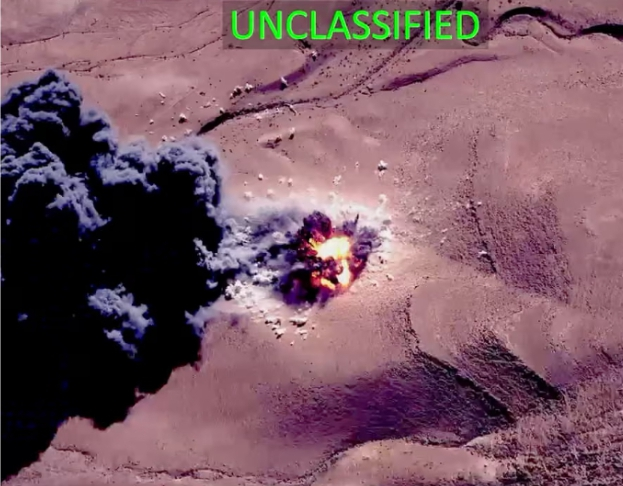
Others expressed concern that intensified military activity could inflame tensions or lead to civilian casualties, despite US assurances that the strikes were conducted with “extraordinary precision.”
Independent verification remains difficult, but no immediate reports of mass civilian harm emerged in the aftermath.
Ultimately, the US airstrikes on Islamic State targets in Syria signal a pivotal moment in the long-running conflict.
They highlight the enduring threat posed by Islamic State, the evolving relationship between Washington and Damascus, and the challenges of transitioning from direct military intervention to sustainable local security.
As the United States recalibrates its presence, the success of this strategy will depend not only on airpower but on governance, justice and the international community’s willingness to address the roots of extremism rather than merely its symptoms.