Britain’s refusal to back a Sudan atrocity prevention plan has deepened criticism of its retreat from global humanitarian leadership, amid conflict and worsening civilian suffering across Sudan.
Officials within the Foreign, Commonwealth and Development Office (FCDO) dismissed proposals that could have protected civilians, opting instead for what internal documents described as the “least ambitious” strategy available.
The decision came six months before El Fasher’s fall, when satellite data and ground intelligence already indicated the city faced imminent collapse under the Rapid Support Forces’ siege.
Following the city’s capture, reports detailed waves of ethnically motivated massacres and sexual violence, confirming that the ignored warnings of genocide had tragically materialized across Darfur.
An internal review prepared last year by the Independent Commission for Aid Impact revealed four protection options, including an international protection mechanism to coordinate civilian safety measures.
Despite evidence of looming atrocities, the UK government prioritized fiscal restraint, citing aid cuts and staffing shortages as justification for abandoning the more ambitious humanitarian proposals.
Officials redirected £10 million in existing aid to the International Committee of the Red Cross and similar bodies, describing it as “sufficient” to maintain minimal protective activity.
Critics argue that this limited support was woefully inadequate for a crisis of Sudan’s magnitude, leaving millions vulnerable to deliberate starvation, displacement, and gender-based violence.
Human rights advocate Shayna Lewis of Paema said atrocities are “never inevitable,” insisting that political apathy—not resource scarcity—allows genocides to unfold under the world’s watchful eye.
Britain’s rejection of atrocity prevention plans for Sudan, despite intelligence warnings of mass killings in El Fasher, underscores a profound moral and diplomatic failure in policy.
Lewis accused Britain of “moral outsourcing,” claiming that by refusing to lead internationally, the government effectively legitimized impunity for perpetrators of mass atrocities in Sudan’s war-torn regions.

Her remarks reflected growing frustration among NGOs and policy experts who believe the UK’s retreat signals a collapse of long-standing commitments to humanitarian intervention.
For decades, Britain has championed civilian protection as a pillar of its global influence, particularly as the United Nations’ “penholder” for Sudan-related Security Council discussions.
Yet, the government’s internal correspondence revealed a shift toward caution, with officials admitting that the country team was “overstretched” and unfit to manage complex new programming.
This bureaucratic hesitancy, critics say, reduced the UK’s presence to symbolic gestures while allowing the RSF’s brutal campaign to escalate unchecked across Darfur’s fractured terrain.
Aid specialists now describe El Fasher’s destruction as a foreseeable catastrophe—one made possible by political decisions prioritizing cost-cutting over crisis prevention and civilian dignity.
Satellite imagery from October showed entire neighborhoods in flames, corroborating survivor testimonies that RSF forces executed families and burned villages across El Fasher’s surrounding settlements.
Tens of thousands fled westward, joining the swelling population of displacement camps where hunger, disease, and sexual violence have become everyday realities for women and children.
“The tragedy of Sudan is not only what happened but what could have been prevented,” Lewis said, underscoring the consequences of delayed and diluted humanitarian action.
Sarah Champion, chair of the UK parliamentary development committee, criticized the FCDO for treating atrocity prevention as “a luxury rather than a fundamental responsibility.”
She argued that Britain’s approach reflects “a dangerously shortsighted logic,” one that values immediate savings over the longer-term cost of regional instability and moral accountability.
Her warning follows mounting evidence that aid budget reductions have eroded Britain’s ability to support women and girls affected by widespread conflict-related sexual violence.
The ICAI review confirmed that proposals to prioritize sexual violence prevention were “hindered by funding constraints and limited management capacity” within the overstretched Sudan country team.
As humanitarian organizations lose access to conflict zones, the UK’s minimal engagement contrasts starkly with the scale of atrocities reported by survivors and satellite investigators.
A promised empowerment program for Sudanese women, intended to launch in 2024, has been delayed until at least 2026—another casualty of resource reallocation within FCDO priorities.
Analysts say the delay symbolizes how austerity in aid spending often translates into lost lives, broken protections, and eroded trust in global justice institutions.
Meanwhile, government spokespersons insist the UK continues to make “a meaningful difference,” highlighting £120 million in overall Sudan assistance and diplomatic coordination with international partners.
At the UN Security Council, British representatives have pledged that “the world will hold the RSF leadership accountable” for crimes committed against civilians in Darfur.
However, accountability without prevention, rights groups argue, amounts to post-crisis damage control—a symbolic exercise that cannot substitute for proactive, well-resourced atrocity deterrence strategies.
The RSF has denied deliberately targeting civilians, but documented evidence from humanitarian agencies and journalists leaves little doubt about the systematic nature of its campaign.
Eyewitnesses recount killings in homes, schools, and hospitals, with militia fighters singling out communities based on ethnicity while government forces stood by in silence.
The resulting displacement crisis now rivals Syria’s and Yemen’s, with over ten million Sudanese uprooted—a figure aid experts call “a stain on global conscience.”
Observers note that Britain’s diminished presence in Darfur mirrors its broader retreat from global humanitarian leadership since merging its aid and foreign affairs departments.
This merger, framed as “efficiency reform,” has in practice blurred the line between strategic diplomacy and ethical responsibility, weakening independent humanitarian decision-making.
Critics say that when atrocity prevention depends on political convenience, bureaucratic risk aversion replaces moral clarity, undermining the credibility of international institutions.
Darfur’s unfolding genocide, they argue, is therefore not only a Sudanese tragedy but a case study in Western disengagement and policy-driven humanitarian paralysis.
London’s foreign policy realignment toward trade and security has coincided with declining influence in Africa, where China and Gulf powers now dominate aid diplomacy.
By stepping back from atrocity prevention, the UK risks surrendering both moral authority and geopolitical leverage in regions once considered strategic humanitarian priorities.
Experts warn that if nations like Britain normalize minimalist engagement, future genocides could become “budget-line casualties” of political expediency rather than moral responsibility.
In Westminster, Labour lawmakers have renewed calls for a dedicated atrocity prevention unit within the FCDO to restore proactive global humanitarian leadership.
Such a move, supporters argue, could help institutionalize early-warning systems, ensuring that budgetary debates no longer determine who lives and who perishes in crises.
The broader question now confronting Britain is whether its foreign policy will reclaim its humanitarian identity or remain defined by cost-conscious caution and moral retreat.
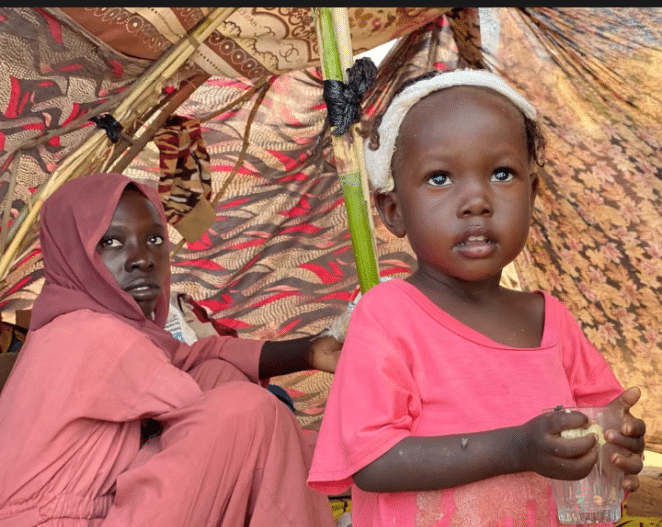
For Sudanese civilians enduring displacement, that debate feels remote. What they remember are the silences—international, political, and deliberate—that preceded their suffering.
As famine looms and aid workers flee, the echoes of El Fasher’s collapse remind the world that genocide thrives not merely on hatred but on hesitation.
Britain’s choice of the “least ambitious” path may have saved money, but it cost something far greater—the credibility of a nation once trusted to prevent atrocity.
About The Author