

Peace talks (negotiations) between the United States and Russia are underway in Abu Dhabi, marking a high-stakes attempt to curb the Ukraine-Russia war amid renewed drone attacks on Kyiv.
The discussions, reportedly attended by Ukraine’s military intelligence chief, come as four civilians were injured in early-morning strikes, forcing evacuations and leaving local residents anxious about escalating threats.
Drone strikes hit multiple districts, including central Pechersk and eastern Dniprovskyi, damaging apartment buildings and energy infrastructure. Mayor Vitali Klitschko confirmed six fatalities and nine injuries from attacks.
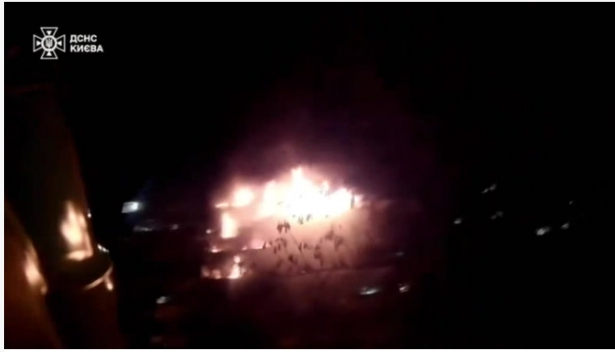
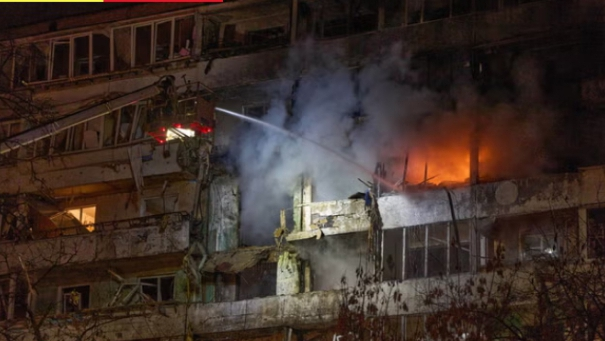
Video footage circulating on social media shows flames engulfing high-rise apartments, highlighting civilian vulnerability during ongoing military escalation and underscoring the urgent need for renewed diplomatic engagement.
The Abu Dhabi talks aim to address elements of Donald Trump’s controversial 28-point peace plan, which proposes territorial concessions and military limitations for Ukraine while barring NATO membership.
Trump expressed cautious optimism on Truth Social, stating, “Something good just may be happening,” reflecting hope amid skepticism from European leaders regarding the plan’s balance.

Ukraine welcomed proposed amendments, signaling willingness to explore adjustments without compromising territorial integrity, seeking a diplomatic path that maintains sovereignty and prevents disproportionate concessions to Moscow.
Despite optimism, the Kremlin swiftly rejected the European counterproposal, describing it as “not constructive” and unsuitable for Moscow’s interests, reinforcing the persistent gaps between negotiating parties.
Russian officials emphasized that frameworks perceived as favoring Ukraine would be unacceptable to President Vladimir Putin, highlighting the difficulties in reconciling expectations for a potential agreement.
French President Emmanuel Macron stated, “The only red line we have since three years is called Russia,” stressing that modifications are necessary to avoid Ukrainian capitulation under pressure.
Macron added, “No one can tell Ukraine what territory they should give up,” emphasizing European solidarity with Kyiv’s sovereignty and the importance of preserving territorial integrity.
The first draft of Trump’s plan initially raised alarm in both Washington and Europe, prompting concerns that Ukraine might be pressured into concessions disproportionately favoring Moscow.
European allies submitted a counterproposal halting fighting at current frontlines, postponing territorial discussions, and providing a NATO-style security guarantee, reflecting long-term strategic concerns and stabilization efforts.
Germany’s Chancellor Friedrich Merz highlighted divergent European perspectives on Russia’s potential readmission to the G8, noting reluctance among six G7 members to support reintegration, excluding the US.
Amid political debates, the conflict continues to exact a human toll, with rescue teams navigating fire-damaged high-rise buildings and civilians facing increasing threats from repeated drone attacks.
Ukraine’s energy ministry reported extensive damage to critical infrastructure, compounding civilian distress, as residents describe growing anxiety and fear amid the escalation of military operations.
The US delegation in Abu Dhabi, including Army Secretary Dan Driscoll, met with Russian officials Monday night to discuss reconciling the peace plan with Ukraine’s territorial concerns.
Sources indicate that key issues, such as sovereignty and military limitations, are central negotiation points, while details on potential compromises remain limited and closely held.
Ukraine’s leadership maintains a firm stance against unilateral territorial concessions, insisting that sovereignty cannot be compromised even as diplomatic discussions explore phased solutions.
An adviser to President Zelensky stated most points had been discussed in Geneva, except for territorial matters, which require direct deliberation at the head-of-state level.
The wave of Russian drone attacks is not confined to Kyiv; Ukrainian forces targeted Novorossiysk in the Black Sea, causing casualties and operational disruption for Russian forces.
Russian authorities claimed to have downed 249 Ukrainian drones overnight across various regions, reflecting the continuing intensity and complexity of military engagements in the conflict.
Additional drone strikes in Krasnodar injured at least six civilians, highlighting the conflict’s transnational consequences and raising alarms among regional security officials.
Romania scrambled fighter jets after drones breached its airspace near Ukraine’s border, signaling the wider regional implications and the need for coordinated European defense measures.
The White House denied that Trump’s plan favored Moscow, asserting progress was made on amendments designed to ensure a more balanced approach for Ukraine in Geneva talks.
Despite reassurances, the Kremlin stated it had not reviewed amendments, leaving uncertainty about mutual acceptance and whether negotiations could yield a viable near-term agreement.
Observers note Trump’s plan involves sensitive geopolitical trade-offs, including Ukraine’s NATO membership and potential reintegration of Russia into the G8, complicating the negotiation dynamics further.
Local reactions in Kyiv reflect anxiety amid repeated strikes, with residents recounting harrowing scenes of firefighters rescuing civilians from burning apartment buildings.
Video footage shows smoke rising from multiple floors as emergency services battle fires caused by drone impacts. “We live in fear every night,” one resident said.
Experts suggest Europe may increasingly pursue autonomous strategies to counter Russian aggression, including accelerating NATO membership for Ukraine, Georgia, and Bosnia-Herzegovina, independent of US-led initiatives.
World affairs editor Sam Kiley writes, “A non-NATO, NATO-style alliance could give Putin pause,” highlighting potential European alternatives in reinforcing security while diplomacy progresses.
The conflict demonstrates the difficulty of reconciling immediate military realities with long-term diplomatic solutions, as Ukrainian forces continue to resist Russian advances while seeking international support.
Despite challenges, Abu Dhabi delegates reportedly explored phased mechanisms for implementing peace plan amendments, aiming to balance territorial integrity, security guarantees, and political feasibility.
Analysts emphasize that successful peace talks require alignment between Kyiv’s demands, European security priorities, and US mediation efforts, or the conflict risks prolonged instability.
The human toll remains stark, with repeated attacks leaving civilians traumatized and infrastructure damaged, underscoring the urgency of a ceasefire to enable reconstruction and humanitarian relief.
European leaders are vocal about shaping the response, balancing support for Ukraine with strategic caution, as Macron’s comments exemplify the drive for sustainable, practical agreements.
The US continues navigating complex dynamics, mediating between Kyiv, Moscow, and Europe, with Abu Dhabi talks representing a critical juncture where practical agreements must reconcile competing interests.
In conclusion, the Ukraine-Russia war remains a multifaceted geopolitical challenge, with fresh drone strikes on Kyiv underscoring urgent need for resolution through the US-Russia peace talks framework.
Trump’s amended 28-point plan addresses territorial, military, and diplomatic concerns, but persistent gaps between Moscow, Kyiv, European allies, and civilians’ needs make the path to peace uncertain yet necessary.
About The Author


