

The Ukraine-Russia war deepens as Britain sends Kyiv more Storm Shadow missiles while Donald Trump accuses Vladimir Putin of conducting secret underground nuclear weapons tests.
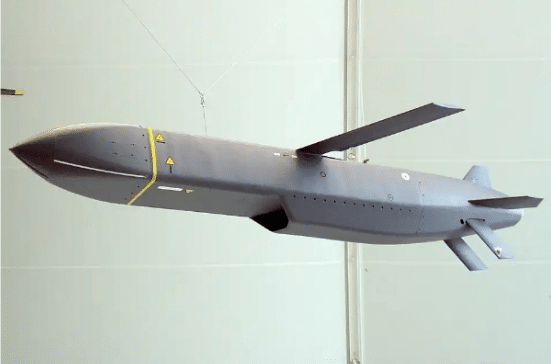
The Ukraine-Russia war has entered a new stage after the United Kingdom confirmed delivering another batch of Storm Shadow cruise missiles to Kyiv, intensifying pressure on Moscow’s forces.
British officials said the latest missile shipment strengthens Ukraine’s capacity to conduct long-range precision strikes deep into Russian-held territory, a crucial step as the Ukraine-Russia war drags on.
An anonymous source told Bloomberg that these missiles are intended to ensure Ukraine retains the ability to strike key targets while countering escalating Russian drone attacks nationwide.
Storm Shadows have previously played an important role in the Ukraine-Russia war, allowing Kyiv to target ammunition depots, logistics centres, and Russian troop concentrations far from the front.
Each missile, capable of travelling over 250 kilometres, can hit protected targets with pinpoint accuracy, a significant advantage that has repeatedly frustrated Moscow’s battlefield commanders.
British defence analysts say the move reflects London’s long-term commitment to helping Ukraine defend its sovereignty and maintain deterrence in the increasingly destructive Ukraine-Russia war.

The UK’s Ministry of Defence has described the missiles as “strategic assets” that give Ukraine critical reach beyond immediate battle zones, helping offset Russia’s superior artillery numbers.
Observers argue that this reinforcement sends a clear signal to Moscow that Ukraine’s allies remain unified despite war fatigue and political shifts across Western capitals.
However, the renewed escalation in the Ukraine-Russia war coincides with fresh controversy after former US president Donald Trump claimed Russia is secretly testing nuclear weapons underground.
Speaking on CBS’s 60 Minutes, Trump alleged that both Russia and China were violating global arms control norms, conducting secretive tests “underground where people don’t know exactly what’s happening.”
Pressed for clarification, Trump said Russia was “testing nuclear weapons” and hinted that Moscow recently threatened to expand into “different levels of testing,” raising alarm among Western officials.
The remarks have drawn immediate reaction from the White House, with national security officials declining to confirm whether Washington possesses intelligence supporting Trump’s assertion.
Experts following the Ukraine-Russia war believe Trump’s statement could reflect broader concern about renewed nuclear brinkmanship as the conflict prolongs and diplomatic communication channels remain frozen.
Arms control specialists warned that unverified claims about nuclear testing risk destabilizing the already volatile geopolitical climate surrounding the Ukraine-Russia war and undermining global non-proliferation efforts.
Russia has repeatedly denied conducting any nuclear weapons testing, accusing Western politicians of fabricating allegations to justify increasing military assistance to Ukraine during the ongoing conflict.
Still, reports suggest Moscow has been upgrading several testing facilities in the Arctic region, raising suspicions that preparations for subcritical or low-yield experiments may be underway.
The Ukraine-Russia war has consistently revived fears about the potential collapse of nuclear stability agreements like New START, suspended earlier this year amid deepening hostilities.
Meanwhile, inside Ukraine, fighting remains fierce in Donetsk and around the eastern city of Pokrovsk, where Russia has intensified efforts to gain full control of the area.
President Volodymyr Zelensky confirmed Ukrainian defences are holding firm in Pokrovsk despite Russia claiming to occupy key districts, including industrial zones and sections near the city’s railway station.
According to Kyiv’s military, Russian troops are attacking in small groups of five or fewer soldiers, often without armoured support, suggesting significant manpower losses in recent weeks.
Ukrainian commanders say Russia’s offensive has relied heavily on relentless assaults to exhaust defenders, a tactic emblematic of the grinding attrition defining the Ukraine-Russia war.
North of Pokrovsk, Ukrainian forces reported gains near Dobropillia, where fresh counterattacks aim to divert Russian troops and relieve pressure on other parts of the front line.
Ukraine’s army chief Oleksandr Syrskyi said the manoeuvres were part of a broader plan to stretch Russia’s logistics and force redeployments away from Pokrovsk’s contested zones.
Analysts note that if Ukraine can hold Pokrovsk, it would deny Russia one of its most strategic transport hubs and frustrate further advances toward Dnipro and central Ukraine.
Zelensky visited frontline troops near Dobropillia earlier this week, awarding medals and discussing drone production and weapons needs with soldiers engaged in the fiercest Ukraine-Russia war battles.
His government continues to prioritise the development of drones, electronic warfare systems, and mobile artillery as part of an expanding high-tech defence strategy against Russia’s larger arsenal.
Ukraine’s deputy prime minister Mykhailo Fedorov confirmed the country’s innovative “drone points system,” which rewards military units based on successful missions, has become increasingly popular across combat zones.
He said hundreds of units participate in the programme, earning points that can be exchanged for new drones and equipment—a gamified innovation reshaping the Ukraine-Russia war landscape.
“The more missions you complete successfully, the more drones you earn,” Fedorov explained, describing it as a self-reinforcing cycle that keeps morale high amid relentless Russian assaults.
Germany also announced plans to boost its financial aid for Ukraine by €3 billion next year, reinforcing its status as Europe’s largest contributor to Kyiv’s defence effort.
The funds, part of Germany’s 2026 budget adjustments, will support artillery procurement, drone production, and replacement of Patriot air defence systems lost during the Ukraine-Russia war.
German Chancellor Friedrich Merz said Berlin will maintain its support “as long as necessary” to help Ukraine resist Russia’s aggression and uphold international law across Europe.
This expanded assistance comes as the European Commission praised Ukraine’s “remarkable commitment” to EU accession despite the severe strain of the ongoing Ukraine-Russia war.
The Commission’s report highlighted progress in judicial reforms and anti-corruption efforts but urged Kyiv to further strengthen institutional independence to accelerate full membership negotiations.
Zelensky welcomed the findings, saying Ukraine was “confidently moving” toward EU membership and expected “decisive action” from Brussels to overcome remaining political and bureaucratic obstacles.
He emphasized that the unity and resilience demonstrated throughout the Ukraine-Russia war show Ukraine’s readiness to integrate fully into the European political and economic framework.
In Moscow, meanwhile, Russian president Vladimir Putin unveiled a new nuclear-powered missile cruiser named Khabarovsk, boasting that it represents “a new era of naval deterrence.”
The announcement came shortly after Trump’s nuclear remarks, further intensifying speculation about whether Russia is attempting to project nuclear dominance amid global scrutiny.
Western officials interpreted Putin’s unveiling as part of an ongoing campaign to remind the world of Russia’s military strength despite mounting battlefield losses in the Ukraine-Russia war.
NATO intelligence assessments have indicated that while Russia retains extensive nuclear capability, its conventional forces continue to suffer attrition from Ukraine’s Western-supplied precision weapons and air defences.
The war’s humanitarian toll also continues to climb, with millions displaced, thousands killed, and cities across Ukraine reduced to rubble through sustained bombardments.
Kyiv’s emergency services reported over one hundred drone and missile strikes overnight, destroying energy facilities and housing in multiple regions—a pattern repeated weekly since autumn.
Ukraine’s air force claimed to have intercepted more than ninety drones during the assault, including several Iranian-made Shahed models widely used in the Ukraine-Russia war.
Despite constant attacks, Ukrainian resilience remains unbroken, and international allies have pledged to maintain military and humanitarian aid throughout 2026 to ensure continued resistance.
Analysts predict the Ukraine-Russia war will extend deep into next year, with neither side positioned to deliver a decisive victory or negotiate a lasting ceasefire soon.
Peace efforts remain stagnant as both Kyiv and Moscow demand incompatible preconditions, while Western powers debate whether to push harder for mediated talks.
For now, the focus remains on sustaining Ukraine’s defences and deterring Russia’s growing aggressiveness amid wider fears of nuclear escalation prompted by Trump’s controversial comments.
As the Ukraine-Russia war enters its fourth year, the geopolitical stakes continue to rise, testing alliances and reshaping the security architecture of Europe and beyond.
The latest developments underscore how military aid, political rhetoric, and nuclear tension remain tightly linked in one of the century’s most consequential and enduring conflicts.
About The Author


