Ukraine drone strikes have thrown Russian power grids into chaos, cutting electricity and heating in Belgorod and Voronezh, intensifying tensions along the Russia-Ukraine border.
“In Belgorod, missile strikes caused serious damage to our energy and heating systems,” said Governor Vyacheslav Gladkov, noting that roughly 20,000 households were left without services.
Alexander Gusev, Voronezh governor, reported, “Several drones were electronically jammed over the city, and a fire broke out at a local utility facility,” highlighting ongoing security challenges.
The Russian Defence Ministry said 44 Ukrainian drones were intercepted overnight, claiming, “Our air defenses successfully neutralized the threat,” yet it did not acknowledge Belgorod or Voronezh disruptions.
Residents in Taganrog, Rostov region, endured hours without power after a transformer substation caught fire, with local authorities warning, “Intermittent blackouts may persist until full repairs are completed.”
Ukrainian officials told Reuters that Russia launched drone and missile attacks on substations supplying two nuclear plants, with one source stating, “Seven civilians were tragically killed overnight.”
Russia’s Defence Ministry described its operations as a “massive strike” targeting weapons production plants and energy facilities, aiming to cripple Kyiv’s energy infrastructure and maintain military advantage.
Kharkiv authorities reported 100,000 residents still without electricity on Sunday, with a local spokesperson noting, “We are working around the clock, but restoration is slow due to ongoing strikes.”
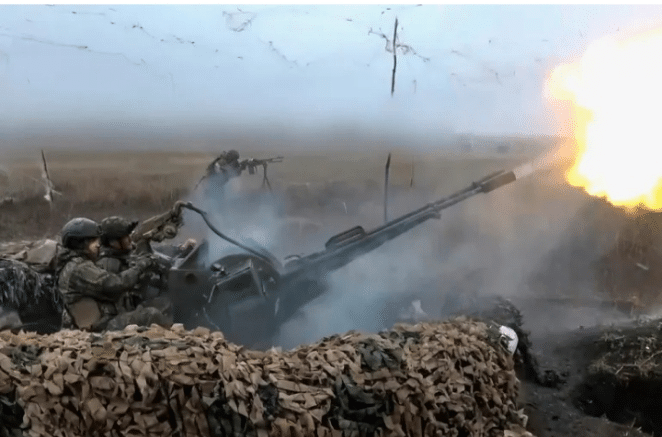
State-owned Ukrainian energy company Tsentrenergo stated, “These are the largest attacks on our facilities since the war began in February 2022,” forcing temporary shutdowns in Kyiv and Kharkiv regions.
The Ukrainian air force confirmed 34 of 69 Russian-launched drones were shot down overnight, noting, “Our defensive systems remain effective despite continued attacks on critical infrastructure.”
Russia and Ukraine continue almost daily assaults on each other’s energy systems as U.S.-led diplomatic initiatives fail, a Ukrainian military analyst observed: “The tit-for-tat attacks show no signs of slowing.”
Kyiv’s long-range drone attacks on Russian refineries aim to reduce Moscow’s oil revenue, with a Ukrainian official explaining, “Striking energy facilities limits the funds Russia can use for war.”
Meanwhile, Russia attempts to weaponize winter conditions, targeting electricity and heating, with an expert noting, “Depriving civilians of heat and power amounts to a deliberate humanitarian tactic.”
Russian Foreign Minister Sergey Lavrov told RIA Novosti, “I am ready to meet U.S. Secretary of State Marco Rubio to discuss Ukraine and improve bilateral relations,” signaling a rare diplomatic gesture.
Lavrov emphasized, “Peace cannot be achieved without taking Russian interests into account,” underscoring Moscow’s insistence on territorial claims over Donetsk, Luhansk, Kherson, and Zaporizhia regions.
President Vladimir Putin demands Ukrainian troop withdrawal from all Russian-claimed territories, while Zelenskyy stated, “We will not formally recognize occupied regions, but temporary arrangements may be considered in military contexts.”
Zelenskyy added, “No mandate allows me to give away Ukrainian land,” maintaining a firm stance on sovereignty and rejecting Russian demands for territorial concessions.
Efforts to organize a summit between Putin and U.S. President Donald Trump were recently canceled, a diplomatic source noted: “Political complexities continue to obstruct meaningful dialogue.”
Ukrainian authorities defended strikes on Russian infrastructure as necessary: “Our operations are a response to repeated attacks on civilians and power grids,” a military spokesperson explained.
Belgorod and Voronezh residents describe significant property and utility damage, with one citizen noting, “We live in constant uncertainty; heating and electricity are unreliable due to drone strikes.”
Russian media stressed successful drone interceptions, claiming, “All major Ukrainian threats were neutralized,” while downplaying power outages and civilian hardships in Belgorod, Voronezh, and Taganrog.
Kyiv relies on drones and missiles to counter Russia’s conventional forces, with a Ukrainian military analyst observing, “Precision strikes allow us to impose operational costs on a larger adversary.”
Experts warn that continued infrastructure attacks risk escalation, potentially affecting nuclear plants and major substations, with one energy analyst stating, “Collateral civilian impacts could worsen in the coming weeks.”
Both sides accuse each other of indirectly targeting civilians through energy disruptions, highlighting blurred lines between military objectives and humanitarian consequences, according to a conflict analyst.
Energy security specialists argue that Ukraine uses strategic strikes to undermine Russian economic capabilities while safeguarding domestic energy systems, emphasizing the asymmetric nature of drone warfare.
U.S. diplomatic engagement faces hurdles, as Lavrov insists on acknowledgment of Russian interests, while Kyiv demands sovereignty, creating fragile and uncertain negotiation prospects, a senior diplomat noted.
Local authorities in Russian border regions warned residents: “Prepare for intermittent outages. Critical infrastructure remains vulnerable as drone attacks continue,” demonstrating the ongoing civilian impact of warfare.
Russia’s strategy involves targeted missile strikes, substation disruptions, and drone barrages to impose operational and psychological pressure on Ukraine, according to military analysts.
Ukrainian energy companies report operational difficulties including plant shutdowns and delayed maintenance, limiting restoration of electricity to affected households, an official said: “We are stretched to capacity.”
Military analysts predict drone warfare will remain central, with both sides adapting tactics against jamming, air defenses, and counter-strikes, reflecting evolving conflict dynamics in modern war.
As winter approaches, humanitarian concerns escalate, with millions dependent on electricity and heating to survive subzero temperatures, according to relief organizations monitoring the conflict.
Experts highlight Ukraine’s increasingly sophisticated drones capable of precise strikes, with a military observer noting, “Kyiv’s technology allows effective retaliation despite Russian air defense systems.”
Russian authorities face mounting pressure to protect cities and energy systems, balancing military objectives with civilian needs, a regional official in Belgorod warned: “We cannot guarantee uninterrupted services.”
Kyiv maintains strikes on refineries are strategic: “We aim to limit Russia’s military funding while defending our energy infrastructure,” a Ukrainian military spokesperson said.
Lavrov’s offer to meet Rubio reflects Moscow’s awareness that dialogue may be necessary, but practical solutions remain distant due to territorial disputes and sovereignty concerns, a diplomatic source said.
The humanitarian impact is severe, affecting heating, electricity, and water access, highlighting the civilian cost of prolonged military conflict, according to independent observers on the ground.
Analysts predict continued drone attacks, as Ukraine leverages technology to counterbalance Russian firepower, while Russia continues operations to pressure civilians and disrupt power grids across affected regions.
Belgorod, Voronezh, and Taganrog officials report ongoing repair work but caution residents that intermittent blackouts may continue until infrastructure is reinforced, a regional spokesperson said.
Russia’s energy retaliation strategy combines targeted missile strikes, substation disruptions, and drone barrages, demonstrating escalation and psychological pressure tactics, according to military analysts monitoring the conflict.
Kyiv’s strikes on Russian energy targets exemplify asymmetric warfare, focusing on strategic disruption over traditional battlefield engagements, an expert said: “Infrastructure warfare is shaping modern conflict.”
The conflict exposes energy infrastructure vulnerability in wartime, as drones and missiles attack and defend civilian and industrial systems, highlighting an evolving theater of war, a policy analyst noted.
Analysts warn that without diplomatic breakthroughs, civilians will continue to suffer energy disruptions, emphasizing the human cost of prolonged conflict on both sides of the border.
Ukraine drone strikes have thrown Russian power grids into chaos, illustrating the strategic importance of energy infrastructure and modern drone warfare in the ongoing conflict along the border.
About The Author