

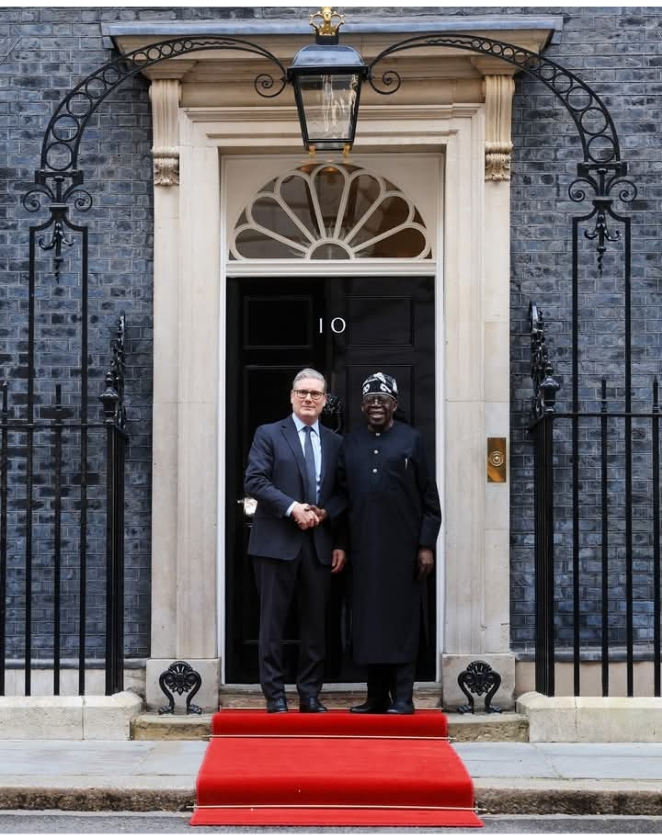
UK-Nigeria steel deal– The United Kingdom has announced a landmark agreement with Nigeria to supply steel for the construction of new port infrastructure in Lagos, marking a significant step in strengthening economic ties between the two nations.
The deal, described as historic by the British Prime Minister Keir Starmer and top UK officials, is expected to support thousands of skilled jobs across Britain while injecting hundreds of millions of pounds into the domestic economy.
The announcement builds on efforts made last year to secure the future of British Steel, a key player in the UK’s industrial base. At the time, the government intervened to prevent the company’s closure, a move that safeguarded thousands of jobs and ensured the continuity of steel production in the country.
This latest agreement is seen as a continuation of that strategy, linking domestic industrial resilience with international trade opportunities.
Under the terms of the deal, British-produced steel will be used in the development of port facilities in Lagos, one of Africa’s busiest and fastest-growing commercial hubs.
The project is expected to enhance Nigeria’s maritime capacity, improve logistics efficiency, and support the country’s broader economic growth ambitions.
For the UK, it represents a valuable export opportunity and a chance to reinforce its manufacturing sector.
Industry analysts note that the agreement comes at a time when global demand for infrastructure investment is rising, particularly in emerging economies.
By positioning itself as a reliable supplier of high-quality steel, the UK aims to capture a larger share of this market. The partnership with Nigeria also highlights the importance of Commonwealth and bilateral relationships in driving trade and investment.
For Nigeria, the use of British steel in Lagos port construction underscores the scale and importance of the project. Lagos serves as a critical gateway for trade in West Africa, handling a substantial portion of the region’s imports and exports.
Expanding and modernising its port infrastructure is seen as essential to reducing congestion, lowering costs, and improving competitiveness.
The deal is also expected to have wider economic implications. In the UK, the influx of investment linked to the agreement will benefit not only steel producers but also supply chains, logistics providers, and related industries.
This ripple effect could help stabilise regions that have historically depended on heavy industry and manufacturing.
Officials have emphasised that the agreement aligns with broader goals of sustainable and inclusive economic growth.
By supporting domestic industry while contributing to infrastructure development abroad, the UK government aims to demonstrate a balanced approach to trade policy. Meanwhile, Nigeria’s participation reflects its ongoing efforts to attract foreign investment and modernise key sectors of its economy.
While details of the timeline and specific project phases are yet to be fully disclosed, both governments have expressed confidence in the partnership’s long-term benefits.
The collaboration is expected to deepen ties between the two countries, opening the door for further cooperation in areas such as energy, technology, and transportation.
Read also: US attacks deeper into Iranian territory, says Dan Caine
The UK-Nigeria steel deal ultimately represents a convergence of economic priorities: safeguarding jobs and industry in Britain while enabling critical infrastructure development in Nigeria.
As the project moves forward, it is likely to be closely watched as a model for future international trade agreements that combine industrial policy with global development objectives.
The agreement is also expected to strengthen long-term industrial cooperation between the United Kingdom and Nigeria beyond the immediate scope of the Lagos port project.
Officials from both sides have submitted that this partnership could pave the way for future joint ventures in steel processing, infrastructure financing, and technology transfer.
Such collaboration may help Nigeria develop more local capacity in construction and manufacturing, while giving British firms continued access to large-scale projects across West Africa.
In addition, the deal reflects a broader strategic shift towards deeper UK engagement with fast-growing African economies.
With Lagos positioned as a major commercial hub, investments in its port infrastructure are likely to have regional ripple effects, boosting trade flows and economic integration.
For the UK, aligning its industrial exports with Africa’s infrastructure expansion not only supports domestic employment but also reinforces its role as a key partner in global development.
About The Author
