The Federal Government has intensified efforts to revitalise Nigeria’s steel market as part of a broader strategy to transform the country into a major industrial hub in Africa.
Speaking at the Nigeria–German Economic Forum in Dortmund, Germany, the Minister of Steel Development, Shuaibu Audu, said the government is actively seeking credible global investors to unlock Nigeria’s estimated $10bn annual steel market.
According to the minister, the initiative aligns with the economic transformation goals of the administration of Bola Ahmed Tinubu, which is focused on reducing Nigeria’s dependence on raw material exports and promoting local industrial production.
Industry stakeholders say the government’s investment drive is coming at a critical time as Nigeria continues to rely heavily on imported steel products despite having vast natural mineral resources.
FG Eyes $10bn Steel Market With Investment Push to Boost Industrialisation
The declaration that FG eyes $10bn steel market with investment push reflects the government’s renewed focus on industrialisation and value addition within Nigeria’s mineral sector.
Addressing investors and policymakers at the forum, Audu said Nigeria is transitioning from an extractive economy that exports raw materials to one that prioritises local manufacturing and processing.
He explained that the government is searching for strategic partners willing to invest capital, transfer technology, and support the development of technical skills across Nigeria’s industrial ecosystem.
“Nigeria is transitioning from a raw materials exporter to a value-adding industrial economy. We are actively seeking credible, long-term partners who share our vision of sustainable industrial growth and who are prepared to invest not only capital but also innovation and technical expertise,” the minister said.
Audu noted that Nigeria’s large and youthful population, estimated at nearly 250 million people, provides a strong labour force and a massive consumer market for industrial products.
He added that Nigeria’s location and participation in regional trade frameworks such as the African Continental Free Trade Area provide additional opportunities for manufacturers to use the country as a production hub for exports across the African continent.
Nigeria’s Steel Demand Estimated at $10bn Annually
The minister disclosed that Nigeria currently records about $10bn in annual steel utilisation, highlighting the scale of domestic demand for steel products used in construction, manufacturing, and infrastructure development.
He said the heavy reliance on imported steel products represents a missed economic opportunity that the government is determined to reverse.
“Our domestic steel demand is conservatively estimated at approximately $10bn per year. Instead of importing finished and semi-finished steel products, we aim to build domestic capacity that will serve local needs and eventually position Nigeria as a net exporter,” Audu said.
To achieve this goal, the government is encouraging investments not only in steel production but also across the entire value chain, including aluminium processing, mineral beneficiation, and industrial infrastructure development.
According to the minister, Nigeria is seeking partnerships that can support critical infrastructure such as power generation, gas supply, rail connectivity, and port systems, which are essential for sustaining industrial growth.
Mineral Wealth Provides Foundation for Industrial Growth
Audu emphasised that Nigeria possesses significant mineral resources capable of supporting large-scale steel production and industrial manufacturing.
He revealed that the country holds over three billion tonnes of iron ore deposits, alongside substantial reserves of limestone, manganese, copper, lead-zinc, lithium, and rare-earth minerals.
These resources, he explained, create a strong foundation for building a robust industrial sector that can generate employment, stimulate exports, and strengthen the country’s economic resilience.
“Nigeria is richly endowed with over three billion tonnes of iron ore in addition to significant deposits of other strategic minerals. These resources provide a strong base for industrial development and present export opportunities, especially to European markets seeking diversified supply chains,” he said.
Technology Transfer and Skills Development Key
Beyond financial investment, the minister emphasised the importance of technology transfer and workforce development in building a globally competitive steel industry.
He explained that Nigeria’s industrial policy prioritises partnerships that include technical training, research collaboration, and innovation-driven manufacturing.
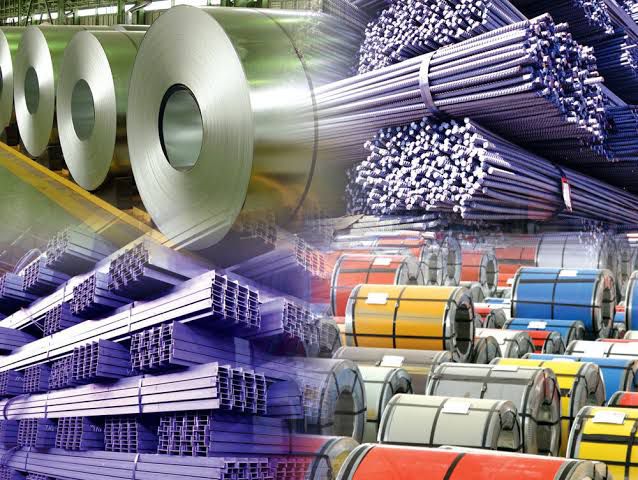
The goal, according to him, is to develop local technical expertise while ensuring that industrial investments create long-term economic value.
“We want partnerships that prioritise skills development and technology transfer. Our objective is not just to extract resources but to build a globally competitive industrial workforce capable of sustaining long-term growth,” Audu added.
Global Supply Chain Shifts Create Opportunities
Nigeria’s renewed push for investment in the steel sector also coincides with ongoing changes in global supply chains, particularly in Europe.
As European economies seek reliable sources of critical minerals for emerging industries such as electric vehicles and renewable energy technologies, Nigeria is positioning itself as a strategic partner with abundant mineral resources.
The Nigeria–German Economic Forum brought together government officials, investors, and industry leaders to explore investment opportunities across the mining and industrial sectors.
Participants included regional leaders in Germany such as Nathanael Liminski, Minister for Federal, International and European Affairs, and Alexander Kalouti, Lord Mayor of Dortmund.
Reviving Nigeria’s Long-Struggling Steel Industry
Nigeria’s steel sector has faced decades of underperformance despite the country’s abundant mineral deposits.
Major industrial assets such as the Ajaokuta Steel Company and the Delta Steel Company have remained largely underutilised, forcing Nigeria to import large volumes of steel products annually.
To address these challenges, the current administration established the Federal Ministry of Steel Development as a standalone ministry tasked with accelerating reforms, attracting investment, and coordinating industrial development within the sector.
Economic analysts say the success of the government’s investment drive will depend on several factors, including improved infrastructure, regulatory stability, and enhanced security in mining regions.
Nevertheless, with a $10bn domestic steel demand and massive mineral reserves, Nigeria’s message to international investors is increasingly clear: the country intends to shift from exporting raw materials to producing value-added industrial goods capable of powering long-term economic growth.
About The Author