

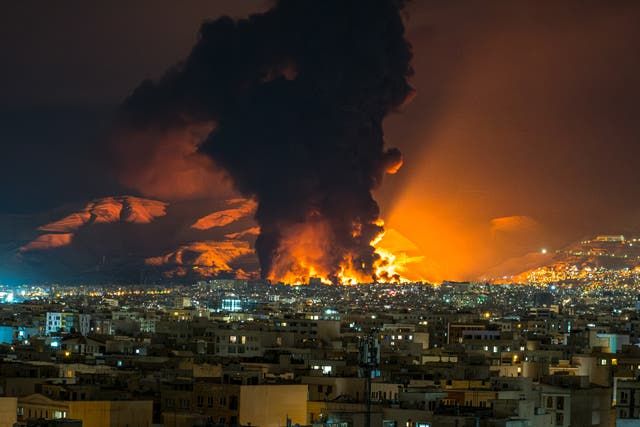
The UK growth hit by Iran war is set to deepen economic pressure, as the Organisation for Economic Co-operation and Development (OECD) warns inflation will surge and growth forecasts decline sharply.
According to the OECD, Britain faces the most severe downgrade among major economies, with growth projections falling significantly as the ongoing conflict in the Middle East disrupts global stability.
The organisation cut the UK’s 2026 growth forecast to 0.7 per cent, down from an earlier estimate of 1.2 per cent, marking the largest reduction among leading global economies.
At the same time, inflation in the UK is expected to rise sharply, with projections indicating an average rate of four per cent throughout 2026, significantly above earlier expectations.
The OECD also noted that the UK is on track to record one of the highest inflation rates among G7 nations, second only to the United States.
Economic analysts say the conflict involving Iran has intensified pressures on energy markets, contributing to rising costs that are feeding into broader inflation trends across Europe.
Oil and gas supply disruptions linked to the war have created uncertainty across global markets, with energy prices becoming increasingly volatile as geopolitical risks remain elevated.
The report also warned that prolonged disruption could significantly worsen economic conditions, particularly if critical infrastructure or shipping routes remain affected for extended periods.
“A prolonged period of disruption could also result in the emergence of significant energy shortages that would lower growth further,” the OECD stated in its latest assessment.
Beyond energy markets, the organisation highlighted growing concerns over fertiliser shortages, which could drive food prices higher if the conflict continues.
Regions within the Middle East are major producers of fertiliser components such as urea and ammonia, making supply chains vulnerable to prolonged instability.
As a result, global food prices could rise sharply, placing additional pressure on household budgets and increasing inflation expectations across multiple economies.
The OECD stressed that such developments could have “potentially serious impacts to household finances,” particularly for lower-income families already struggling with rising living costs.
In response, governments have been urged to encourage greater energy efficiency among households and businesses to mitigate the impact of rising energy prices.
The report also supported measures introduced by Rachel Reeves aimed at assisting vulnerable households during the ongoing economic uncertainty.
However, the OECD emphasised that long-term solutions require reducing dependence on fossil fuel imports, which leave economies exposed to geopolitical shocks.
Some countries have already begun implementing such measures, including energy rationing policies and export controls designed to protect domestic supply during periods of disruption.
Across the G20, economic growth is expected to weaken in the short term before gradually recovering, though uncertainty remains high due to the unpredictable nature of the conflict.
The OECD noted that any escalation affecting major energy routes or infrastructure could have far-reaching consequences beyond current projections.
A sustained increase in global energy prices would add to business costs, reduce investment, and ultimately weigh heavily on economic growth worldwide.
Central banks have therefore been urged to remain “vigilant” in managing inflation risks, particularly as external pressures continue to mount.
In the UK, political reactions to the report have been swift, with opposition figures criticising the government’s handling of the economy.
Shadow chancellor Sir Mel Stride argued that recent policy decisions have left the UK more vulnerable to external shocks at a critical time.
He claimed that increased borrowing, higher taxes, and rising spending have contributed to stagnating growth and worsening economic indicators.
Stride also criticised energy policies, suggesting that reliance on imported energy has heightened the UK’s exposure to global market volatility.
In response, Rachel Reeves defended the government’s approach, acknowledging the challenges posed by the international situation while maintaining confidence in current policies.
She stated, “The war in the Middle East is not one that we started, nor is it a war that we have joined.”
“But it is a war that will have an impact on our country,” she added, highlighting the unavoidable economic consequences of global instability.
Reeves emphasised that the government’s economic strategy is designed to protect both national finances and household incomes during uncertain times.
“Our economic plan means going further to build a stronger more secure economy,” she said, outlining priorities including regional growth, innovation, and closer ties with European partners.
Despite these assurances, economists warn that the UK’s economic outlook remains fragile, particularly if the conflict persists or intensifies further.
Read also:UK armed forces authorized to board Russian tankers in British waters
Energy market instability continues to be a central concern, given its direct impact on inflation, production costs, and consumer spending patterns.
The UK’s reliance on imported energy leaves it particularly exposed to disruptions in global supply chains linked to geopolitical tensions.
If the situation worsens, analysts suggest that both inflation and growth forecasts could deteriorate beyond current projections.
Businesses are already facing increased operational costs, which may lead to reduced hiring, lower investment, and slower overall economic activity.
Consumers, meanwhile, are likely to experience continued pressure on living standards as prices for energy, food, and essential goods rise.
The combined effect of these factors presents a significant challenge for policymakers attempting to stabilise the economy.
While some recovery is expected in the coming years, much will depend on the duration and intensity of the conflict.
For now, the OECD’s warning underscores the scale of the challenge facing the UK as it navigates a complex and uncertain global environment.
Read more: Ireport247news
About The Author
