Typhoon Dujuan Japan has left at least four people dead and 22 injured after torrential rain, landslides and powerful winds caused widespread destruction, flooding, travel disruption and power outages.
The typhoon brought violent winds reaching 144km/h (89mph) as it moved across the region, forcing authorities to issue evacuation advisories affecting more than 1.6 million people around Tokyo.
Although Dujuan was moving away from Japan on Tuesday morning, authorities continued rescue operations while assessing damage caused by landslides, collapsed homes, flooding and record-breaking rainfall.

Officials also began downgrading several heavy-rain and landslide warnings as the storm weakened and moved north-east, although significant disruption remained across affected communities.
The storm particularly affected areas around Tokyo, including Kanagawa and Chiba prefectures, where emergency workers searched damaged homes and investigated reports of people missing after landslides.
Typhoon Dujuan Japan Leaves Death and Destruction
In Yokosuka, Kanagawa prefecture, torrential rainfall triggered several landslides, with mud entering a home and killing a woman in her 60s, according to Japanese public broadcaster NHK.
Police and firefighters were also searching for a couple in their 70s who were believed to have been caught in another incident involving landslides and damaged homes.
Authorities in neighbouring Chiba prefecture reported three additional deaths linked to a series of landslides that struck communities near Tokyo during the storm.
Two people believed to have been inside collapsed homes remained missing, prompting rescue teams to continue searching through damaged structures and debris.
The deaths highlighted the dangers created by the combination of saturated ground, intense rainfall and powerful winds as Typhoon Dujuan moved through densely populated parts of eastern Japan.
Rescue Teams Search Collapsed Homes
Emergency workers faced difficult conditions as they searched homes and neighbourhoods affected by landslides, floodwater and structural damage caused by the storm.

The authorities were also working to restore essential services after the typhoon disrupted electricity supplies across affected areas.
In Chiba alone, officials said about 45,000 households remained without electricity on Tuesday morning, leaving residents dealing with the aftermath of the storm.
The outages added to wider disruption across the region, where heavy rainfall affected roads, public transportation, aviation and scheduled events.
The Guardian reported that Typhoon Dujuan had caused widespread disruption across the Tokyo region, including deaths, landslides, flight cancellations and the early closure of a major video-game trade fair.
More Than 1.6 Million People Urged to Evacuate
More than 1.6 million people living in and around Tokyo were urged to evacuate on Monday as the typhoon brought intense rainfall and increased the threat of flooding and landslides.
The evacuation requests were not mandatory, but authorities encouraged residents in vulnerable locations to move to safer areas while the storm’s strongest effects continued.
The warnings reflected concerns that saturated ground could become unstable, particularly in communities close to hillsides, rivers and other areas vulnerable to flooding.
Even after Dujuan weakened, authorities continued monitoring affected communities because heavy rainfall can create landslide risks after the strongest winds have passed.
Tokyo Records Exceptional Rainfall
The storm produced exceptionally heavy rainfall across parts of the Tokyo region, with some locations recording amounts far above normal September levels.
Oshima, an island approximately 120km south of central Tokyo, recorded 832mm of rainfall over 48 hours, according to NHK.
That amount was more than twice the island’s average rainfall for the entire month of September, highlighting the extraordinary intensity of the storm.
Tokyo’s Edogawa ward also recorded 282.5mm of rainfall within 24 hours, setting a record for the area.
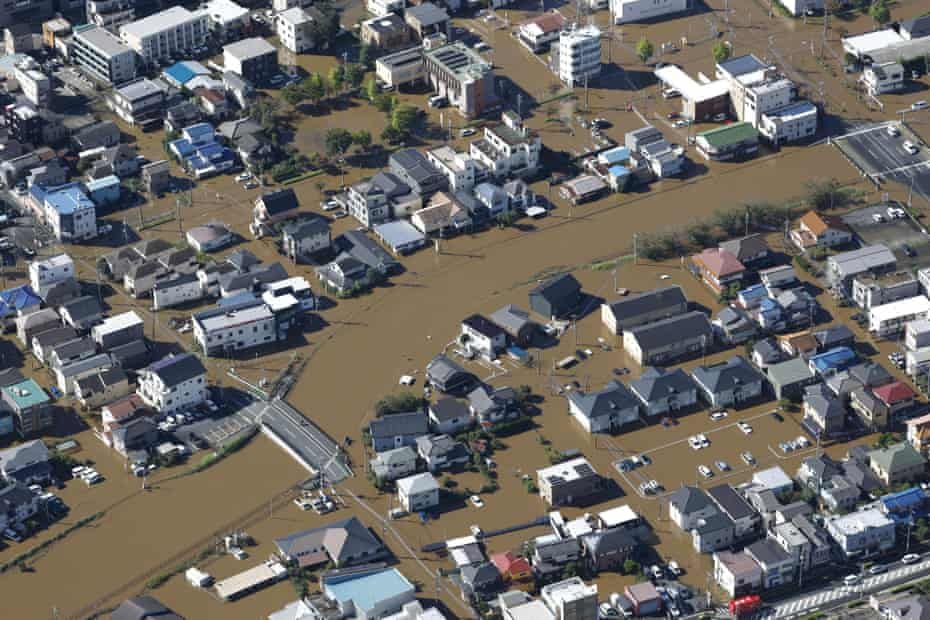
The rainfall overwhelmed some communities and contributed to flooding, while the prolonged saturation of the soil increased the risk of landslides.
Floodwater also covered roads in parts of Chiba, with residents navigating streets affected by accumulated rainfall as emergency services responded to reports of damage.
Airlines Cancel Hundreds of Flights
The impact of Typhoon Dujuan extended beyond residential communities, with major Japanese airlines cancelling hundreds of scheduled flights as the storm disrupted air travel.
Japan Airlines cancelled 135 flights, while All Nippon Airways cancelled another 140 flights because of the dangerous weather conditions.
The cancellations affected passengers travelling through airports serving the Tokyo region and other areas exposed to the storm’s heavy rainfall and strong winds.
Air travel disruption formed part of a wider transportation crisis created by the typhoon, as authorities and operators responded to flooding, damaged infrastructure and dangerous conditions.
The storm also affected public events, demonstrating how extreme weather can disrupt economic and cultural activities even when authorities have prepared for seasonal typhoons.
One of the world’s biggest video-game trade fairs was forced to close early in Tokyo as the storm created difficult conditions across the capital.
Asian Games Events Also Disrupted
The typhoon also caused disruption to some events connected to the Asian Games, adding another dimension to the widespread effects of the severe weather.
Organisers and participants had to contend with conditions that included heavy rainfall, flooding and transportation difficulties.
The disruption showed how a major weather system can affect sporting and cultural programmes across a region, even when the storm’s centre moves away.
For residents, however, the most immediate concerns remained safety, electricity restoration, property damage and the continuing search for missing people.
Dujuan Weakens After Moving North-East
By Tuesday morning, Typhoon Dujuan had weakened as it moved north-east and away from Japan, allowing authorities to reduce several warnings.
However, the weakening storm did not immediately eliminate the danger because communities had already received enormous amounts of rainfall.
Emergency agencies therefore continued assessing damaged buildings and monitoring areas where unstable ground could produce additional landslides.
Residents in affected areas were also facing the practical consequences of the storm, including electricity outages, damaged properties, flooded roads and disrupted travel.
Take this poll: https://ireport247news.com/2027-oyo-governorship-poll/
The changing weather conditions allowed rescue and recovery efforts to intensify, but officials remained cautious because heavy rain can continue producing secondary hazards even after a typhoon weakens.
Climate Change Raises Heavy Rain Concerns
Japan regularly experiences strong typhoons during late summer and early autumn, making preparations for severe storms an important part of national disaster planning.
However, scientists have warned that human-driven climate change can increase the risks associated with extreme rainfall because warmer air can hold greater amounts of moisture.
That relationship does not mean every individual storm can be attributed directly to climate change, but warmer atmospheric conditions can contribute to heavier rainfall during extreme weather events.
Typhoon Dujuan has arrived during a year marked by unusually intense rainfall, flooding and tropical cyclones affecting different parts of the world.
The storm’s rainfall totals in the Tokyo region demonstrate how quickly extreme weather can overwhelm communities, particularly when heavy precipitation combines with strong winds and unstable terrain.
Japan Faces Continued Extreme Weather Risks
Japan’s geography and location in the western Pacific expose it to recurring tropical cyclones, particularly during the late summer and early autumn months.
The country’s authorities maintain extensive warning and evacuation systems because typhoons can bring several hazards simultaneously, including flooding, landslides, storm surges and destructive winds.
Read also: US to shut down Iranian airlines worldwide from Wednesday, Bessent says
The experience of Typhoon Dujuan again demonstrated the importance of timely warnings and emergency response as residents and authorities deal with rapidly changing weather conditions.
With the storm moving away, attention has shifted from immediate survival to rescue operations, damage assessment, electricity restoration and rebuilding affected communities.
The deaths and injuries have also underscored the human cost of extreme weather, while the record rainfall and widespread disruption show the scale of the challenge facing authorities.
As rescue teams continue searching affected areas, communities around Tokyo and neighbouring prefectures are beginning the difficult process of recovering from a storm that brought deadly landslides, flooding, major travel disruption and extensive power outages.