

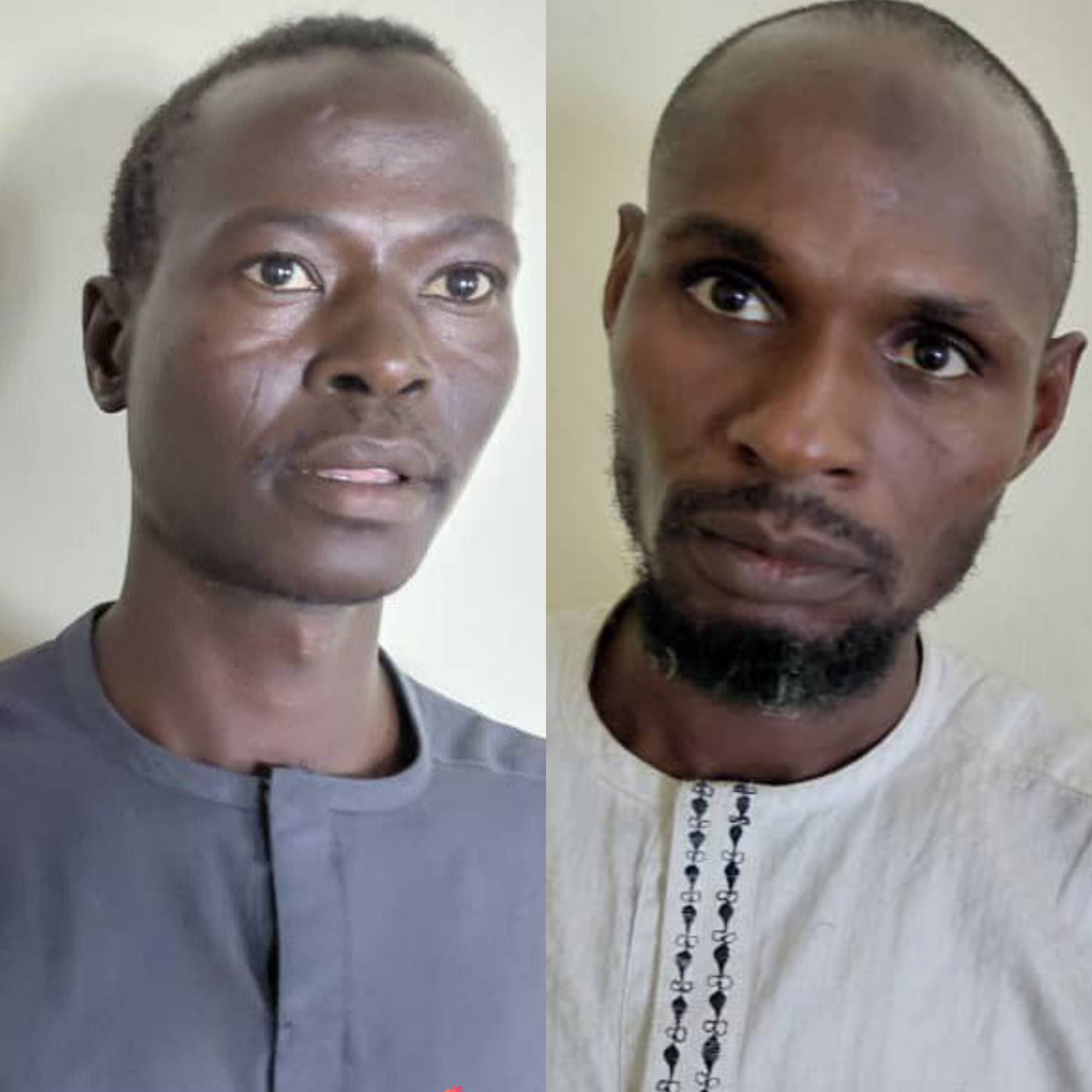
Two suspected ISWAP fighters, including a bomb-making expert, surrender to Nigerian troops in Yobe State under Operation Hadin Kai, military confirms.
Troops of Operation Hadin Kai have recorded what security officials describe as a major breakthrough in the North-East campaign against insurgency after two suspected ISWAP fighters surrendered to the Nigerian military in Yobe State.
The incident happened on June 8 in Geidam, where the suspects reportedly walked into positions held by troops of the 159 Battalion and gave themselves up without resistance.
Military sources confirmed that the development is being treated as part of a growing wave of pressure-induced defections within ISWAP ranks.
The surrendered individuals were identified as Ismail Mohammed and Abu Umar. Security officials say both men are believed to have played active roles within ISWAP operations across the Lake Chad Basin region.
Bomb-making specialist linked to ISWAP operations
Of the two, Abu Umar is considered the more strategically significant figure due to his alleged role as a bomb-making specialist within ISWAP. Military sources described him as an “engineer” responsible for assembling and deploying Vehicle-Borne Improvised Explosive Devices (VBIEDs), commonly known as car bombs.
VBIED attacks have long been one of the most destructive tactics used by ISWAP and other extremist groups in Nigeria’s North-East, often targeting military convoys, markets, places of worship, and civilian gatherings.
Security analysts say individuals with this level of technical expertise are rare and highly valued within ISWAP, as they enable coordinated high-impact attacks and complex operational planning.
Intelligence value and ongoing interrogation
Authorities believe the surrender of Abu Umar could provide critical intelligence on ISWAP logistics networks.
This includes possible information on bomb-making locations, supply routes, storage sites, and training camps used by the group.
The Nigerian military is reportedly placing strong emphasis on intelligence exploitation as part of ongoing efforts to dismantle insurgent structures under Operation Hadin Kai, which continues to target ISWAP and Boko Haram remnants across the region.
Link to Timbuktu Triangle operations
The second suspect, Ismail Mohammed, is believed to have ties to commanders operating within the Baa Shuwa axis of the so-called Timbuktu Triangle, a known operational corridor for insurgent activity in the North-East.
This area has long been regarded by security forces as a strategic hideout and coordination zone for ISWAP, due to its difficult terrain and limited accessibility.
Related news:
Kogi school attack claims lives of vice principal, others in Iluke Bunu

Operation Hadin Kai neutralises 38 ISWAP terrorists

Nigerian Army intercepts ISWAP logistics courier supplying tyres
Rising pressure on ISWAP networks
Security experts say the latest surrender reflects increasing military pressure on ISWAP cells across the Lake Chad Basin. Continuous ground operations, intelligence surveillance, and targeted strikes are believed to be weakening the group’s operational structure.
In recent months, reports of defections, arrests, and internal disruptions within ISWAP have increased, suggesting possible fractures within its command hierarchy.
VBIED threat remains a key concern
Despite these developments, analysts warn that VBIED capability remains one of the most dangerous threats posed by ISWAP. Over the years, such attacks have caused heavy casualties and widespread destruction across military and civilian targets in the North-East.
Security agencies say disrupting this capability is a top priority, as it remains central to the group’s ability to carry out large-scale coordinated attacks.
Military response and broader impact
Operation Hadin Kai officials describe the surrender as a positive indicator of sustained operational pressure on ISWAP and other extremist factions operating in the region.
They say continued military operations, combined with intelligence-driven engagements, are gradually reducing the group’s freedom of movement and weakening its internal cohesion.
The latest development is being viewed as part of a broader pattern of attrition affecting ISWAP, as security forces intensify efforts to restore stability across communities in the North-East.
You bring it as hot as it is