

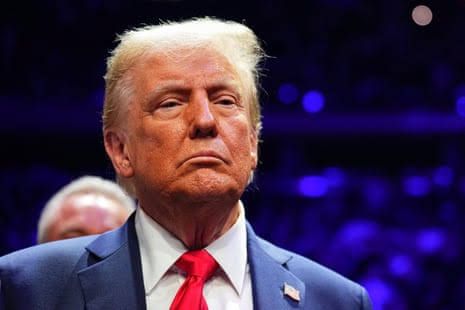
A controversial tax bill newly passed by the United States House of Representatives under the leadership of President Donald Trump could drastically impact Nigeria’s foreign exchange inflows, potentially slashing its $21 billion annual diaspora remittances and disrupting millions of Nigerian households.
Trump’s newly passed Bill, dubbed the “One Big Beautiful Bill Act”, the proposed legislation introduces a 3.5% tax on all international money transfers by non-citizens in the U.S., targeting migrants including green card holders and temporary visa beneficiaries. The tax will be deducted automatically at the point of transaction by banks and remittance firms, with proceeds remitted to the U.S. Treasury quarterly.
Nigeria—currently Africa’s largest remittance recipient—is among the countries projected to suffer the most, alongside Mexico, India, China, and the Philippines. The Central Bank of Nigeria (CBN) revealed that personal remittances reached $20.93 billion in 2024, marking the highest inflow in five years and a major contributor to Nigeria’s balance of payments.
Analysts warn that the tax, if signed into law, will significantly reduce remittance flows to Nigeria, undermine foreign reserves, and drive senders towards unregulated and riskier channels.
“The US is saying ‘America First,’ but the fallout for countries like Nigeria will be enormous,” said Charles Sanni, CEO of Cowry Treasurers Limited. “The double taxation—first on salaries and then on remittances—will discourage formal transfers and weaken the economy.”
Sanni estimated that the proposed 3.5% tax could cost Nigeria at least $215 million annually, not counting potential capital flight and a spike in informal transactions.
The development comes amid Nigeria’s ongoing efforts to stabilise its foreign exchange market and curb inflation. The CBN recently launched the Non-Resident Bank Verification Number (NRBVN) platform, aimed at simplifying access for Nigerians abroad and targeting $1 billion in monthly remittance flows. However, this ambitious target now appears uncertain.
Beyond remittance reductions, experts fear the bill could prompt Nigerian investors in the U.S. to redirect capital to other jurisdictions with more favourable tax environments.
“People will begin to search for places where their investments won’t be hit by such punitive taxes,” Sanni added. “We could also see government revenue shortfalls being filled with new taxes or borrowing.”
According to Professor Akpan Ekpo, an economist, the bill’s impact will ripple beyond financial data. “This is not just about numbers. Families in Nigeria rely on these funds for food, school fees, health, and housing. At a time of economic hardship, this tax threatens a critical survival mechanism.”
Meanwhile, Boniface Chizea, CEO of BIC Consultancy Services Limited, warned of a potential surge in underground transactions. “When official channels become too expensive or complicated, people will turn to informal routes—crypto wallets, peer-to-peer systems, or even shared debit cards.”
This informalisation trend, experts say, could create serious regulatory blind spots and increase the risk of money laundering. Manuel Orozco, Director of Migration, Remittances, and Development at the Inter-American Dialogue, said the tax might push migrants to explore alternative transfer methods outside regulatory oversight.
“Increased demand for unregistered cross-border processors could lead to illicit flows and even embolden money laundering networks. It’s a dangerous path,” Orozco warned.
A recent Agusto Diaspora Remittance Industry Report found that Africa received an estimated $94.8 billion in remittances in 2023, with Egypt and Nigeria accounting for nearly half. In Nigeria, diaspora funds go far beyond personal support—they fund businesses, real estate investments, school tuition, and even health emergencies.
“The sustained inflow of funds highlights the diaspora’s commitment to family and community welfare,” the report stated.
Despite this, the U.S. Census Bureau noted that as of 2023, nearly 47.8 million immigrants lived in the United States. Most are legal residents, yet the bill targets all non-citizens, leaving them little room for relief.
Facing this challenge, stakeholders are urging the Nigerian government to act swiftly. “This is the time to look inward,” said Professor Ekpo. “We must accelerate crude oil refining, diversify exports, and build strong internal revenue mechanisms.”
Still, the short-term consequences will likely be felt by ordinary Nigerians. “Many families live hand-to-mouth, waiting on a relative abroad for school fees or medical bills,” Sanni concluded. “This tax could push them to the edge.”
As President Trump’s new tax bill inches closer to final approval, its impact on Nigeria’s economy could be historic. With remittances playing a crucial role in household survival and economic stability, experts warn that unless Nigeria ramps up domestic productivity and financial innovation, the nation could face another wave of economic strain—this time, from beyond its borders.