Trump World Cup attendance confirmed as he presides over the 2026 draw in Washington, placing the US president at the centre of football diplomacy and global sporting attention.
The 48-team expansion across the United States, Mexico, and Canada creates unprecedented logistical challenges, requiring close coordination between FIFA officials, host nations, and local authorities for the historic event.
White House officials emphasised that Trump’s role presiding over the ceremony highlights a strengthened partnership with FIFA President Gianni Infantino, whose regular visits to Washington have sparked debate and admiration.
Infantino’s ongoing engagement with the US president underscores the strategic alignment of football governance with political diplomacy, fostering global visibility for FIFA while reinforcing America’s organisational influence over the event.
Expectations are growing that Trump will be the first recipient of the FIFA Peace Prize, a new award intended to recognise diplomatic efforts and the global significance of hosting the tournament.
Critics argue that awarding Trump politicises football, while FIFA representatives claim the decision reflects practical leadership in coordinating a tri-nation event and managing international stakeholder interests.
The president has repeatedly positioned the World Cup as a defining feature of his administration, linking the tournament to celebrations of America’s 250th independence anniversary next year.
His public warnings to relocate matches from cities he labels unsafe have sparked controversy, with local officials concerned about financial losses, logistical disruption, and potential reputational damage for host venues.
Iran escalated tensions by announcing a boycott of the draw after U.S. authorities refused visas to several members of its football delegation, intensifying political scrutiny around the tournament.
Iranian Football Federation president Mehdi Taj criticised the US decision as overtly political, calling on FIFA to uphold fair access and maintain the integrity of international sports participation.
FIFA expressed regret over the incident but highlighted the challenges of hosting in countries where domestic policy intersects with international sporting commitments, including visa regulations and security protocols.
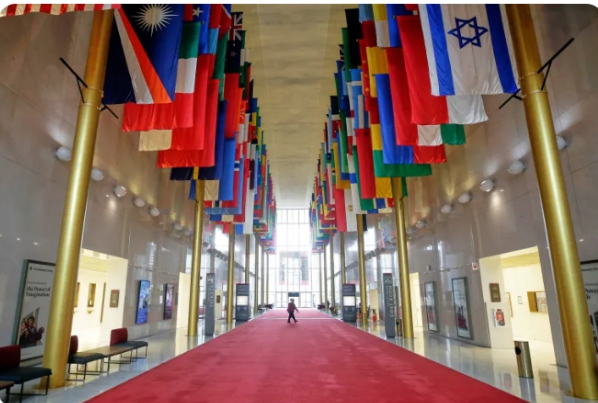
The Kennedy Center, hosting the ceremony, provides symbolic resonance, blending American cultural heritage with global football spectacle while offering a high-profile stage for Trump to preside over the proceedings.
Defending champions Argentina headline the top-seeded nations alongside the United States, Mexico, Canada, Brazil, France, Germany, Spain, England, Portugal, the Netherlands, and Belgium, reflecting competitive balance in the draw.
Cristiano Ronaldo is expected to make his sixth World Cup finals appearance at age 41, providing a historic storyline and the possibility of concluding his career with a first global title.
Newly qualified teams, including Cape Verde, Jordan, and Curacao, highlight FIFA’s expanding inclusivity and the growing opportunities for nations historically absent from the World Cup stage.
Coaches from debutant nations emphasise the transformational impact of participation, offering national pride, developmental pathways for young players, and enhanced visibility for their football programs internationally.
The final six positions will be decided through playoffs, creating uncertainty for seeded nations and elevating the significance of tactical preparation ahead of the group-stage draw.
Italy remains the most prominent wildcard, capable of disrupting group hierarchies despite missing previous tournaments, with potential to challenge established teams and influence early-stage match dynamics.
Analysts warn that Italy’s qualification could introduce significant unpredictability, forcing top seeds to adapt strategies and reconsider assumptions about early progression in the tournament’s structure.
Renovation work at Mexico City’s Azteca Stadium continues in preparation for the opening match on June 11, blending modern broadcast, safety, and spectator experience standards with historical prestige.
Teams will receive venue-specific match schedules after the draw, enabling precise planning for travel, accommodation, and competitive preparation across the three host nations’ diverse geographic locations.
Supporters’ groups have raised concerns about dynamic ticket pricing, which may make key matches, including the final, prohibitively expensive for families, casual fans, and international spectators alike.
Secondary-market ticket prices already reflect massive demand, with resale platforms listing entry-level seats for the final at MetLife Stadium starting near seven thousand dollars, reflecting commercial pressures.
Consumer advocates caution that escalating ticket costs may exclude traditional supporters, undermining grassroots engagement and the inclusive spirit typically celebrated during World Cup tournaments.
FIFA defends dynamic pricing as necessary for managing unprecedented demand, though critics contend commercial strategies should not overshadow the event’s cultural and sporting significance for fans.
Security measures across the United States, Mexico, and Canada have been intensified, anticipating record-breaking attendance and global attention, with coordination between federal, municipal, and private agencies critical to operational success.
Transportation and logistics planning must accommodate millions of visitors, demanding advanced scheduling, intercity coordination, and robust public safety measures to maintain smooth operations throughout the six-week competition.
Media coverage will reach billions globally, with broadcasters emphasising Trump presiding over the draw, player storylines, debutant nations’ narratives, and the diplomatic context surrounding participation and potential boycotts.
Analysts suggest Trump’s prominent role may overshadow traditional sporting narratives, creating a unique intersection of politics, spectacle, and football, raising questions about governance, influence, and global perception.
FIFA officials stress that transparency, procedural integrity, and adherence to sporting regulations remain paramount despite political attention, ensuring that competitive fairness governs qualification and match scheduling.
The expanded tournament format increases exposure for smaller nations, offering broader commercial opportunities, sponsorship engagement, and global fan engagement while reshaping international football economics.
From a strategic perspective, host cities are leveraging the draw to attract investment, tourism, and infrastructure funding, with Trump presiding signalling the importance of presidential endorsement in these initiatives.
FIFA continues to emphasise global unity and celebration of football, framing the 2026 World Cup as an opportunity to bridge cultural and political divides while generating unprecedented media and fan engagement.
With historic players like Ronaldo and Messi participating, along with debutant nations and host cities preparing intensively, the tournament promises high-level competition and stories that will define global football for years.
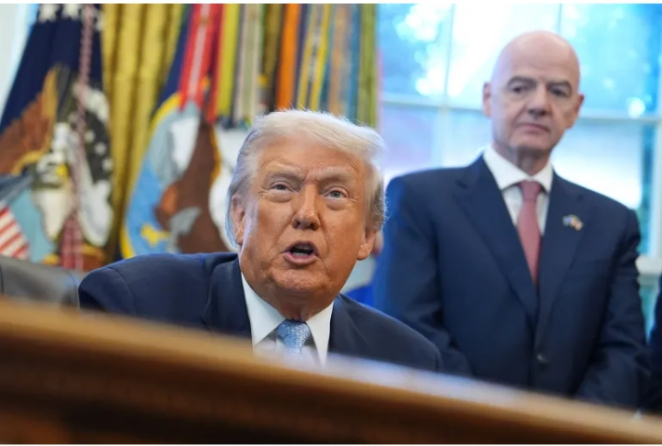
Trump’s centrality in the draw exemplifies the growing intersection of sports, diplomacy, and political theatre, highlighting how modern mega-events operate at the crossroads of influence, media, and international attention.
As fans, nations, and media converge on the draw, Trump’s presiding role ensures that the 2026 World Cup begins under unprecedented scrutiny, setting the tone for a historic, politically charged sporting spectacle.