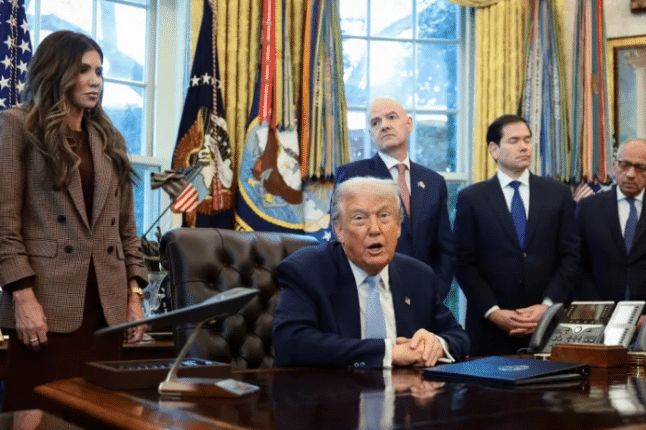
The White House escalated tensions on Tuesday as President Donald Trump warned that a US strike on Mexican cartels remained a viable option following recent attacks.
Officials across Washington and Mexico City reacted cautiously, while analysts signalled growing uncertainty over how far Trump might go despite international and diplomatic concerns.
President Trump told reporters the United States would “act decisively” if threats persisted, hinting that discussions with Mexico included scenarios involving direct military engagement across the border.
He alleged drug cartels posed “an immediate national danger,” stressing his government had the “capacity, intelligence and operational readiness” to respond swiftly if required.
“We’re losing lives every week,” Trump said, insisting cartels operated with impunity and that decisive steps were needed to curb illicit activity threatening American communities nationwide.
“We know the networks, we know the routes, and we know the structures,” he continued, asserting US intelligence could deliver “surgical, rapid, and overwhelming measures” if authorised.
Mexican President Claudia Sheinbaum reiterated her government’s opposition, saying Mexico “will never accept foreign military action” and urging the United States to pursue cooperative strategies only.
Sheinbaum emphasised Mexico’s sovereignty, remarking, “No nation has the right to violate another’s territory, no matter the justification or pressure presented.”
Diplomatic observers note Sheinbaum’s administration now faces one of its most serious bilateral challenges, following months of strained communication over security issues.
Jeff Garmany, a Latin America specialist, told reporters Trump’s proposals signal “a potentially severe rupture in regional cooperation,” warning it could “reshape hemispheric relations dramatically.”
According to Garmany, “Mexico’s government has legitimate fears—strikes would inflame tensions, disrupt civilian life, and set a precedent that neither nation can easily reverse.”
He added that cartels’ sophistication means military strikes “may generate headlines but produce minimal long-term disruption,” suggesting the approach risks symbolic rather than strategic outcomes.
Another expert, analyst Veronica Ibarra, said Washington’s messaging appears divided, with some officials pushing cross-border coordination and others promoting unilateral action.
“Mixed signals create instability,” Ibarra observed, warning that inconsistent communication “emboldens cartels while straining diplomatic ties on both sides of the border.”
In Congress, lawmakers voiced sharply differing views, reflecting partisan divides that have defined numerous national security debates throughout Trump’s second term.
Republican Senator Mark Dillon described Trump’s warning as “responsible leadership,” claiming the President “must protect Americans regardless of international hesitations.”
Democratic Representative Elena Ruiz countered, arguing, “Unilateral strikes would be reckless, illegal, and disastrous for regional security. Diplomacy must come before theatrics.”
The Pentagon has not confirmed which options, if any, are currently active, but officials privately acknowledge planning discussions remain ongoing at multiple levels.
A senior defence source told reporters the priority is “accurate intelligence mapping,” explaining any operation would depend on precisely identifying high-value cartel infrastructure.
The source added that coordination “without triggering broader conflict” remains the military’s foremost challenge should the President escalate actions beyond maritime operations.
Recent boat strikes in the Caribbean have heightened international scrutiny, with human rights groups demanding clarity over casualties and verification of alleged cartel links.
Advocates argue the administration has provided limited evidence, raising concerns the strikes risk setting dangerous precedents under contested legal interpretations.
Human rights lawyer Michael Santos stated, “When lethal actions lack transparent justification, the world must question the legitimacy of those operations.”
Santos warned that expanded intervention inside Mexico “would amplify these concerns exponentially,” especially if civilian areas were inadvertently affected.
Public reaction across the United States remains divided, with some communities expressing fear of retaliation while others demand stronger measures to curb drug inflow.
Local activist Jenna McMillan said families battling addiction “want solutions, not political posturing,” urging leaders to invest in treatment and prevention rather than military action.
She argued that focusing solely on cartels “ignores the domestic roots of the drug crisis,” a view echoed by several public health advocates.
Border-state officials have adopted a cautious tone, aware that rising tensions could disrupt trade, travel, and cross-border economic cooperation.
Arizona Governor Paul Hammond said stability must remain paramount, noting, “Any action affecting millions on both sides must be weighed with extraordinary prudence.”
Mexican lawmakers, meanwhile, condemned Trump’s remarks, calling them “provocative, dangerous, and historically insensitive” given decades of bilateral cooperation on security.
Opposition senator Lucero Hernández warned that unauthorised strikes “would be viewed as aggression,” potentially triggering diplomatic retaliation and legal challenges at international forums.
Military veterans and strategists caution that cross-border operations carry serious risks, from unpredictable engagements to potential entanglement in Mexico’s domestic security dynamics.
Retired General Marcus O’Neill explained, “Cartels are heavily armed, deeply entrenched, and structurally adaptive. Even targeted strikes would face immediate tactical and political complications.”
He added that previous interventions across sovereign borders have historically produced “far-reaching consequences impossible to fully anticipate in the planning stage.”
The White House insists the goal is deterrence, though critics say the public messaging resembles escalation rather than restraint.
Press Secretary Dana Rhodes claimed discussions with Mexico were “constructive,” while sidestepping questions about whether Sheinbaum supported any proposed military initiatives.
Rhodes emphasised the administration would “use every available tool,” prompting renewed debate over where constitutional and international boundaries lie.
Academic researchers note these discussions mark a sharp departure from past precedents, where cross-border strikes were broadly rejected due to sovereignty principles.
Analyst Jorge Ramírez observed, “Even at the height of the drug war, cooperation—not unilateral force—was considered the viable path. This shift is historically significant.”
Within Mexico, public sentiment leans strongly against US involvement, with many fearing foreign intervention would worsen violence rather than suppress it.
Community leader Rosa Delgado stated, “We’ve lived through two decades of conflict. Bombs or drones from another country won’t make our neighbourhoods safer.”
Delgado said locals want “economic support, education and security reform—not missiles,” reflecting widespread discontent with externalised approaches.
Washington’s allies are also monitoring the situation, concerned that cross-border military action could undermine global norms governing international intervention.
European diplomats privately warned that the move could be interpreted as “unilateral overreach,” potentially weakening alliances and damaging US credibility abroad.
Trump, however, maintained that national security supersedes diplomatic discomfort, saying, “We won’t let bureaucracy stop us from defending American lives.”
His remarks continue to reverberate across global media, intensifying debate over whether geopolitical strategy or domestic politics is driving the rhetoric.
As the situation evolves, both nations face mounting pressure to find common ground before the issue escalates into a significant regional confrontation.
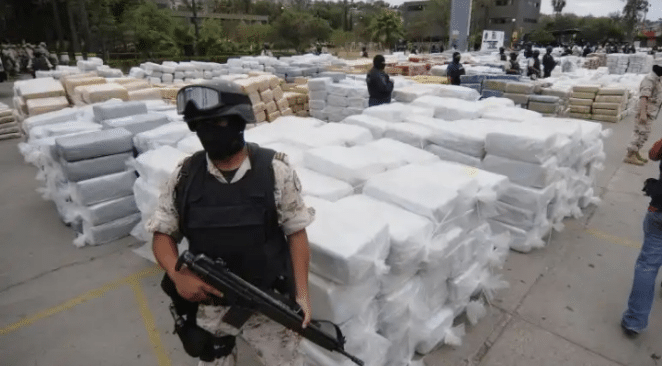
Analysts predict the coming weeks will determine whether diplomacy or force becomes the defining approach to one of North America’s most complex security challenges.
For now, the possibility of a US strike on Mexican cartels remains a flashpoint reshaping discussions about sovereignty, security, and the future of US-Mexico relations.
Read more: Ireport247news
About The Author